Introduction: Why Traditional ERP Implementations Struggle
ERP implementation has historically been slow, expensive, and difficult to adapt as business needs evolve. Organizations often spend months or years customizing rigid systems, only to find that requirements have already changed. The core issue is not ERP itself, but the lack of flexibility, automation, and intelligence in traditional implementation approaches. This is where AI-powered ERP implementation on Moqui changes the equation by combining automation, open architecture, and real-time adaptability.
What is AI-Powered ERP Implementation on Moqui
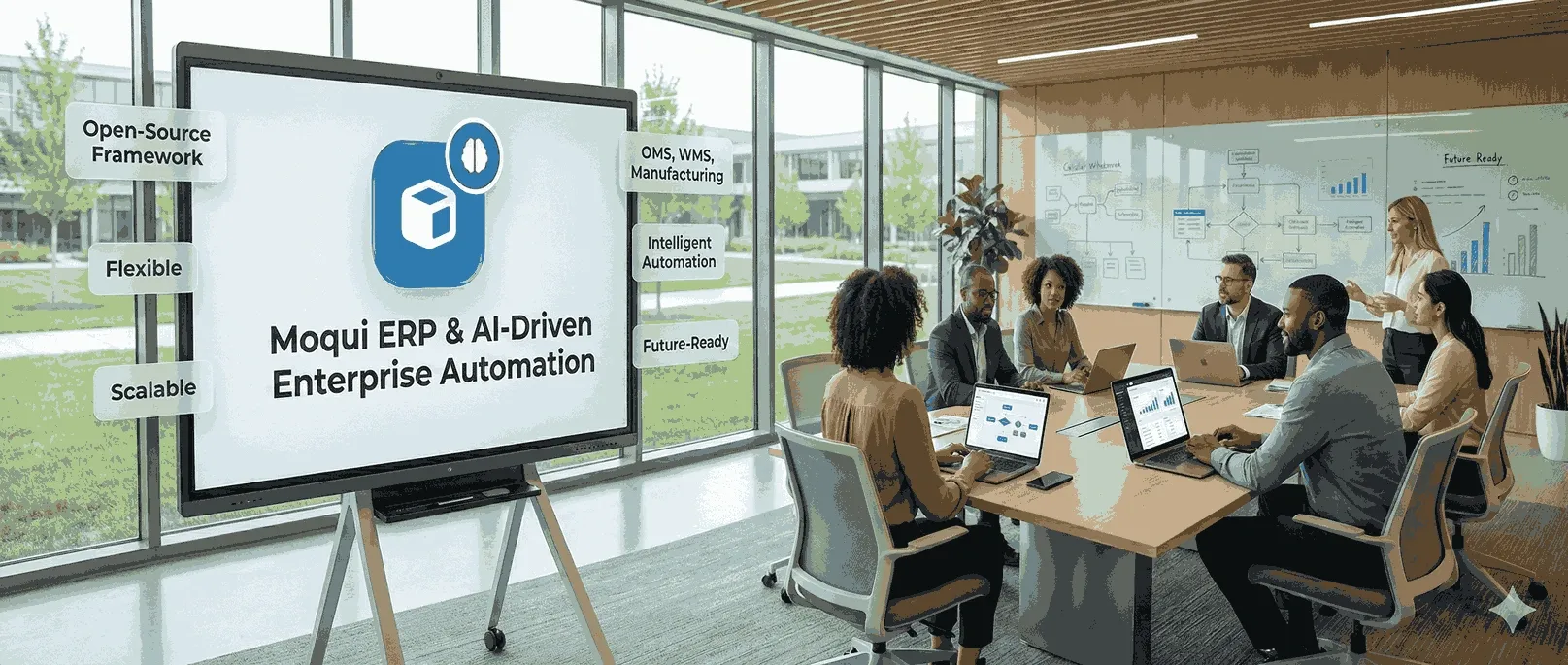
AI-powered ERP implementation is the process of using artificial intelligence across the software development lifecycle to design, build, test, and deploy ERP systems faster and more efficiently. When combined with the Moqui framework, this approach creates a highly flexible execution environment where business logic, workflows, and integrations can be automated and continuously optimized. Unlike legacy ERP systems, this aligns with the principles of modern, intelligent ERP systems that focus on flexibility, automation, and open architecture . Moqui itself acts as a strong foundation for building scalable enterprise systems, as explained on the official Moqui framework site, offering a service-oriented architecture that supports real-time execution and seamless integration.
AI-Assisted SDLC: Accelerating ERP Implementation
One of the biggest advantages of implementing ERP on Moqui is the ability to embed AI into the entire development lifecycle. Instead of relying on manual effort, AI accelerates each phase of delivery. AI assists in requirement analysis by converting business workflows into structured system logic, reducing ambiguity. During development, it enables faster code generation and reusable service creation. Testing becomes more efficient through automated validation and anomaly detection. Deployment is streamlined with intelligent configuration management, reducing errors and delays. This approach aligns closely with modern AI-driven ERP systems where automation is not an add-on but a core capability.
Faster Customization Without Complexity
Customization is where most ERP projects fail due to rigid architectures and high dependency on vendor-specific tools. Moqui changes this by offering a flexible data model, service layer, and screen framework that allows rapid customization without breaking the system. AI enhances this further by identifying patterns in business requirements and automatically suggesting optimized workflows. This enables faster delivery of solutions such as modern order management systems and AI-powered warehouse management systems without extensive rework. Instead of rewriting modules, businesses can extend and adapt the system dynamically, making ERP a living system rather than a static implementation.
Architecture Advantage: Why Moqui Fits AI Execution
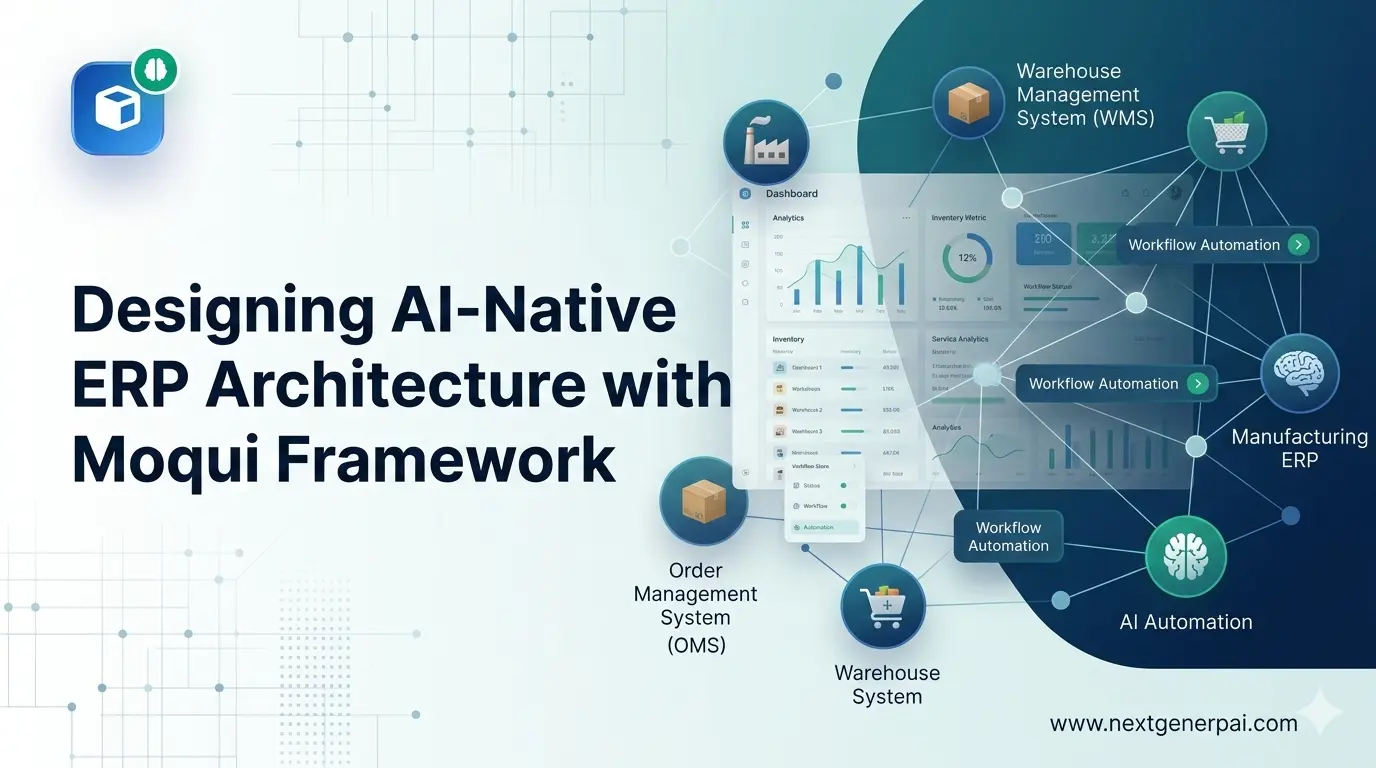
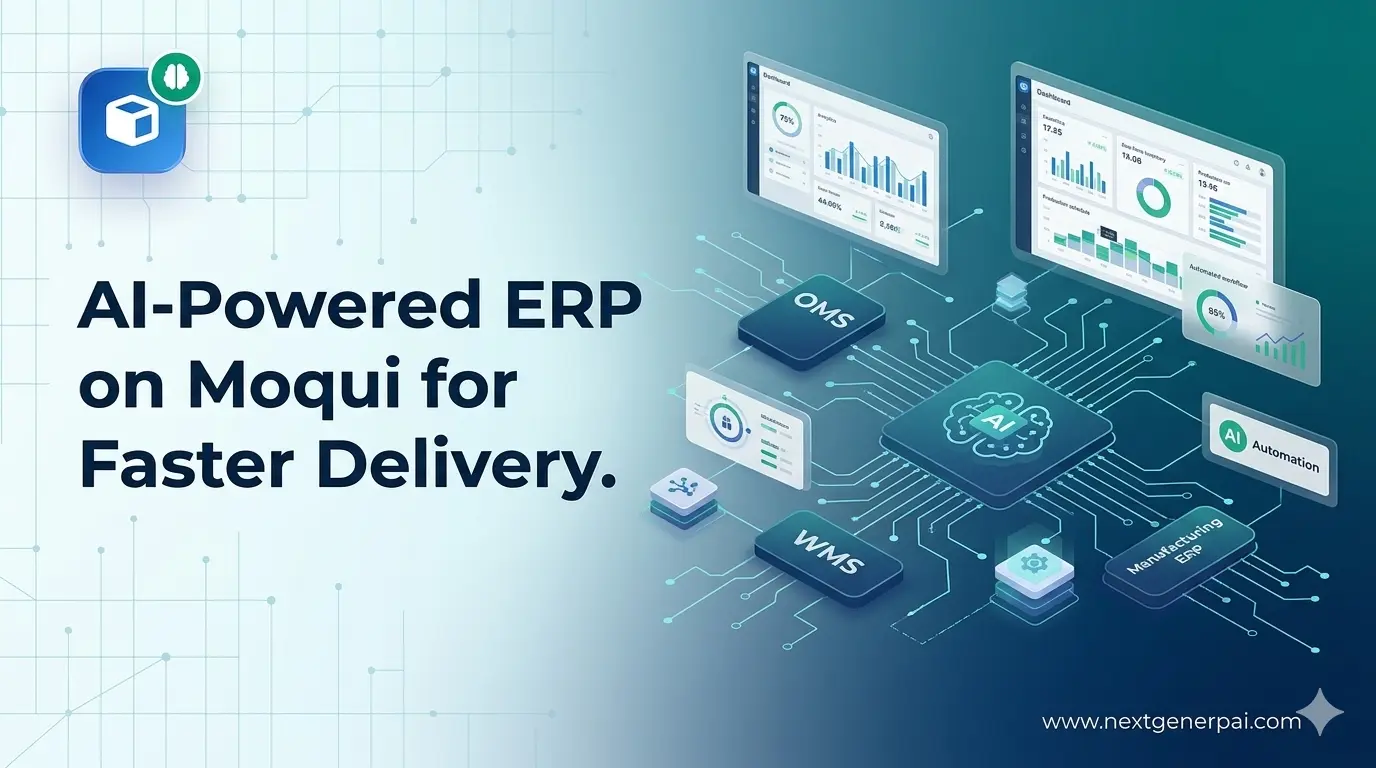
Moqui is not just an ERP framework, it is an execution engine where business operations actually run. Its architecture is designed for real-time decision-making and automation. The entity engine provides a flexible data layer that adapts to changing business models. The service engine enables reusable business logic that can be orchestrated by AI agents. The screen and workflow layer allows rapid UI and process configuration. This architecture makes Moqui ideal for building systems aligned with ERP architecture with AI agents, where automation is deeply embedded into operations rather than layered on top.
Real-World Use Cases of AI-Powered Implementation
AI-powered ERP implementation on Moqui delivers tangible results across industries. In e-commerce, order routing can be automated based on inventory availability, delivery timelines, and customer preferences, similar to autonomous order management. In warehousing, AI continuously monitors stock levels and triggers real-time rebalancing, supporting autonomous warehouse management. In manufacturing, production schedules can be dynamically adjusted based on demand forecasts, machine availability, and supply constraints. These are not theoretical capabilities but practical implementations that reduce manual effort and improve operational efficiency.
Lower Total Cost of Ownership Through Open Architecture
One of the strongest business advantages of Moqui-based ERP implementation is cost control. Traditional ERP systems come with high licensing fees, expensive customization, and long-term vendor lock-in. With an open-source foundation like Moqui and Apache OFBiz, businesses can adopt an open-source ERP migration strategy that eliminates recurring licensing costs and gives full control over the system. Combined with AI-driven automation, this significantly reduces development effort, maintenance costs, and dependency on large implementation teams. Businesses can also leverage custom ERP development solutions tailored to their exact needs without unnecessary overhead.
Better Business Outcomes with Intelligent ERP
AI-powered ERP implementation is not just about speed and cost, it directly impacts business outcomes. Organizations gain real-time visibility across operations, enabling faster and more informed decision-making. Automation reduces human error and improves process consistency. Systems become scalable, allowing businesses to grow without constantly re-implementing ERP. By combining Moqui with AI, companies can build systems that continuously learn and adapt, aligning with the vision of a future-ready Next-Gen ERP architecture that evolves with the business.
Future Outlook: From Implementation to Continuous Optimization
ERP implementation is no longer a one-time project. With AI and Moqui, it becomes an ongoing process of optimization and innovation. As AI agents become more advanced, they will not only execute workflows but also redesign them based on performance data. ERP systems will shift from being transactional platforms to intelligent decision engines. Businesses that adopt this approach today will be better positioned to handle complexity, scale operations, and stay competitive in a rapidly changing environment.
Conclusion
AI-powered ERP implementation on Moqui represents a fundamental shift in how enterprise systems are built and operated. By combining AI-assisted SDLC, flexible architecture, and open-source foundations, businesses can achieve faster delivery, lower costs, and significantly better outcomes. Instead of struggling with rigid systems, organizations can build ERP platforms that adapt, learn, and evolve alongside their operations.