Introduction: The Challenge of Real-Time Inventory Management
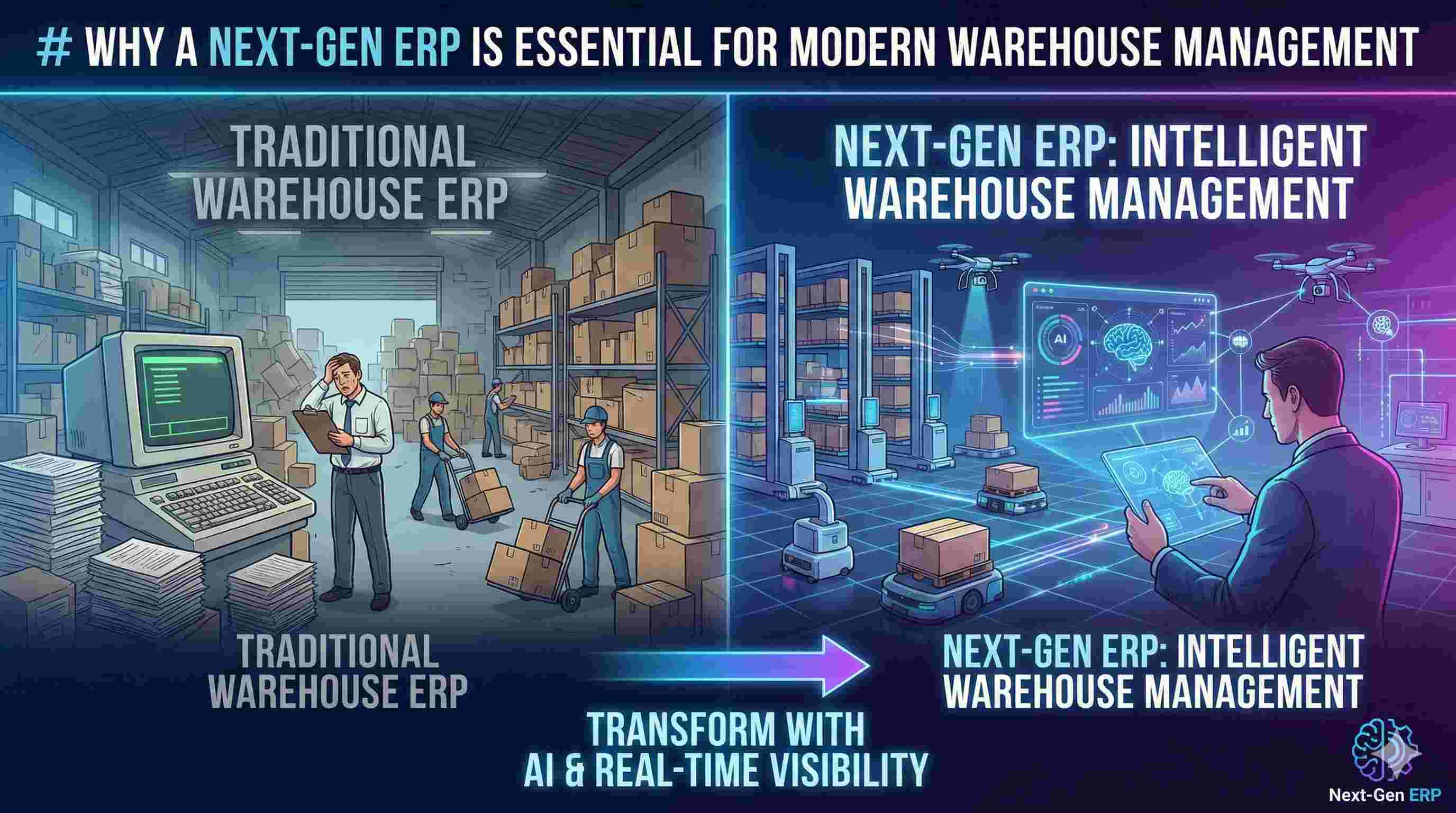
Modern supply chains demand speed, accuracy, and adaptability, yet many warehouses still operate on reactive processes that struggle to keep up with real-time demand fluctuations. Inventory mismatches, delayed fulfillment, and inefficient picking processes create bottlenecks that directly impact revenue and customer satisfaction. This is where autonomous warehouse management powered by AI agents is transforming operations.
Autonomous warehouse management uses AI-driven ERP automation and intelligent agents to continuously monitor, analyze, and optimize inventory movements in real time. Instead of relying on static rules or manual interventions, AI agents dynamically adjust workflows across inventory, order fulfillment, and warehouse operations.
This shift is central to the evolution of Next-Gen ERP architecture, where systems are designed to be intelligent, adaptive, and deeply integrated across business functions.
What Is Autonomous Warehouse Management?
Autonomous warehouse management refers to the use of AI agents within a warehouse management system (WMS) to automate decision-making processes such as inventory allocation, replenishment, picking optimization, and demand forecasting without constant human intervention.
Key Characteristics
- Real-time inventory tracking and updates
- AI-driven decision-making for stock movement
- Continuous optimization of warehouse workflows
- Integration with order and manufacturing systems
- Self-learning systems that improve over time
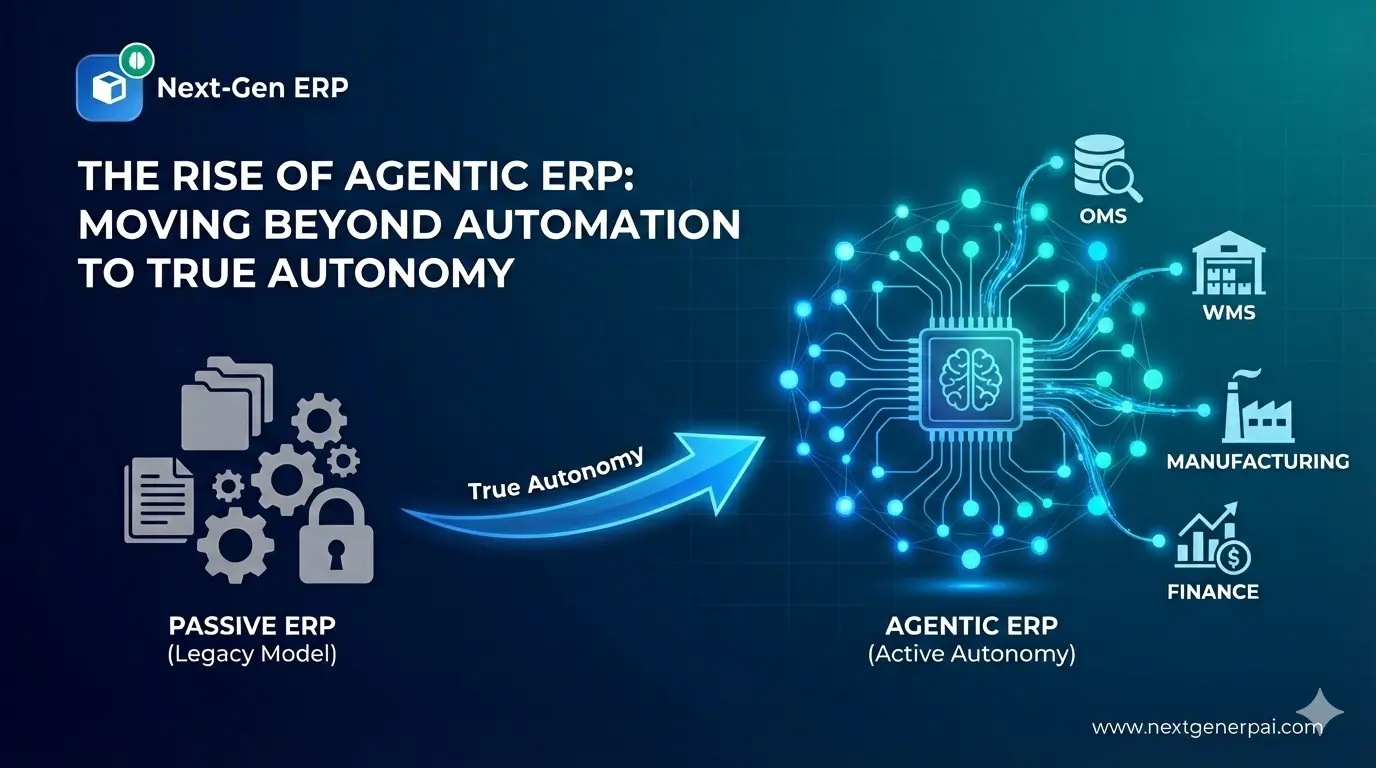
In simple terms, it transforms a warehouse from a passive storage system into an intelligent, self-optimizing ecosystem.
How AI Agents Work in Warehouse Management
AI agents are not just automation scripts. They are intelligent entities capable of analyzing data, making decisions, and executing actions across systems.
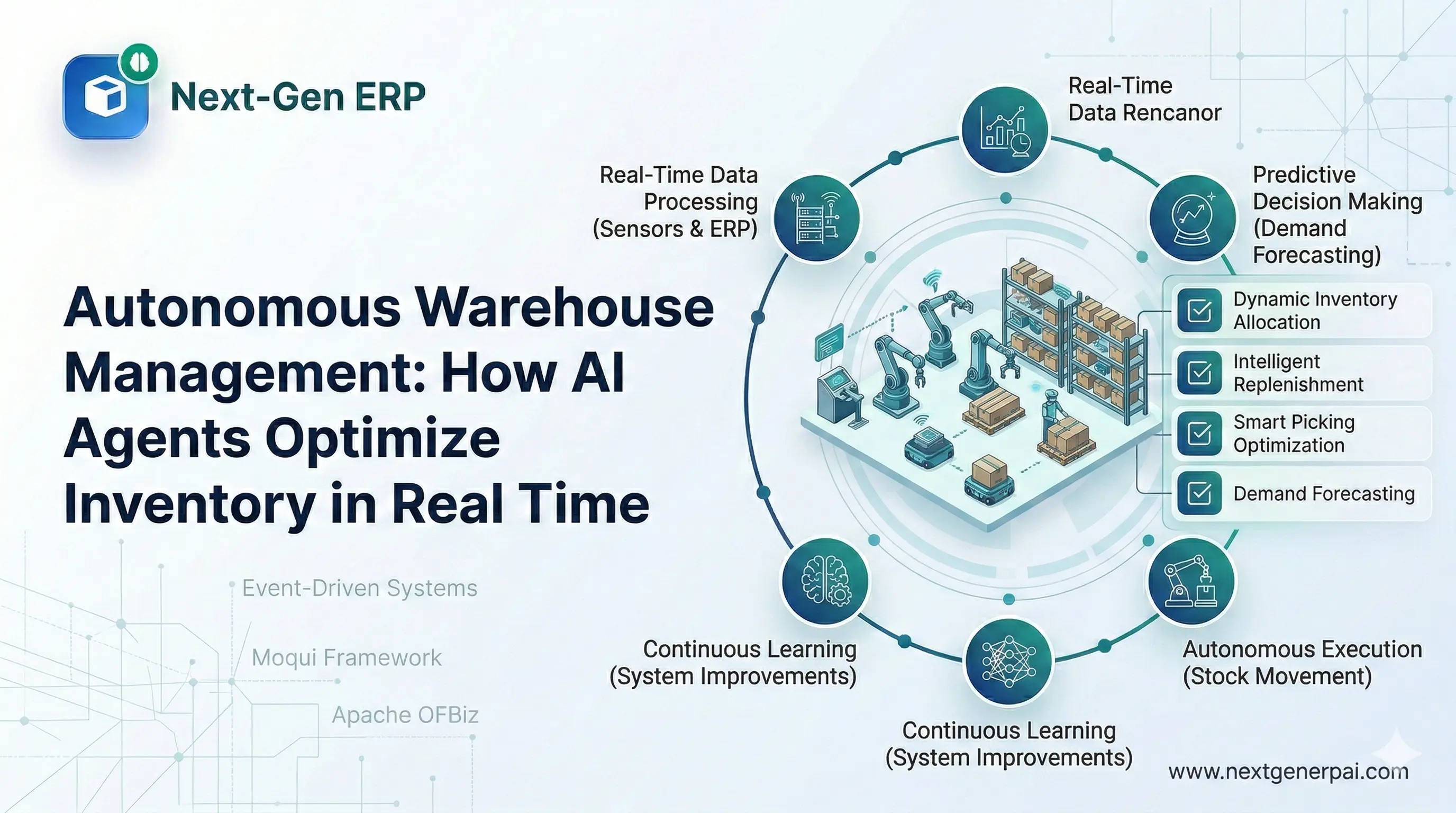
Core Capabilities of AI Agents
-
Real-Time Data Processing AI agents continuously ingest data from sensors, ERP systems, and transactional flows to maintain accurate inventory visibility.
-
Predictive Decision Making Using historical data and machine learning models, agents forecast demand and adjust inventory positioning proactively.
-
Autonomous Execution Agents trigger workflows such as stock transfers, replenishment, or order prioritization without manual input.
-
Continuous Learning They improve performance over time by learning from outcomes and refining decision logic.
These capabilities are deeply integrated into AI-powered warehouse management systems like those built through custom ERP development solutions.
The Role of Next-Gen ERP in Autonomous Warehousing
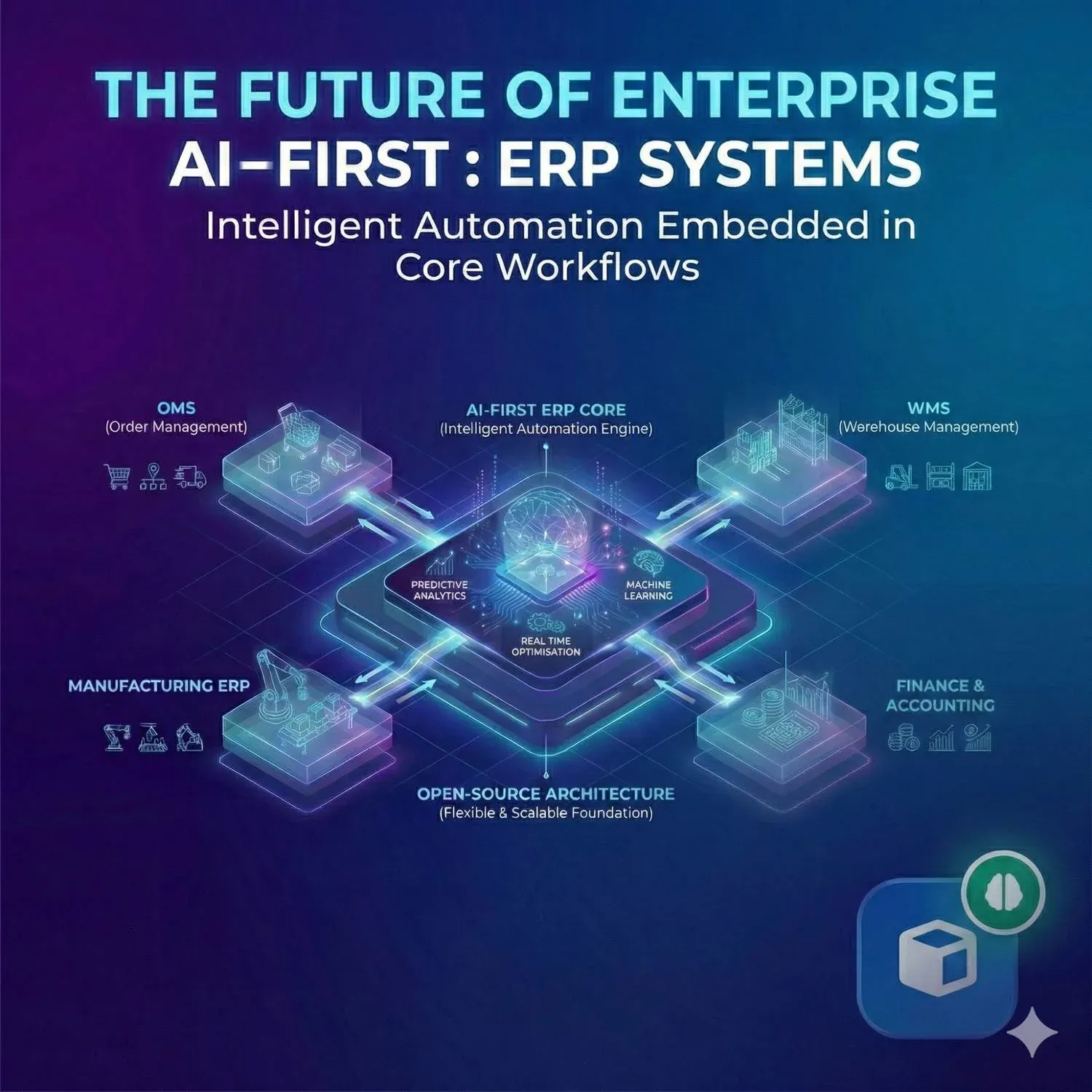
Autonomous warehouse management is not a standalone system. It depends on a unified ERP architecture that connects multiple business functions.
Integrated ERP Components
-
Order Management System (OMS) Handles order capture, validation, and fulfillment orchestration. Learn more about modern order management systems.
-
Warehouse Management System (WMS) Manages storage, picking, packing, and shipping. Explore AI-powered warehouse management systems.
-
Manufacturing Execution System (MES) Aligns production with inventory and demand.
-
AI Automation Layer Coordinates intelligent workflows across systems.
This integration ensures that inventory decisions are not isolated but aligned with demand, production, and supply chain constraints.
Technology Architecture Behind Autonomous WMS
Autonomous warehouse systems rely on a modern, open, and scalable architecture.
Key Architectural Elements
1. Event-Driven Systems
Inventory updates, order changes, and warehouse events trigger real-time actions across the system.
2. AI Decision Engines
Machine learning models analyze patterns and generate recommendations or actions.
3. Open-Source ERP Platforms
Platforms like Moqui Framework and Apache OFBiz provide flexibility and scalability for building intelligent ERP systems. Many enterprises adopt Moqui ERP development and consultancy to implement such architectures.
4. Microservices-Based Design
Each function such as inventory, picking, or shipping operates independently but communicates seamlessly.
5. API-First Integration
Ensures smooth connectivity with external systems like e-commerce platforms and logistics providers.
Organizations looking to modernize often leverage ERP migration to open-source platforms to enable this architecture.
Real-World Use Cases of Autonomous Warehouse Management
1. Dynamic Inventory Allocation
AI agents automatically allocate inventory across multiple warehouses based on:
- Demand patterns
- Delivery timelines
- Stock availability
This reduces shipping costs and improves delivery speed.
2. Intelligent Replenishment
Instead of fixed reorder points, AI agents:
- Predict stock depletion
- Trigger replenishment orders
- Optimize supplier selection
3. Smart Picking Optimization
AI optimizes picking routes by analyzing:
- Order priorities
- Warehouse layout
- Worker availability
This significantly reduces picking time and labor costs.
4. Real-Time Order Fulfillment
Integration with OMS allows AI agents to:
- Prioritize urgent orders
- Allocate stock instantly
- Reduce order processing delays
5. Demand Forecasting and Planning
AI continuously updates forecasts based on:
- Sales trends
- Seasonal variations
- External factors
This ensures optimal inventory levels at all times.
Business Benefits of AI-Driven Warehouse Automation
1. Improved Inventory Accuracy
Real-time updates eliminate discrepancies between physical and system inventory.
2. Faster Order Fulfillment
Automated workflows reduce delays and improve delivery timelines.
3. Reduced Operational Costs
AI minimizes manual intervention, labor costs, and inventory holding costs.
4. Enhanced Scalability
Autonomous systems adapt easily to business growth and demand fluctuations.
5. Better Decision Making
AI-driven insights provide actionable intelligence for strategic planning.
These benefits align with the core principles of Next-Gen ERP architecture, which emphasizes flexibility, automation, and scalability.
Autonomous Workflows Across OMS, WMS, and MES
One of the most powerful aspects of autonomous warehouse management is how it connects different systems.
Example Workflow
- Customer places an order via OMS
- AI agent evaluates inventory across warehouses
- WMS selects optimal picking location
- MES adjusts production if stock is insufficient
- AI triggers replenishment or manufacturing orders
This interconnected workflow ensures seamless operations across the entire supply chain.
Challenges in Implementing Autonomous Warehouse Systems
While the benefits are significant, implementation requires careful planning.
Common Challenges
- Data quality and system integration
- Resistance to automation adoption
- Complexity of legacy systems
- Need for scalable infrastructure
This is why many organizations invest in Moqui ERP development and consultancy and custom ERP development solutions to build tailored systems that meet their specific needs.
Future of Autonomous Warehouse Management
The future of warehouse management is fully autonomous, where AI agents not only optimize operations but also collaborate with robotics and IoT devices.
Emerging Trends
- AI-driven robotics for picking and packing
- Digital twins for warehouse simulation
- Hyper-personalized supply chain planning
- Autonomous decision ecosystems across ERP
As businesses move toward intelligent operations, autonomous warehouse management will become a foundational capability.
Conclusion: From Automation to Autonomy
Autonomous warehouse management is not just an upgrade to traditional WMS. It represents a shift toward intelligent, self-optimizing systems that can respond to real-time changes without human intervention.
By combining AI agents with a modern ERP architecture, businesses can achieve:
- Real-time inventory optimization
- Faster and more accurate fulfillment
- Scalable and future-ready operations
Organizations that embrace this transformation through Next-Gen ERP architecture, open-source platforms, and AI automation will gain a significant competitive advantage in the evolving digital economy.