Enterprise Warehouse Management
Smart WarehouseOperations Platform
Transform your warehouse into a high-performance fulfillment center with AI-powered inventory management, optimized picking, and real-time visibility.
0+
Warehouses
0M+
SKUs Tracked
0%
Accuracy
Explore Features
What is a Warehouse Management System?
A Warehouse Management System (WMS) controls the movement and storage of inventory within a warehouse. Next-Gen ERP's WMS handles inbound receiving, RF/barcode scanning, pick-pack-ship, wave planning, and multi-warehouse management — built on Moqui Framework and integrated with your ERP, e-commerce platforms, and 3PL providers. Combine it with our Order Management System for end-to-end fulfilment.
Warehouse Operations
End-to-End Warehouse Control
From receiving to shipping optimize every step of your warehouse operations
1
2
3
4
5
6
Step 1 of 6
Inbound Receiving & QC
Streamline dock-to-stock process with mobile receiving, ASN matching, and automated quality inspection workflows
ASN integration
Barcode receiving
Quality inspection
Blind receiving
Powerful Features
Everything You Need to Run Your Warehouse
Comprehensive tools for modern warehouse operations
Barcode & RFID
Full barcode and RFID support for accurate inventory tracking and hands-free operations
Automation Ready
Seamless integration with conveyor systems, AS/RS, AGVs, and robotic picking solutions
Multi-Warehouse
Manage multiple warehouses, zones, and locations from a single unified platform
Task Management
Intelligent task interleaving and labor management for maximum productivity
Analytics Dashboard
Real-time KPIs, productivity metrics, and customizable reporting dashboards
Mobile WMS
Native iOS and Android apps with offline capability for warehouse floor operations
99.9%
Inventory Accuracy
45%
Faster Fulfillment
30%
Space Optimization
60%
Labor Efficiency
Integrations
Connect With Your Tech Stack
SAP
ERP
Oracle
ERP
NetSuite
ERP
Shopify
E-commerce
Amazon
Marketplace
FedEx
Carrier
UPS
Carrier
Zebra
Hardware
FAQ
Common Questions
What is a Warehouse Management System (WMS)?
A WMS is software that optimizes warehouse operations including receiving, put-away, inventory management, picking, packing, and shipping. It provides real-time visibility and control over all warehouse activities.
How does WMS improve warehouse efficiency?
WMS improves efficiency through optimized pick paths, directed put-away, task interleaving, and real-time inventory tracking. Most customers see 30-50% improvement in productivity within the first 6 months.
Can WMS integrate with my existing ERP?
Yes, our WMS offers pre-built integrations with major ERPs like SAP, Oracle, NetSuite, and Microsoft Dynamics. We also provide REST APIs for custom integrations.
Does WMS support multiple warehouses?
Absolutely. Our WMS supports unlimited warehouses, distribution centers, and 3PL operations from a single platform with centralized visibility and control.
Transform Your WarehouseInto a Fulfillment Powerhouse
Join 200+ warehouses that have increased efficiency by 45% with our WMS platform
Free 14-day trialNo setup feesCancel anytime
Latest Insights & Articles
Stay updated with the latest trends in ERP, AI automation, and business technology.
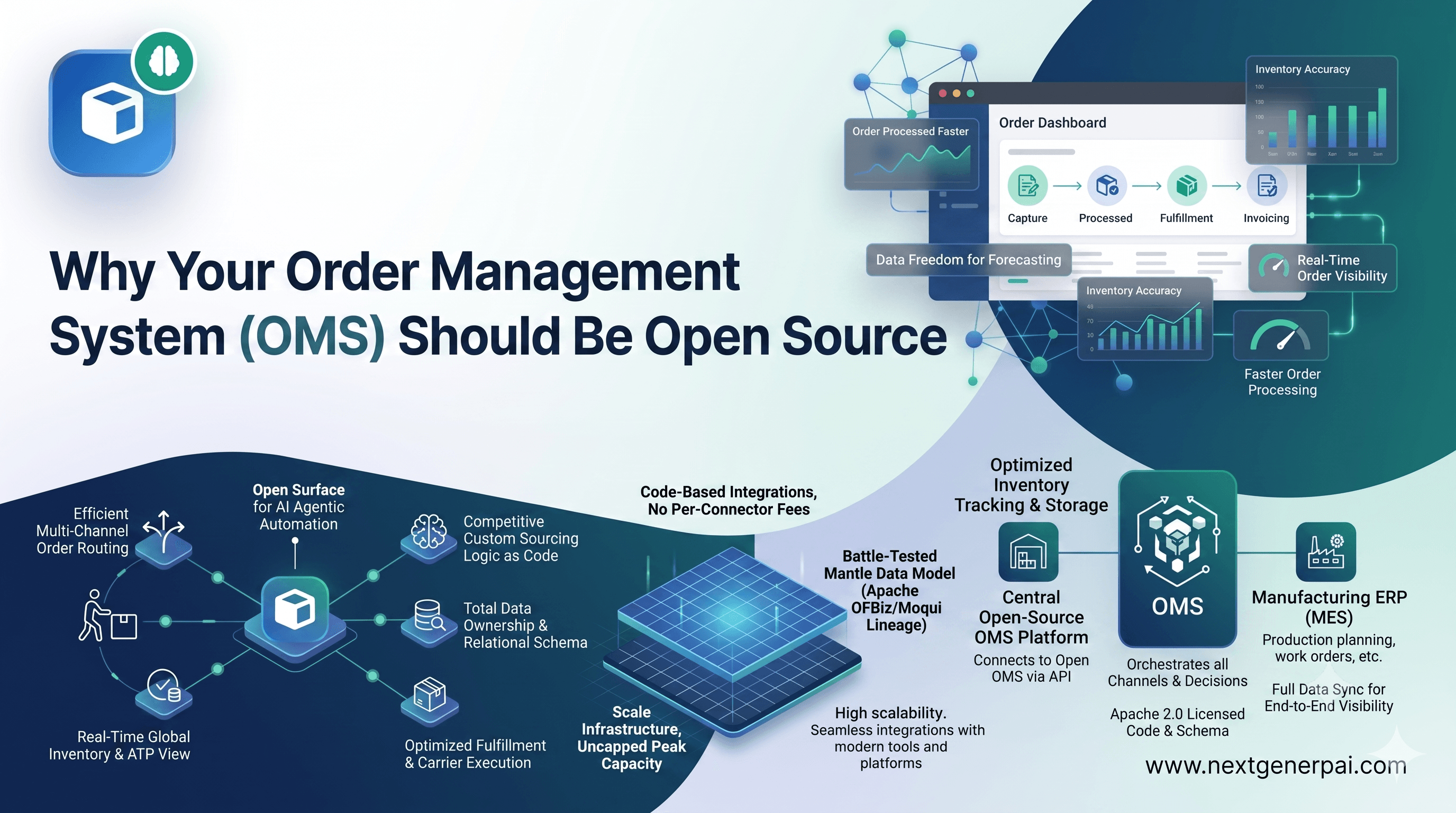
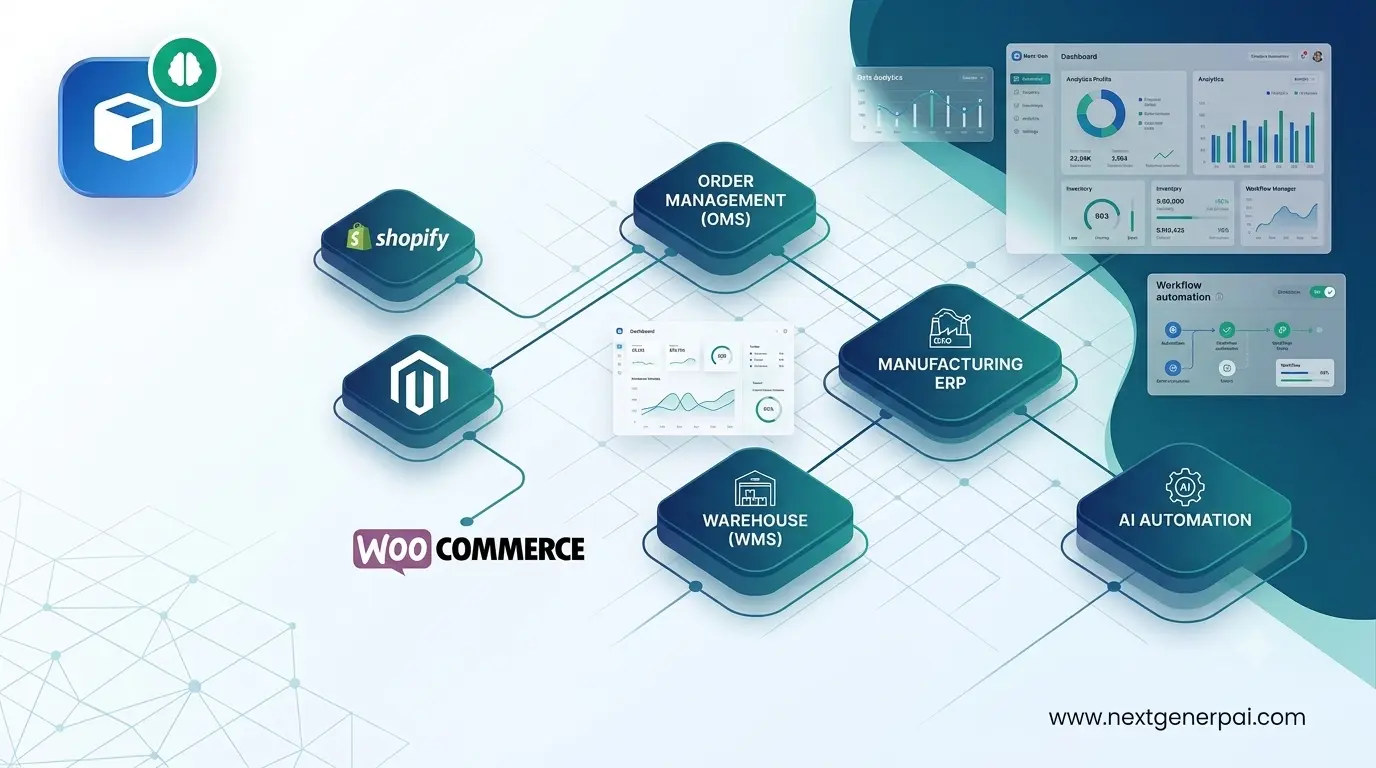
❓FAQ
Frequently AskedQuestions
Find answers to common questions about our solutions and services
🔍
A
Our manufacturing ERP supports all major modes: discrete, process, mixed-mode, make-to-order (MTO), make-to-stock (MTS), and engineer-to-order (ETO). The system handles hybrid environments with multiple simultaneous modes, giving manufacturers flexibility to manage complex production without separate software platforms.
A
Our MRP engine automatically calculates material needs using demand forecasts, current stock levels, supplier lead times, and production schedules. It processes multi-level BOMs and generates intelligent purchase and work order suggestions to maintain optimal inventory at every production stage.
A
Yes. Our shop floor control module provides live production monitoring via IoT sensors and operator terminals. You get real-time visibility into machine performance, WIP tracking, operator efficiency, and quality metrics — with instant alerts for bottlenecks or production issues.
A
Quality management includes automated inspection plans, non-conformance reporting (NCR), CAPA workflows, statistical quality control (SQC), supplier quality management, and complete lot and serial traceability across the production lifecycle. Every quality event is logged against the relevant production order.
A
Our ERP supports multi-level BOMs with version control, cost roll-up, where-used analysis, engineering change orders, alternate materials, and phantom BOMs. All revisions retain full history with cost tracking, making it straightforward to manage even complex, multi-level product structures.
A
Yes. We integrate with IoT sensors, PLCs, SCADA systems, and CAD/CAM software via standard protocols. Real-time machine data feeds OEE monitoring, predictive maintenance scheduling, and automated production reporting — eliminating manual data collection from the shop floor entirely.
A
Manufacturing analytics cover production efficiency, OEE, capacity utilisation, cost variance, scrap and rework tracking, labour efficiency, and inventory turnover. All data appears in real-time KPI dashboards with customisable reports exportable to Excel or distributed automatically via email.
A
Manufacturing ERP implementation typically takes 12–16 weeks, covering process mapping, system configuration, shop floor integration, data migration, testing, and user training. A phased rollout approach is used to minimise disruption to ongoing production operations.
❓
💡
Still Have Questions?
Our expert team is here to help you find the perfect solution for your business