Introduction: Why Traditional ERP Architecture Is Breaking Down
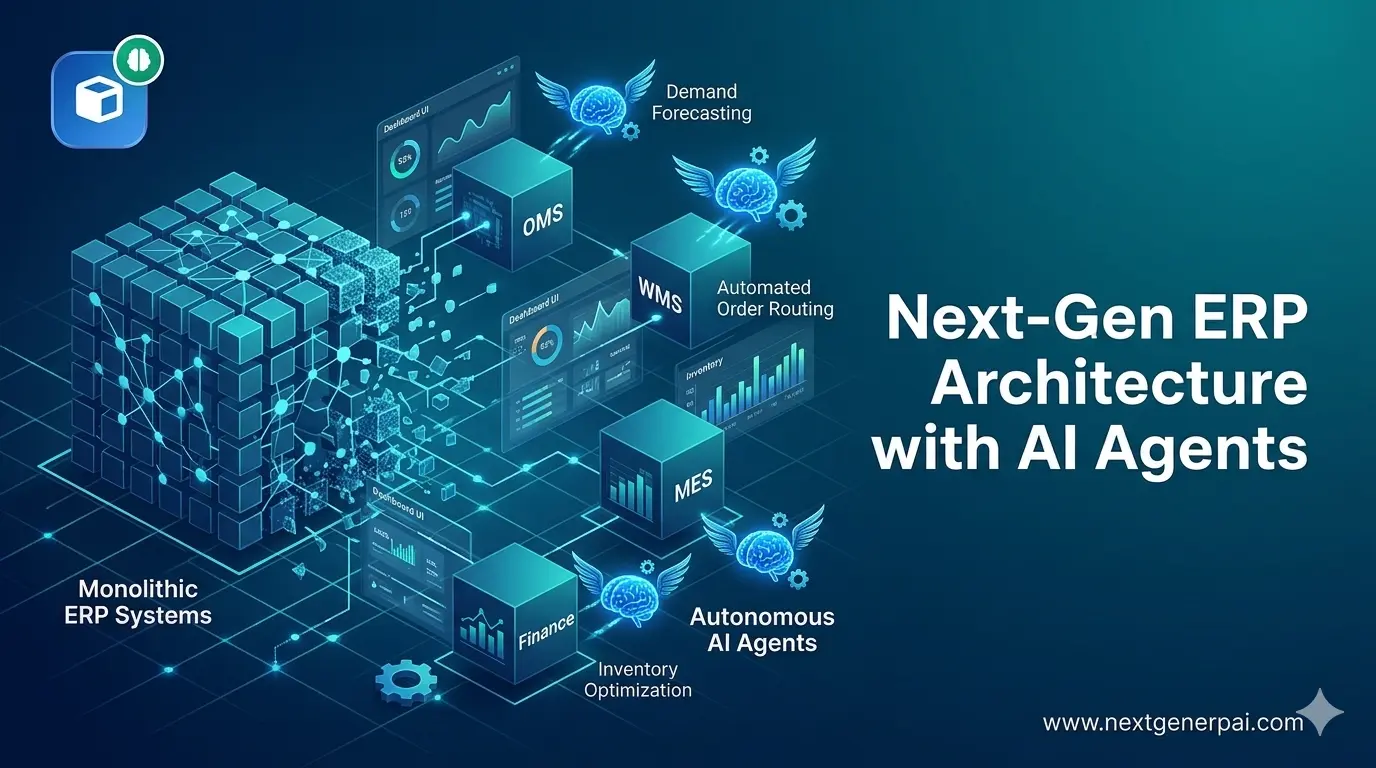
For decades, enterprises have relied on monolithic ERP systems to manage core business operations such as finance, inventory, manufacturing, and order processing. While these systems brought initial standardization, they now struggle to meet modern business demands like real-time decision-making, scalability, and automation.
Monolithic ERP architecture is rigid by design. Any change requires significant effort, upgrades are expensive, and integrations with modern platforms often become complex and fragile. As businesses expand across channels, geographies, and digital ecosystems, this rigidity becomes a bottleneck.
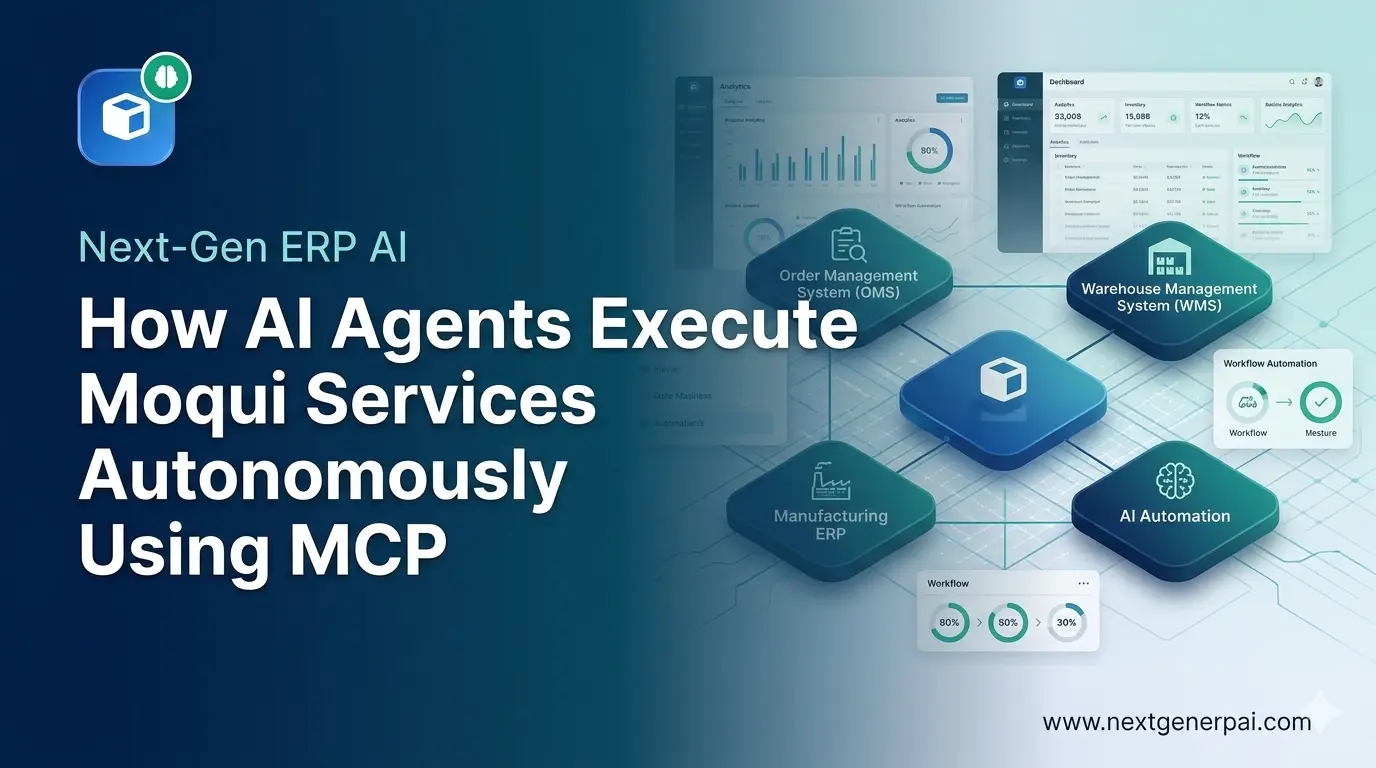
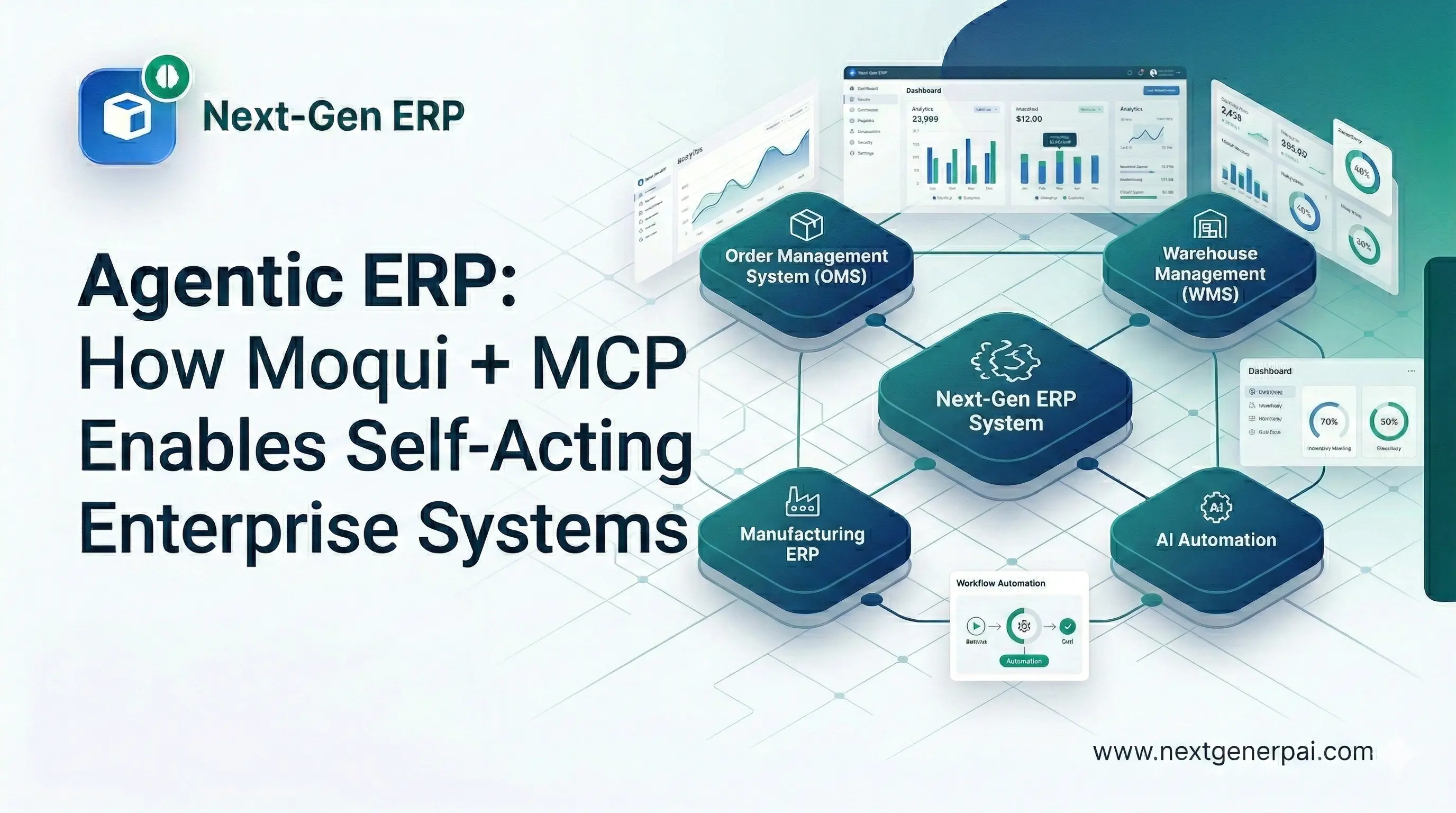
This is where Next-Gen ERP architecture emerges as a transformative approach. It shifts from tightly coupled systems to modular, intelligent, and AI-driven ecosystems powered by autonomous agents.
What Is Next-Gen ERP Architecture
Next-Gen ERP architecture is a modern, flexible, and intelligent system design that combines modular ERP components with AI-driven automation and open-source technologies to enable real-time, scalable, and adaptive enterprise operations.
Unlike traditional ERP systems, Next-Gen ERP focuses on:
- Modular services instead of monolithic blocks
- Real-time data flow across systems
- AI-driven decision-making and automation
- Open architecture to avoid vendor lock-in
As defined in the foundational concept of Next-Gen ERP, it integrates systems like OMS, WMS, and manufacturing with intelligent automation to help businesses operate faster and smarter .
Explore more about the foundation of this approach on Next-Gen ERP architecture.
From Monolithic ERP to Modular Architecture
The Limitations of Monolithic ERP
Traditional ERP systems are built as a single unified application where all modules are tightly coupled. While this simplifies initial deployment, it creates long-term challenges:
- Difficult to scale individual components
- High dependency between modules
- Slow innovation cycles
- Expensive customization and upgrades
For example, updating a warehouse workflow in a monolithic ERP may require changes across inventory, finance, and order modules, increasing risk and cost.
The Shift to Modular ERP Systems
Next-Gen ERP breaks this structure into independent but connected modules:
- Order Management Systems (OMS) handle order lifecycle and customer interactions
- Warehouse Management Systems (WMS) manage inventory and logistics
- Manufacturing Execution Systems (MES) control production operations
Each module operates independently but communicates seamlessly through APIs and shared data models.
Businesses adopting modern order management systems and AI-powered warehouse management systems can evolve faster without disrupting the entire ERP landscape.
The Role of Open-Source ERP in Modern Architecture
A key enabler of Next-Gen ERP is open-source technology.
Platforms like:
provide the flexibility needed to build scalable and customizable ERP solutions.
Why Open-Source Matters
- No vendor lock-in
- Full control over customization
- Lower total cost of ownership
- Faster innovation cycles
Organizations leveraging Moqui ERP development and consultancy can build highly tailored ERP systems that align with complex business workflows.
Additionally, companies transitioning from legacy systems benefit from ERP migration to open-source platforms, ensuring long-term scalability and flexibility.
AI-Driven ERP: The Shift Toward Intelligence
What Is AI-Driven ERP Automation
AI-driven ERP automation refers to the use of artificial intelligence to automate business processes, analyze data, and enable predictive decision-making within ERP systems.
This includes:
- Demand forecasting
- Inventory optimization
- Automated order routing
- Predictive maintenance in manufacturing
- Intelligent financial reporting
Instead of static workflows, ERP systems become dynamic and adaptive.
From Automation to Intelligence
Traditional ERP automation focuses on predefined rules. Next-Gen ERP goes beyond that by introducing:
- Machine learning models
- Real-time analytics
- Context-aware workflows
This enables ERP systems to not just execute tasks but also learn and improve over time.
Autonomous AI Agents: The Next Evolution
What Are Autonomous ERP Agents
Autonomous ERP agents are intelligent software entities that independently execute tasks, make decisions, and coordinate workflows across ERP modules without human intervention.
They act as digital operators within the ERP ecosystem.
How AI Agents Transform ERP Architecture
Instead of centralized processing, ERP systems become distributed intelligence networks powered by agents:
- An order agent validates and routes orders
- A warehouse agent optimizes picking and storage
- A manufacturing agent adjusts production schedules
- A finance agent monitors cash flow and anomalies
These agents communicate with each other in real time, enabling fully automated business operations.
Architecture of a Next-Gen ERP System
Core Layers of Next-Gen ERP Architecture
-
Data Layer Centralized yet accessible data models ensuring consistency across modules
-
Service Layer Modular services for OMS, WMS, MES, and finance
-
Integration Layer APIs and event-driven architecture connecting internal and external systems
-
AI Layer Machine learning models and autonomous agents driving intelligence
-
User Interface Layer Role-based dashboards and real-time insights
Event-Driven Architecture
A critical component of Next-Gen ERP is event-driven design:
- Systems react instantly to business events
- No dependency on batch processing
- Real-time synchronization across modules
This enables faster decision-making and operational agility.
Real-World Use Cases
1. E-commerce Order Fulfillment
An e-commerce company uses:
- OMS to capture orders
- WMS to manage inventory
- AI agents to optimize fulfillment
Result:
- Faster order processing
- Reduced fulfillment errors
- Improved customer satisfaction
2. Manufacturing Optimization
A manufacturing company uses MES integrated with AI agents:
- Predict machine downtime
- Adjust production schedules dynamically
- Optimize resource allocation
Result:
- Increased production efficiency
- Reduced waste
- Better utilization of resources
3. Multi-Warehouse Inventory Management
A retail business with multiple warehouses uses AI-driven WMS:
- Real-time inventory visibility
- Intelligent stock transfers
- Automated replenishment
Result:
- Lower inventory holding costs
- Improved stock availability
- Faster delivery timelines
Business Benefits of Next-Gen ERP Architecture
1. Scalability Without Complexity
Modular architecture allows businesses to scale individual components without impacting the entire system.
2. Faster Innovation
New features can be deployed independently, enabling continuous improvement.
3. Real-Time Decision Making
AI-driven insights provide actionable intelligence instantly.
4. Reduced Operational Costs
Automation reduces manual effort and improves efficiency.
5. Future-Proof Technology Stack
Open-source and modular design ensure long-term adaptability.
Companies investing in custom ERP development solutions can tailor this architecture to their specific industry needs.
The Future: Fully Autonomous Enterprise Systems
The future of ERP lies in fully autonomous enterprise systems where:
- AI agents manage end-to-end workflows
- Systems self-optimize based on data
- Human intervention is minimized
We are moving toward a world where ERP is not just a system of record but a system of action and intelligence.
Next-Gen ERP architecture will continue to evolve with:
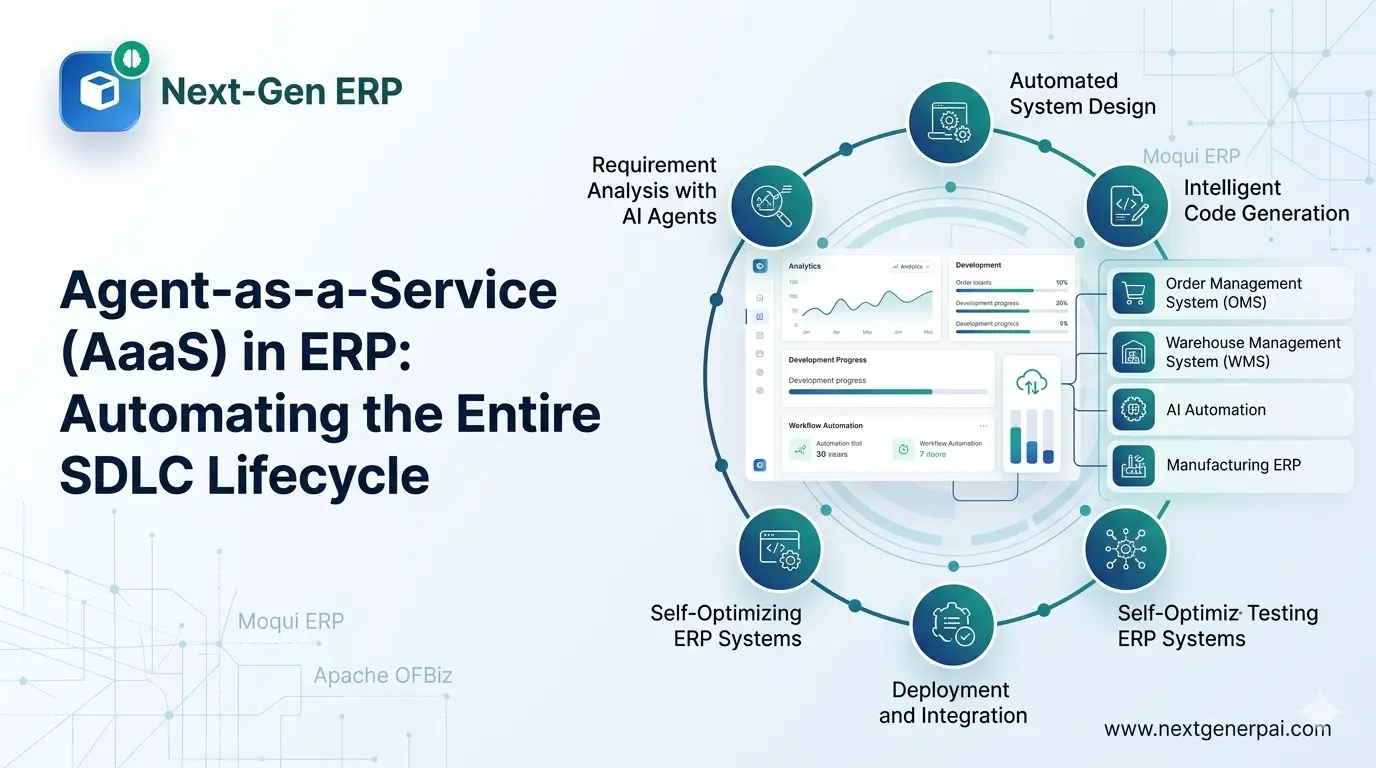
- Agent-as-a-Service (AaaS) models
- Hyper-automation across departments
- Real-time digital twins of business operations
Conclusion
The transition from monolithic ERP systems to autonomous AI-driven architecture is not just a technical upgrade. It is a strategic shift in how businesses operate.
Next-Gen ERP enables organizations to become:
- More agile
- More intelligent
- More scalable
By combining modular systems, open-source platforms, and AI-powered automation, businesses can build a future-ready ERP foundation that drives continuous growth and innovation.
To explore how this architecture can be implemented in your organization, visit Next-Gen ERP.