Introduction: The Shift from Reactive OMS to Intelligent Systems
Order Management Systems (OMS) are at the core of modern commerce, managing everything from order capture to fulfillment and invoicing. However, traditional OMS platforms are largely rule-based, reactive, and dependent on manual interventions. As businesses scale across multiple channels and geographies, these limitations become operational bottlenecks.
This is where AI Agents in Order Management Systems (OMS) are redefining the landscape. Instead of static workflows, businesses are now adopting intelligent, autonomous systems that can make decisions, optimize processes, and adapt in real time.
In a Next-Gen ERP architecture, OMS is no longer just a transaction processor. It becomes a dynamic decision engine powered by AI agents that continuously learn and optimize operations.
What Are AI Agents in Order Management Systems?
AI agents in OMS are autonomous software entities that can:
- Analyze real-time data
- Make decisions based on business goals
- Execute workflows without human intervention
- Continuously learn from outcomes
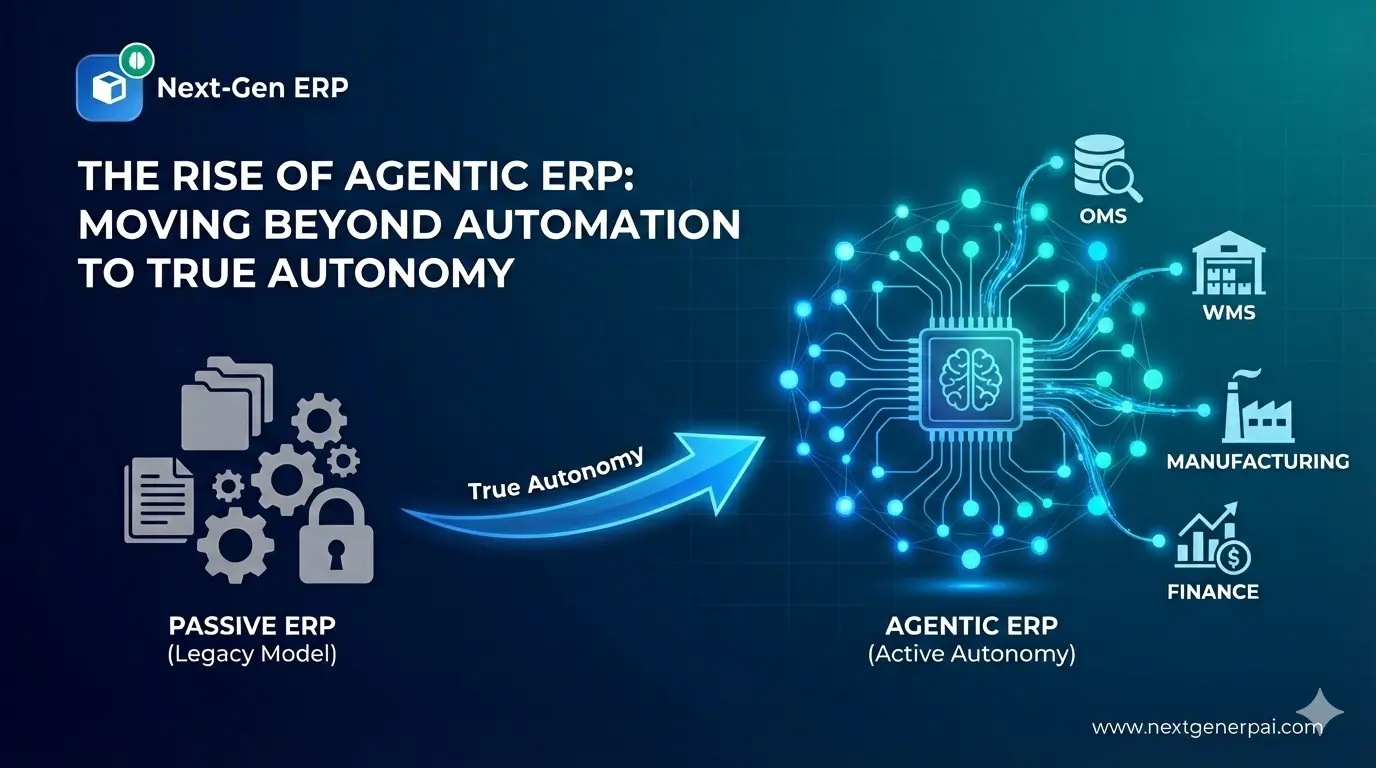
Unlike traditional automation, which follows predefined rules, AI agents operate with context awareness and adaptability.
Simple Definition
AI Agents in Order Management Systems are intelligent software components that automate, optimize, and execute order lifecycle processes using real-time data and machine learning.
From Traditional OMS to AI-Driven OMS
Limitations of Traditional OMS
- Static rule-based workflows
- Manual exception handling
- Delayed decision-making
- Limited scalability across channels
- Poor real-time visibility
Evolution to AI-Driven OMS
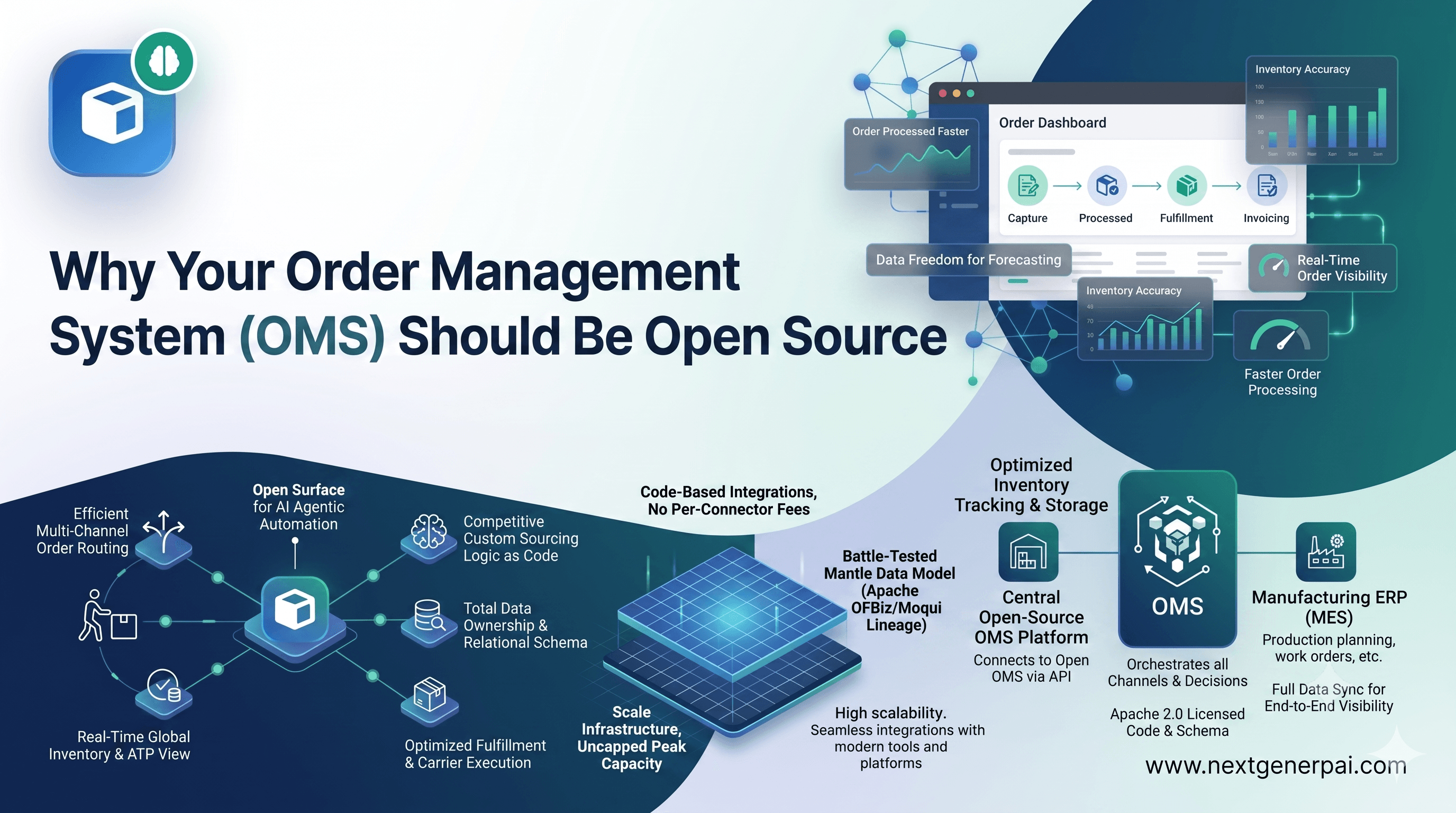
Modern OMS platforms powered by Next-Gen ERP architecture integrate:
- Real-time data processing
- Predictive analytics
- Autonomous decision-making
- Seamless integration with WMS and MES
This transformation enables businesses to move from order processing to order intelligence.
How AI Agents Work in Modern OMS Architecture
AI agents operate across multiple layers of the OMS ecosystem:
1. Order Capture Intelligence
AI agents validate incoming orders in real time by:
- Detecting anomalies or fraud patterns
- Recommending optimal pricing or discounts
- Identifying customer priority levels
2. Intelligent Order Routing
Instead of fixed routing rules, AI agents dynamically decide:
- Best warehouse for fulfillment
- Optimal shipping method
- Cost vs speed trade-offs
This is tightly integrated with AI-powered warehouse management systems to ensure real-time inventory visibility.
3. Autonomous Exception Handling
Traditional OMS requires manual intervention for:
- Stockouts
- Delayed shipments
- Payment failures
AI agents automatically:
- Re-route orders
- Split shipments
- Trigger alternative fulfillment strategies
4. Continuous Learning Loop
AI agents improve over time by:
- Learning from fulfillment outcomes
- Adjusting decision parameters
- Optimizing future workflows
Key Technologies Behind AI Agents in OMS
Machine Learning Models
Used for:
- Demand forecasting
- Customer behavior prediction
- Inventory optimization
Event-Driven Architecture
AI agents rely on real-time events such as:
- Order placement
- Inventory updates
- Shipment status changes
Open-Source ERP Frameworks
Platforms like:
enable flexible implementation of AI-driven OMS solutions without vendor lock-in.
Businesses leveraging Moqui ERP development and consultancy can build highly adaptive OMS architectures tailored to their workflows.
Real-World Use Cases of AI Agents in OMS
E-commerce: Dynamic Order Fulfillment
An online retailer uses AI agents to:
- Route orders to the nearest warehouse
- Optimize delivery timelines
- Reduce shipping costs by 20%
Manufacturing: Smart Order Promising
Manufacturers integrate OMS with MES to:
- Check production capacity in real time
- Commit realistic delivery dates
- Avoid over-promising
Retail: Omnichannel Order Orchestration
AI agents enable:
- Buy Online, Pick Up In Store (BOPIS)
- Ship-from-store optimization
- Real-time inventory synchronization
This is powered by modern order management systems that integrate OMS, WMS, and POS systems.
Healthcare: Critical Order Prioritization
Hospitals use AI-driven OMS to:
- Prioritize life-saving supplies
- Automatically reroute urgent orders
- Maintain compliance and traceability
Business Benefits of AI-Driven OMS
1. Faster Order Processing
AI agents eliminate manual bottlenecks, enabling:
- Real-time order validation
- Instant routing decisions
2. Improved Customer Experience
- Accurate delivery timelines
- Fewer order errors
- Faster fulfillment
3. Cost Optimization
AI agents reduce:
- Shipping costs
- Inventory holding costs
- Operational inefficiencies
4. Scalability Across Channels
AI-driven OMS supports:
- Multi-channel commerce
- Global operations
- High transaction volumes
5. Real-Time Decision Making
Businesses gain:
- Live order visibility
- Predictive insights
- Proactive issue resolution
Organizations adopting ERP migration to open-source platforms can unlock these benefits without the constraints of legacy systems.
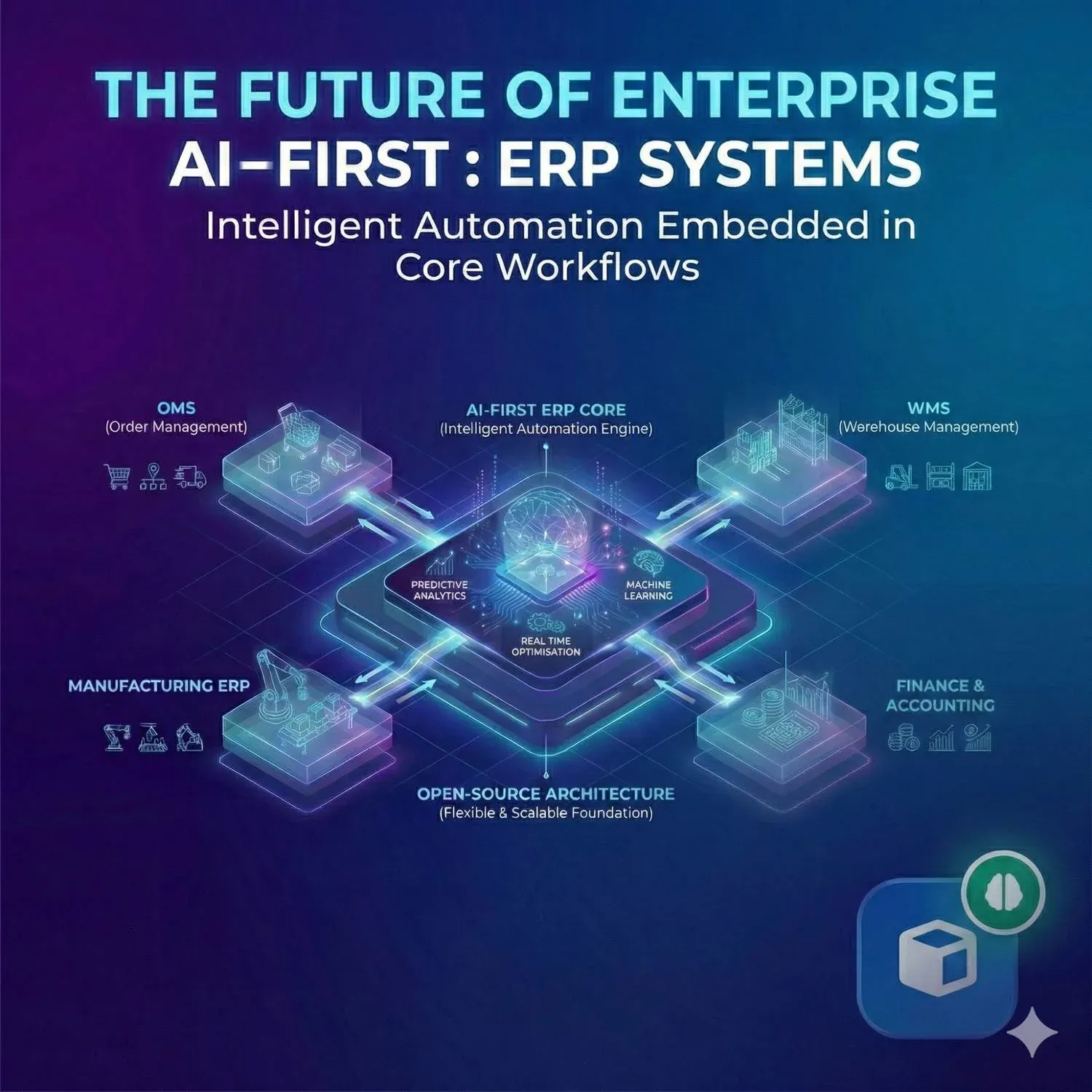
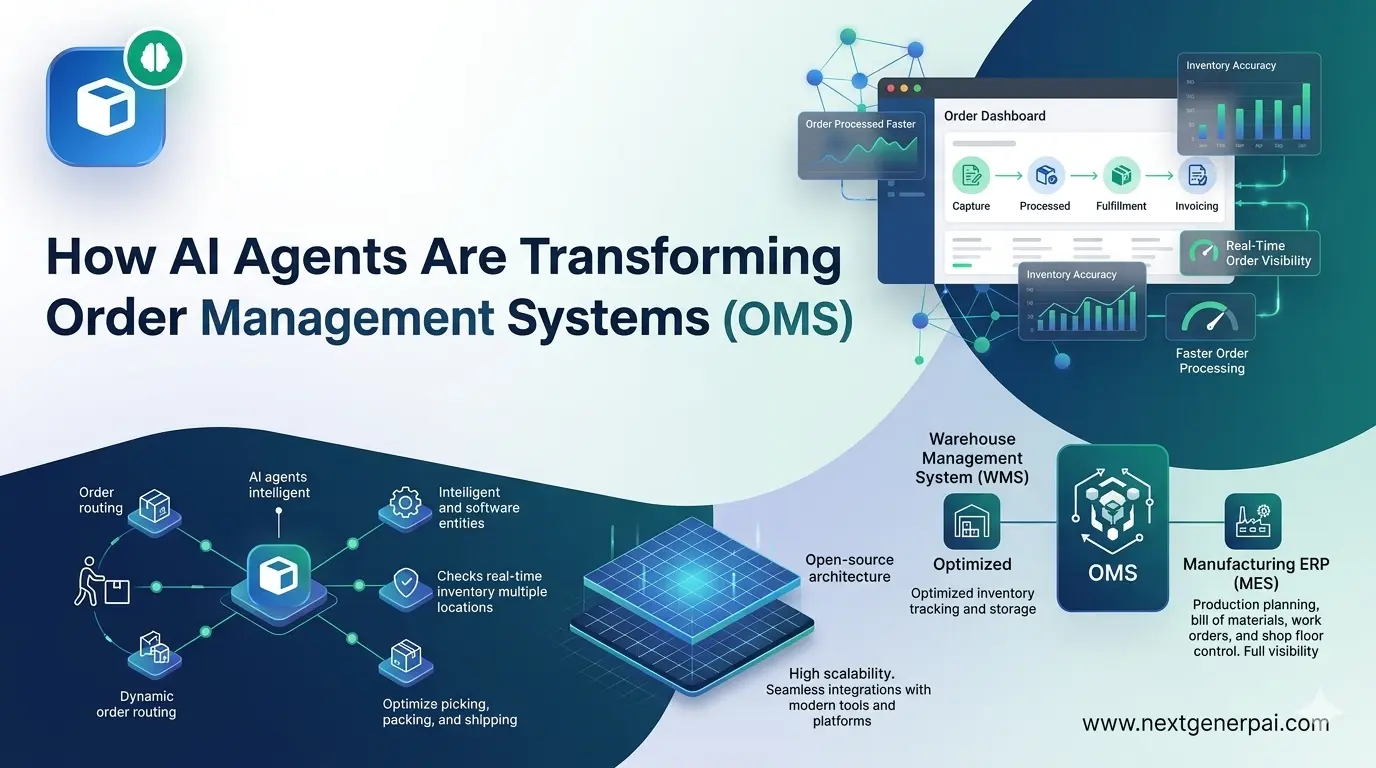
OMS, WMS, and MES: The AI-Powered Connection
In a Next-Gen ERP ecosystem, AI agents connect:
- OMS for order orchestration
- WMS for inventory and fulfillment
- MES for production execution
How They Work Together
- OMS receives the order
- AI agent checks inventory via WMS
- If needed, MES schedules production
- AI agent finalizes fulfillment strategy
This unified approach creates a closed-loop intelligent system.
Businesses leveraging custom ERP development solutions can design this integration based on their unique workflows.
AI Agents vs Traditional Automation in OMS
| Feature | Traditional Automation | AI Agents |
|---|---|---|
| Decision Making | Rule-based | Data-driven |
| Adaptability | Low | High |
| Learning Capability | None | Continuous |
| Exception Handling | Manual | Autonomous |
| Scalability | Limited | High |
Future of Order Management Systems with AI Agents
The future of OMS lies in fully autonomous systems where:
- Orders are processed without human intervention
- AI agents negotiate fulfillment strategies
- Systems self-optimize in real time
Emerging Trends
- Agent-as-a-Service (AaaS) for OMS
- Autonomous supply chain networks
- Predictive fulfillment ecosystems
- AI-driven customer personalization
As businesses move toward AI-powered ERP automation, OMS becomes a strategic advantage rather than just an operational tool.
Why Businesses Are Moving Toward Next-Gen ERP OMS
Modern enterprises are choosing Next-Gen ERP platforms because they provide:
- Open-source flexibility
- AI-driven automation
- Modular architecture
- Seamless integrations
This aligns with the core philosophy of flexibility, intelligence, and scalability described in modern ERP systems.
Conclusion: From Order Processing to Order Intelligence
AI agents are transforming Order Management Systems from static, rule-based platforms into intelligent, autonomous systems. Businesses that adopt AI-driven OMS gain faster operations, better customer experiences, and the ability to scale without complexity.
The shift is clear. OMS is no longer just about managing orders. It is about making smarter decisions in real time.
Companies investing in Next-Gen ERP architecture are positioning themselves for a future where operations are not just automated but truly intelligent.