AI-First ERP Systems: Why Intelligent Automation Is the Future of Enterprise Software
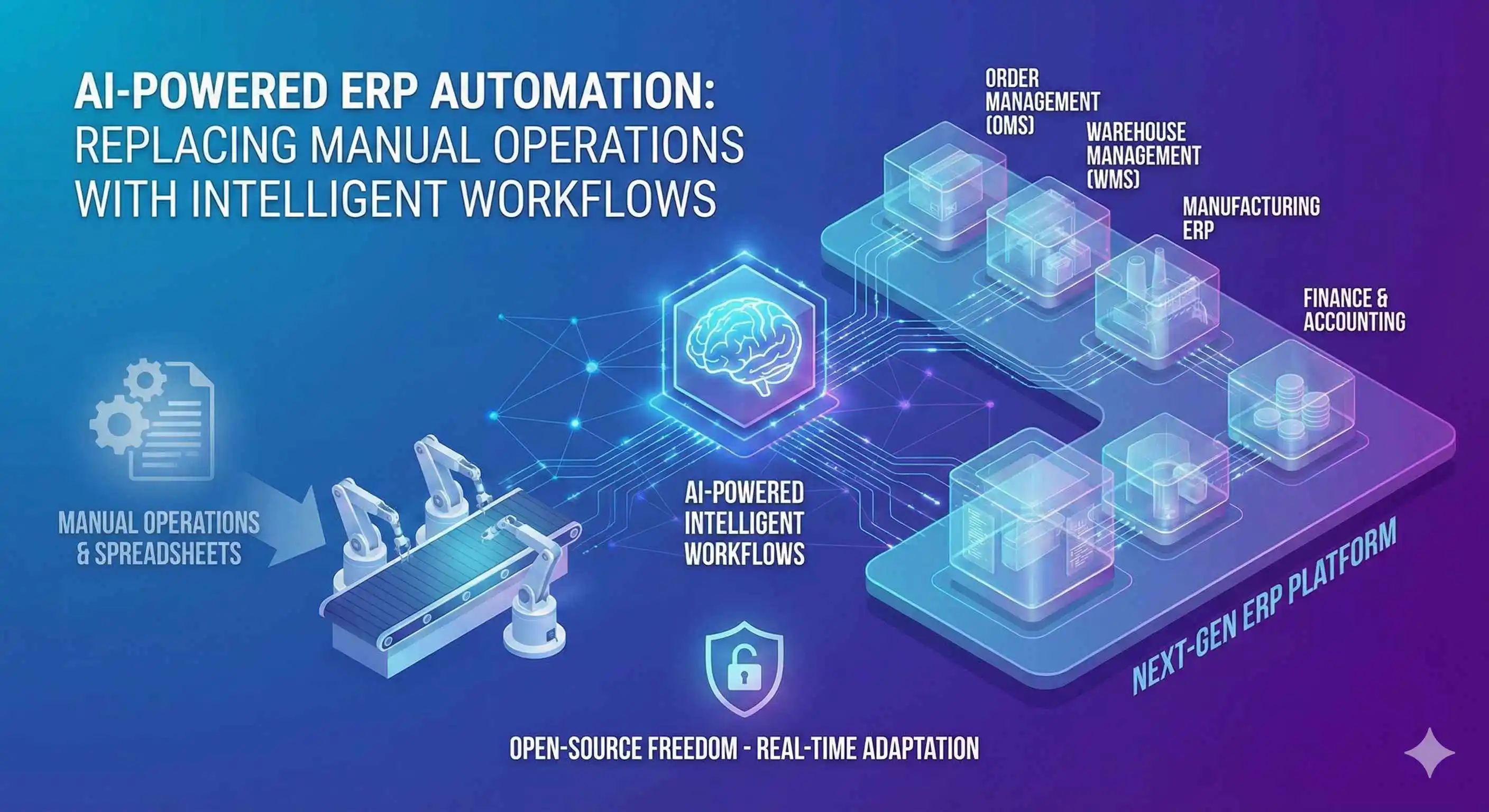
Enterprise software is no longer just about recording transactions. Modern organizations expect their systems to guide decisions, automate repetitive work, and respond to change in real time. This shift is driving the rise of AI-First ERP Systems, where intelligent automation is built into the core architecture instead of being added as an external layer. For businesses aiming to scale efficiently, reduce operational friction, and gain predictive visibility, AI-powered ERP software is quickly becoming the foundation of enterprise strategy.
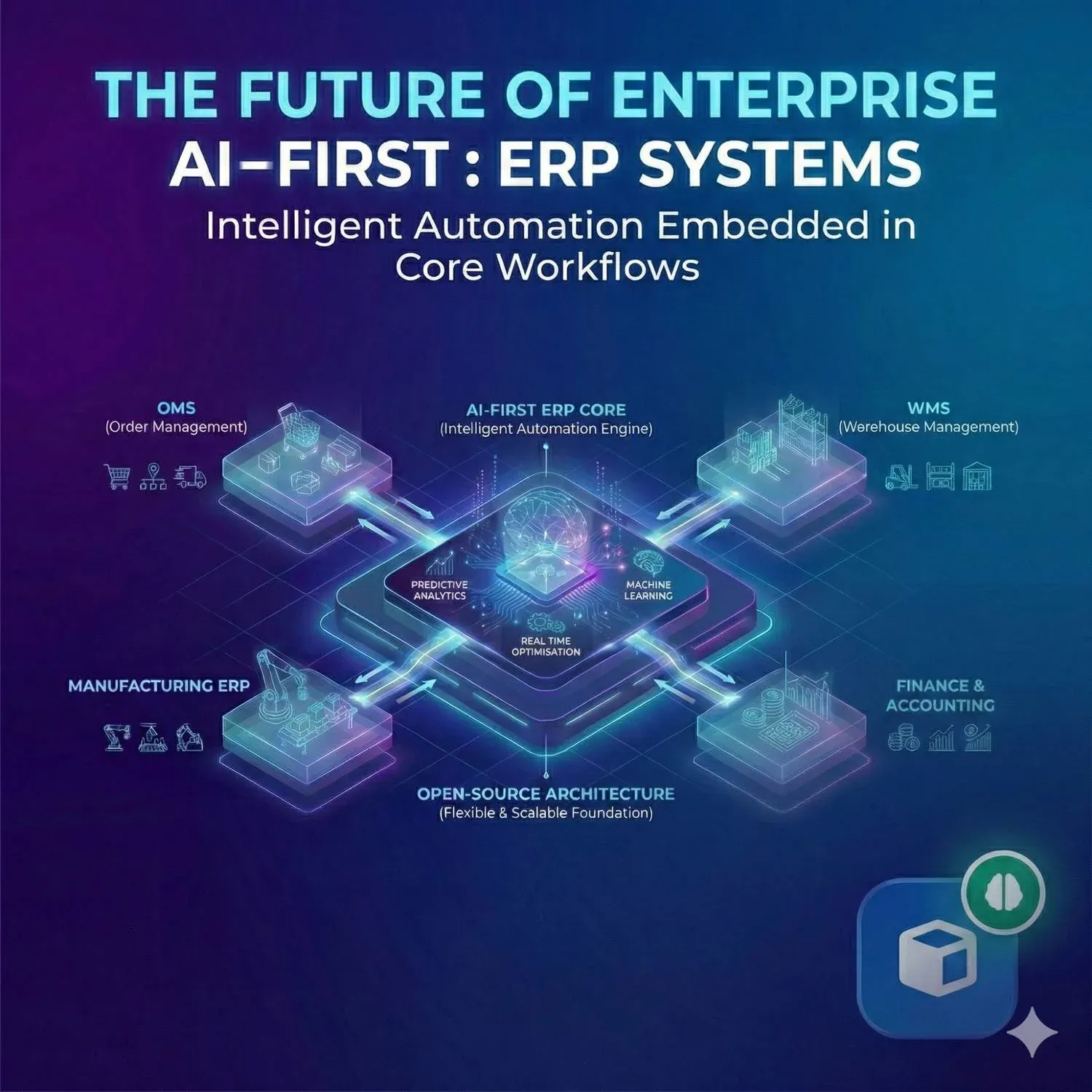
An AI-First ERP System embeds artificial intelligence directly into core business workflows such as Order Management, Warehouse Management, Manufacturing, and Finance. Rather than relying on static rules and manual approvals, the system continuously analyzes operational data, identifies patterns, and automates actions. This approach transforms ERP from a reporting tool into a decision-support engine.
What Is an AI-First ERP System?
An AI-First ERP System is enterprise software designed with intelligent ERP automation at its core. AI models operate within the ERP framework to automate processes, predict outcomes, and optimize workflows across departments.
In practical terms, this means: • Orders are automatically prioritized based on fulfillment constraints and profitability • Inventory is optimized using demand forecasting models • Production schedules adapt to real-time shop floor conditions • Financial anomalies are detected instantly without manual audits
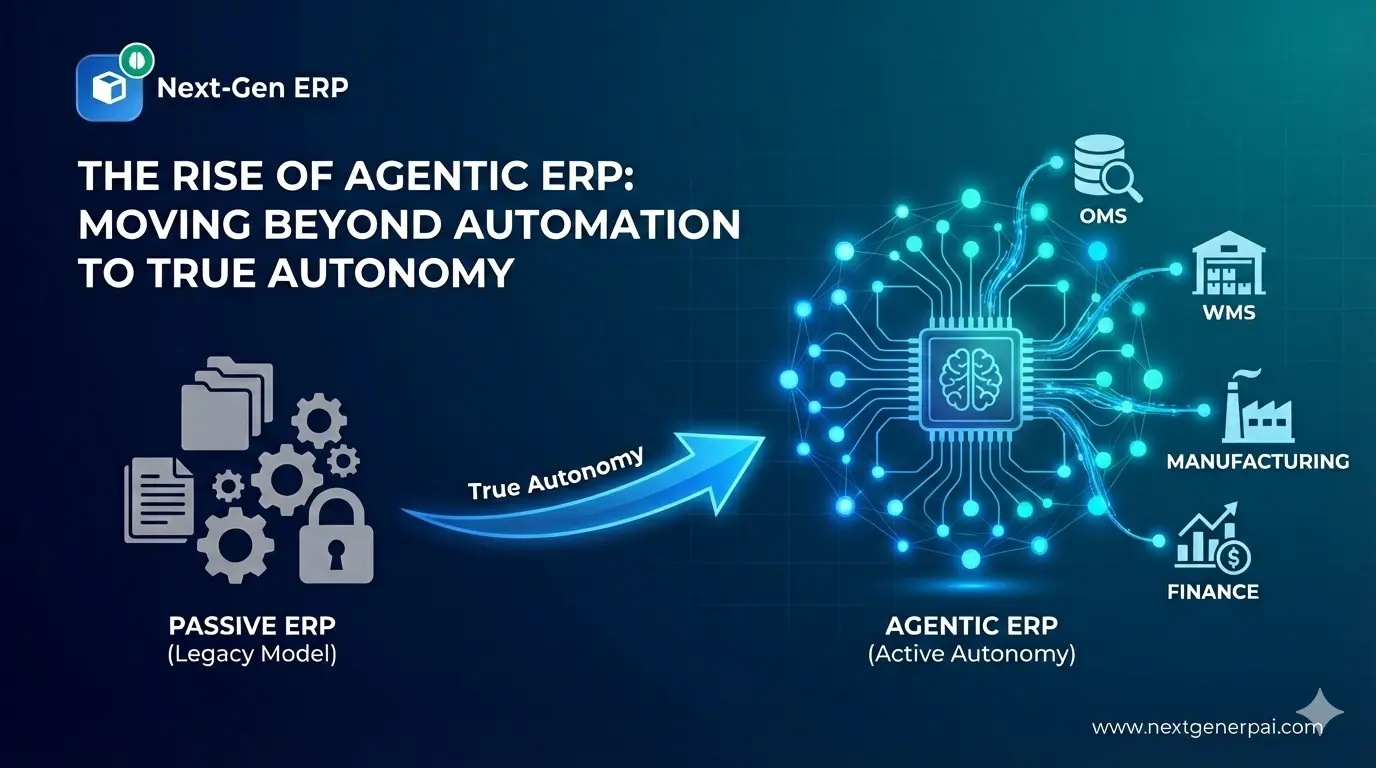
Unlike traditional ERP platforms that depend heavily on fixed workflows, next-generation ERP systems continuously learn and improve using live business data.
How AI-First ERP Systems Work
AI-First ERP Systems combine unified data architecture, machine learning models, and ERP workflow automation.
First, unified enterprise data ensures that Order Management, Warehouse Management, Manufacturing, and Finance operate within a single open-source ERP platform. AI engines can then analyze cross-functional data rather than isolated transactions.
Second, machine learning algorithms evaluate historical and real-time data to identify patterns. For example, delayed supplier performance can automatically adjust procurement planning. Seasonal demand patterns can refine inventory levels across warehouses.
Third, intelligent automation executes decisions through embedded workflows. Instead of generating reports for manual action, the system triggers automated responses such as replenishment orders, production rescheduling, or risk alerts.
This integrated intelligence allows AI-powered ERP software to move from passive monitoring to proactive optimization.
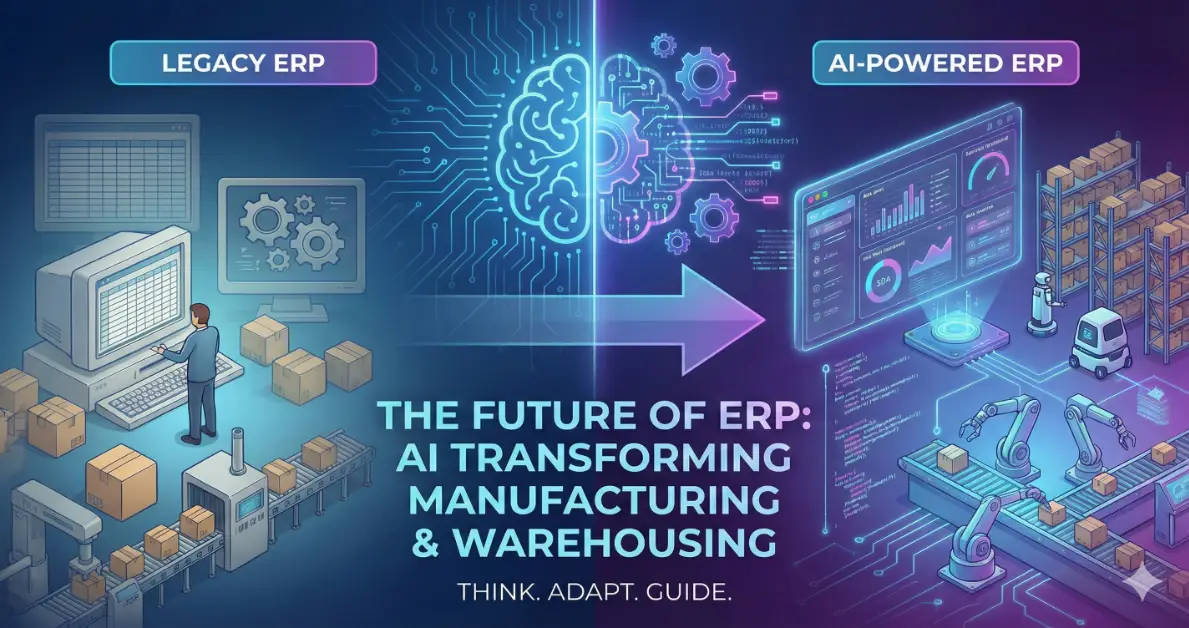
AI-First ERP vs Traditional ERP vs Add-On AI
Many organizations attempt to add AI tools on top of legacy ERP systems. While this may provide limited insights, it rarely delivers full automation.
Traditional ERP Systems These systems focus on transaction processing and compliance. They require manual data interpretation and often depend on batch reporting.
ERP with Add-On AI Tools External AI tools may provide dashboards or forecasting modules, but integration gaps limit automation. Data silos reduce effectiveness.
AI-First ERP Systems AI is embedded directly into workflows. Automation, predictive analytics, and decision logic operate within the same system. There are no disconnected layers.
This architectural difference is critical. True AI-First ERP Systems are designed for adaptability, not patchwork integration.
The Technology Behind Intelligent ERP Automation
Several AI technologies power modern ERP workflow automation:
Predictive Analytics Uses historical data to forecast demand, cash flow, and production requirements.
Machine Learning Learns from operational behavior to improve scheduling, procurement, and inventory accuracy.
Anomaly Detection Identifies irregular transactions, supply chain disruptions, or compliance risks in real time.
Natural Language Processing Enables conversational reporting and intelligent data retrieval for executives.
When deployed within an open-source ERP platform such as Moqui, these technologies become scalable and customizable without vendor lock-in.
Industry Applications of AI-First ERP Systems
Manufacturing AI-driven production planning optimizes work orders and machine utilization. Predictive maintenance reduces downtime and improves throughput.
Retail and E-commerce Demand forecasting aligns inventory with customer buying patterns. Automated order routing improves fulfillment speed and reduces shipping costs.
Healthcare Intelligent scheduling enhances resource allocation and compliance monitoring.
Financial Services AI-powered risk analysis and anomaly detection strengthen financial controls and reporting accuracy.
Across industries, AI-First ERP Systems shift operations from reactive management to proactive optimization.
Measuring the Business Impact
The value of intelligent ERP automation can be quantified. Organizations implementing AI-powered ERP software often report:
• Reduced manual processing time by 30–50 percent • Improved inventory accuracy above 95 percent • Faster order fulfillment cycles • Lower operational costs through predictive planning • Improved decision speed due to real-time visibility
These measurable gains demonstrate why AI-First ERP Systems are not experimental technology. They are a strategic investment in operational efficiency.
Why Open Architecture Matters
AI innovation requires flexibility. Closed ERP environments often restrict integrations and customization. An open-source ERP platform provides the transparency and extensibility needed for AI-driven workflows.
With open architecture, businesses can: • Integrate custom AI models • Connect third-party analytics engines • Adapt workflows as business processes evolve • Scale infrastructure without excessive licensing costs
Next-Gen ERP follows this approach by combining open-source flexibility with intelligent automation across OMS, WMS, and Manufacturing ERP. This ensures long-term scalability and freedom from vendor lock-in.
Implementation Roadmap for AI-First ERP
Transitioning to AI-First ERP Systems requires strategic planning rather than simple software replacement.
Step 1: Data Consolidation Unify operational data across departments.
Step 2: Workflow Mapping Identify manual processes suitable for intelligent automation.
Step 3: AI Model Integration Embed predictive and automation models directly within ERP workflows.
Step 4: Continuous Optimization Monitor performance and refine algorithms as business conditions evolve.
With the right foundation, implementation becomes an evolution rather than disruption.
The Future of Enterprise Software
Enterprise systems are moving toward autonomous operations where AI continuously optimizes workflows. AI-First ERP Systems represent this evolution. They combine automation, predictive intelligence, and open architecture into a unified operational platform.
Businesses that embrace next-generation ERP strategies gain faster decision-making, improved operational efficiency, and scalable infrastructure that supports growth. Those relying solely on traditional ERP systems risk falling behind as market complexity increases.
Intelligent automation is not an optional upgrade. It is the future of enterprise software. Organizations ready to modernize their operations should look beyond incremental enhancements and invest in AI-First ERP Systems designed for adaptability and long-term innovation.
Next-Gen ERP embodies this vision by integrating AI-powered ERP software with Order Management, Warehouse Management, and Manufacturing capabilities into a cohesive, open, and scalable platform. The result is a smarter enterprise foundation built for sustainable growth and digital transformation.