Enterprise systems are entering a new phase where automation is no longer limited to scripts and predefined workflows. The next generation of ERP platforms is moving toward intelligent systems capable of making decisions, triggering actions, and coordinating operations automatically. This is where AI agents begin to play a critical role.
Moqui provides a powerful foundation for this transformation. Its service-oriented architecture, event-driven design, and flexible workflow engine make it well suited for building ERP platforms that are ready for intelligent agents. When combined with Moqui MCP and a modern Next-Gen ERP architecture, organizations can create autonomous ERP environments where business processes continuously adapt and optimize themselves.
This shift represents a major step toward truly intelligent enterprise operations.
What Is an AI-Agent-Ready ERP System
An AI-agent-ready ERP system is an enterprise platform designed so intelligent software agents can monitor operations, analyze data, and execute business processes automatically.
Unlike traditional ERP automation, which relies on fixed rules and scheduled workflows, AI agents can interpret context and make decisions dynamically.
In an ERP environment, AI agents can:
- Monitor operational data across multiple systems
- Detect events such as demand spikes or supply delays
- Trigger workflows automatically
- Coordinate actions across departments
This allows ERP platforms to move from passive systems of record to active systems that support operational decision-making.
Modern ERP platforms such as those built with Moqui enable this capability through modular architecture and open integration capabilities.
Why Moqui Is an Ideal Framework for AI-Driven ERP
Moqui was designed as a flexible enterprise application framework capable of handling complex business workflows and integrations. This architecture naturally aligns with the requirements of AI-driven ERP systems.
Organizations that build ERP solutions on Moqui gain several architectural advantages.
Service-Oriented Architecture
Moqui exposes business functionality through structured services. AI agents can interact with these services to perform tasks such as:
- Creating or updating orders
- Adjusting inventory levels
- Triggering procurement workflows
- Updating production schedules
This service layer provides a clean interface for autonomous agents to interact with enterprise processes.
Businesses that want to build advanced ERP capabilities on this framework often rely on professional implementation support through Moqui ERP development and consultancy.
Flexible Workflow Engine
The workflow engine in Moqui enables dynamic orchestration of enterprise processes. AI agents can initiate workflows, modify decision paths, and respond to operational events.
This flexibility allows businesses to automate complex cross-department workflows without rigid system constraints.
Event-Driven System Architecture
Moqui is designed to react to real-time events. Inventory changes, order status updates, or production exceptions can trigger automated processes instantly.
AI agents can monitor these events and respond in real time, improving operational responsiveness.
Open-Source Extensibility
Because Moqui is open-source, businesses can integrate new technologies without vendor limitations. This is particularly important when introducing advanced AI capabilities into ERP platforms.
The underlying framework can be explored on the official Moqui website.
What Is Moqui MCP and Why It Matters for AI Agents
Moqui MCP plays a key role in enabling structured communication between AI agents and enterprise workflows.
MCP acts as a control layer that allows AI systems to interact with ERP services safely and efficiently.
Through MCP, AI agents can:
- Discover available ERP services
- Access structured workflow definitions
- Trigger operational processes
- Retrieve enterprise data in a controlled way
This architecture ensures that intelligent agents can interact with the ERP system without directly modifying core platform logic.
The result is a stable and scalable environment for AI-driven enterprise automation.
Autonomous ERP Workflows: The Next Step in Enterprise Automation
Autonomous ERP workflows represent the evolution of traditional workflow automation.
Instead of relying only on predefined rules, these workflows adapt dynamically based on operational data and business context.
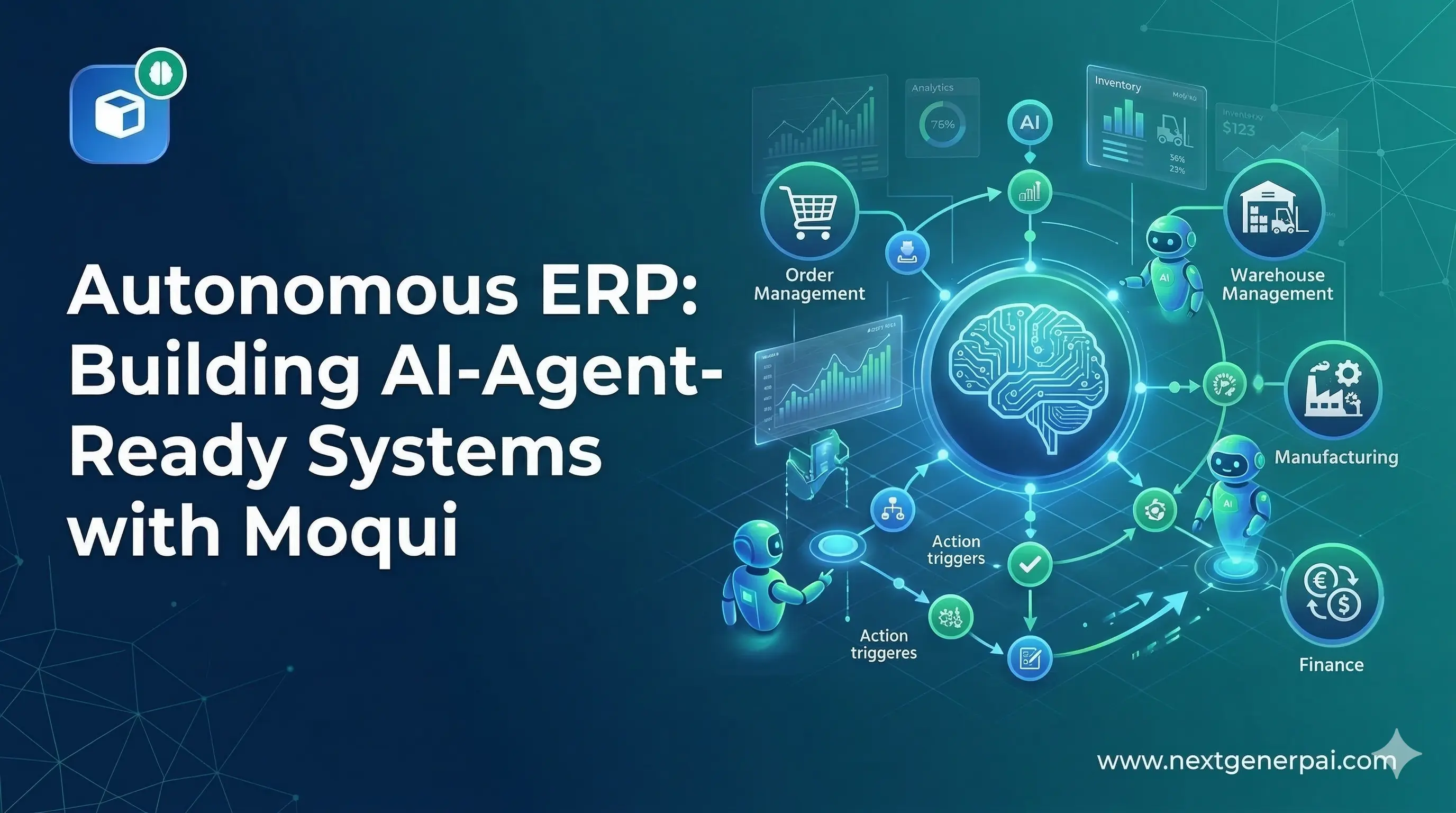
AI agents continuously monitor enterprise operations and trigger actions when specific conditions occur.
For example, in a manufacturing organization:
- Demand increases for a product
- The ERP system detects inventory shortages
- An AI agent triggers procurement workflows
- Production schedules are automatically adjusted
- Logistics teams receive updated fulfillment timelines
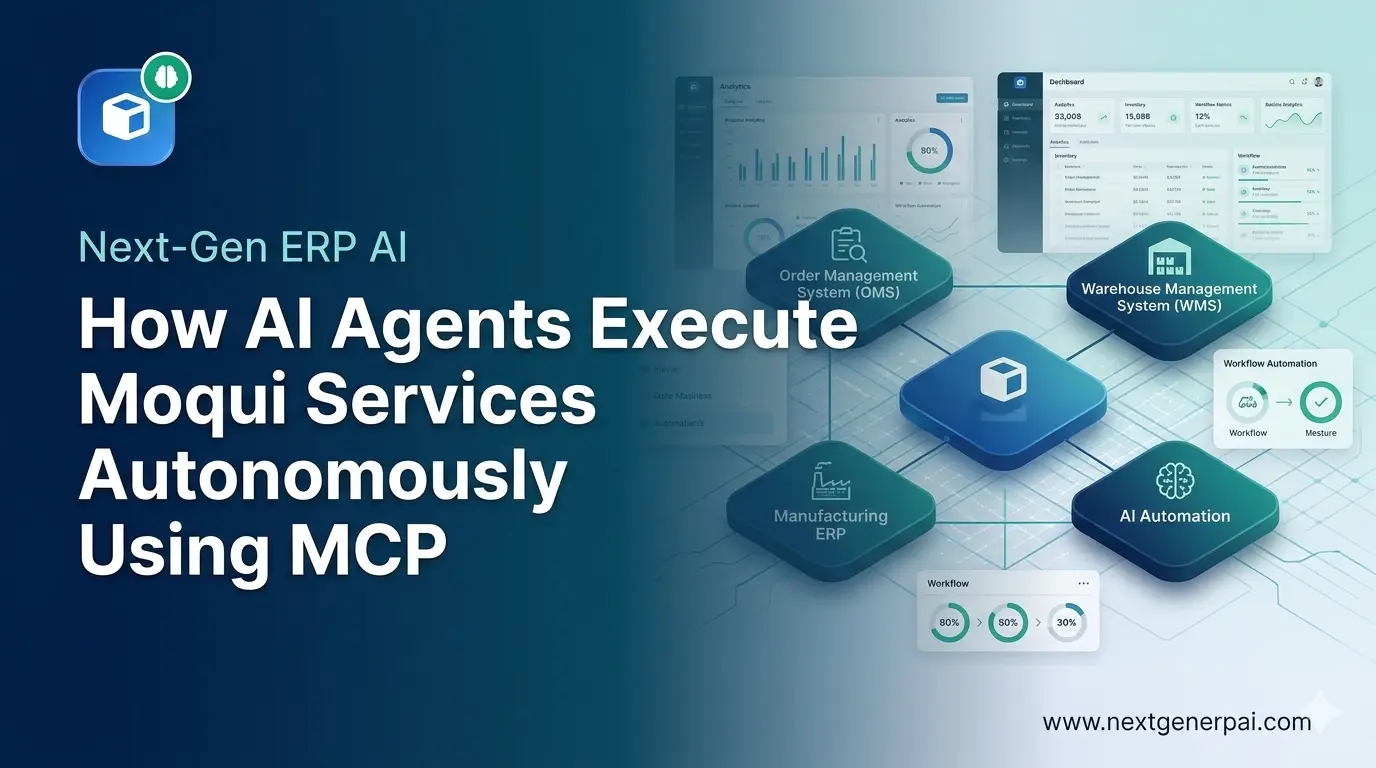
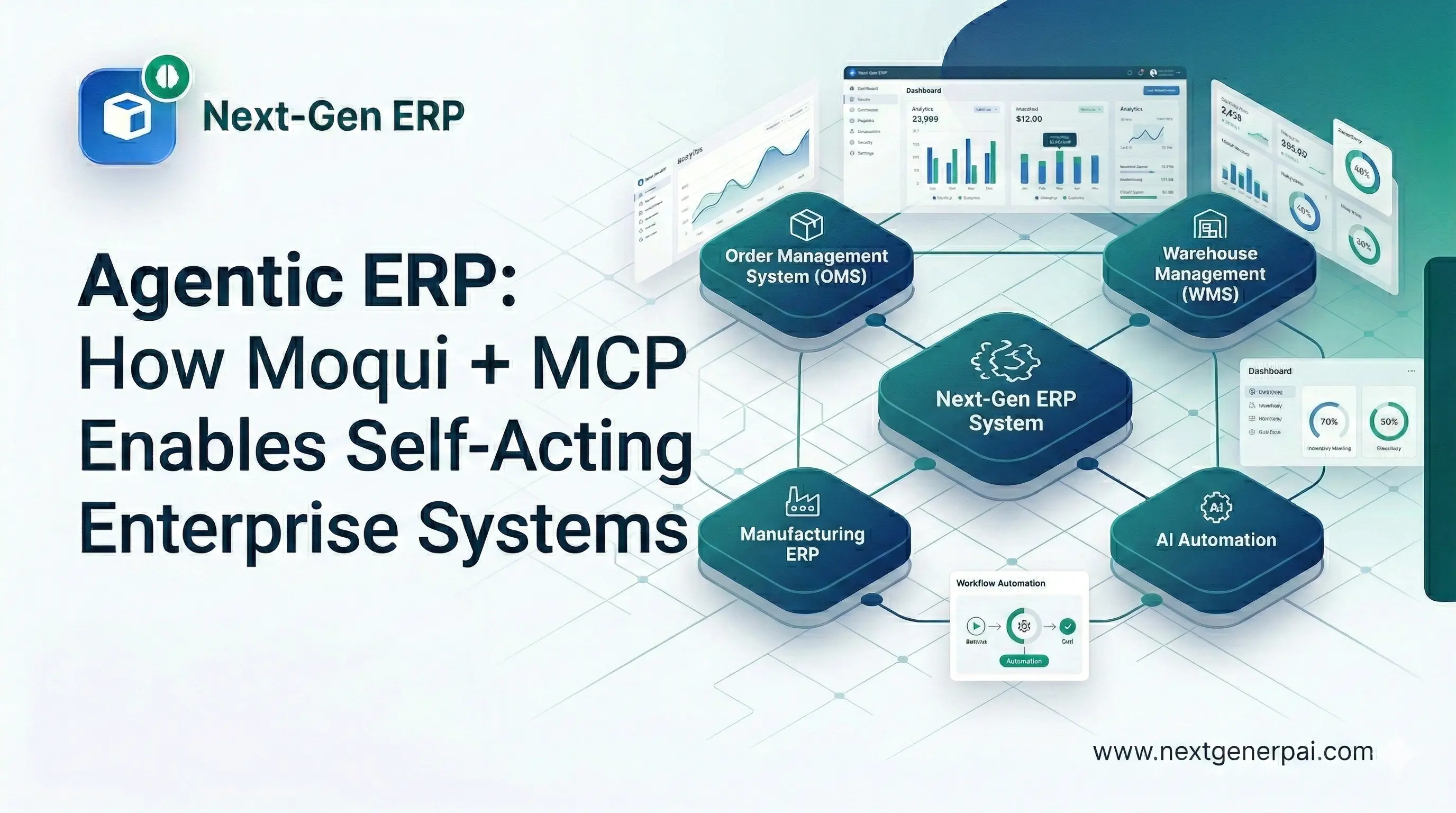
Modern ERP platforms make this possible by combining operational modules such as Order Management Systems and Warehouse Management Systems with intelligent automation layers.
Organizations moving away from rigid legacy systems often achieve this flexibility through ERP migration to open-source platforms.
Next-Gen ERP Architecture Designed for Intelligence
Traditional ERP platforms were designed primarily to store data and manage transactions.
Next-Gen ERP systems are designed to support continuous operational intelligence.
A modern ERP architecture typically includes four core layers.
Operational Layer
This layer contains core business systems such as order management, warehouse management, manufacturing operations, and finance.
Service and Workflow Layer
Platforms such as Moqui manage workflows, service orchestration, and business logic across the organization.
AI and Automation Layer
AI agents analyze enterprise data, identify patterns, and trigger automated workflows.
Integration Layer
Open APIs connect ERP systems with e-commerce platforms, logistics providers, analytics tools, and external enterprise systems.
This layered approach allows AI capabilities to evolve without destabilizing core business operations.
Real Business Applications of AI-Agent ERP
AI-agent-ready ERP platforms can support intelligent automation across many industries.
Manufacturing
AI agents can monitor production performance, detect anomalies, and automatically adjust manufacturing schedules.
Retail and E-commerce
Autonomous agents can balance inventory across warehouses, optimize fulfillment processes, and improve order delivery performance.
Healthcare Operations
Healthcare organizations can automate supply chain coordination and compliance reporting.
Financial Services
AI-driven ERP systems can automate reconciliation processes and detect anomalies in financial data.
These use cases demonstrate how ERP systems are evolving from operational tools into intelligent business platforms.
Organizations exploring other open-source ERP ecosystems often evaluate technologies such as the Apache OFBiz framework alongside Moqui.
The Strategic Advantage of AI-Agent-Ready ERP Platforms
Organizations that adopt AI-ready ERP frameworks gain significant operational advantages.
These systems can:
- Respond faster to operational events
- Reduce manual intervention in complex workflows
- Improve decision-making using real-time data
- Scale operations without increasing administrative complexity
Moqui provides the architectural flexibility required to support these capabilities.
By combining open-source ERP architecture with AI automation, businesses can gradually introduce intelligent agents while maintaining full control over their operational systems.
The Future of Autonomous Enterprise Operations
ERP platforms are evolving rapidly. Systems that once served primarily as transaction databases are becoming intelligent operational platforms.
AI agents will increasingly participate in:
- Operational decision-making
- Workflow orchestration
- Supply chain optimization
- Enterprise resource planning
Frameworks like Moqui enable organizations to build ERP environments where automation, intelligence, and scalability work together.
Businesses that adopt AI-agent-ready ERP architecture today position themselves for a future where enterprise operations become faster, smarter, and increasingly autonomous.
Frequently Asked Questions
What is an AI agent in ERP systems
An AI agent in an ERP system is a software entity that can monitor enterprise data, analyze operational events, and trigger automated workflows to achieve specific business objectives.
Why is Moqui suitable for AI-driven ERP systems
Moqui provides a service-oriented architecture, flexible workflow engine, and event-driven design that allow AI agents to interact with enterprise processes efficiently.
What are autonomous ERP workflows
Autonomous ERP workflows are business processes that automatically adapt based on operational data, using AI agents to trigger and coordinate actions across ERP modules.
What is Next-Gen ERP architecture
Next-Gen ERP architecture is a modular enterprise system design that combines operational ERP modules with AI automation, open integration capabilities, and scalable technology frameworks.