Choosing an ERP is one of the highest-stakes technology decisions any company will make. The wrong system can lock you into a decade of workarounds, ballooning license fees, and rigid workflows that fight your business instead of supporting it. Open-source ERP has changed that calculation, giving CTOs, CFOs, and operations leaders genuine alternatives to expensive proprietary platforms. But the open-source ecosystem is wide and uneven. Moqui, Apache OFBiz, Odoo, and ERPNext each solve different problems, suit different team sizes, and carry very different long-term cost profiles. This guide walks through a practical evaluation framework, a weighted scoring model, and an honest look at the leading open-source ERP options so you can make a decision that holds up over time.
Why Open-Source ERP Has Become a Serious Enterprise Choice
A decade ago, open-source ERP was seen as a budget alternative for small businesses. That view is outdated. Enterprises now adopt open-source platforms because they offer something proprietary vendors structurally cannot: full control over the source code, the data model, and the upgrade path. When SAP, Oracle, or Microsoft change pricing, deprecate a module, or push a forced migration, customers have limited leverage. Open-source flips that relationship. You can fork, customize, host where you want, and avoid the slow erosion of value that comes with vendor lock-in. For a deeper look at this tradeoff, our analysis on open-source ERP versus proprietary ERP and vendor lock-in covers the financial and architectural risks in detail.
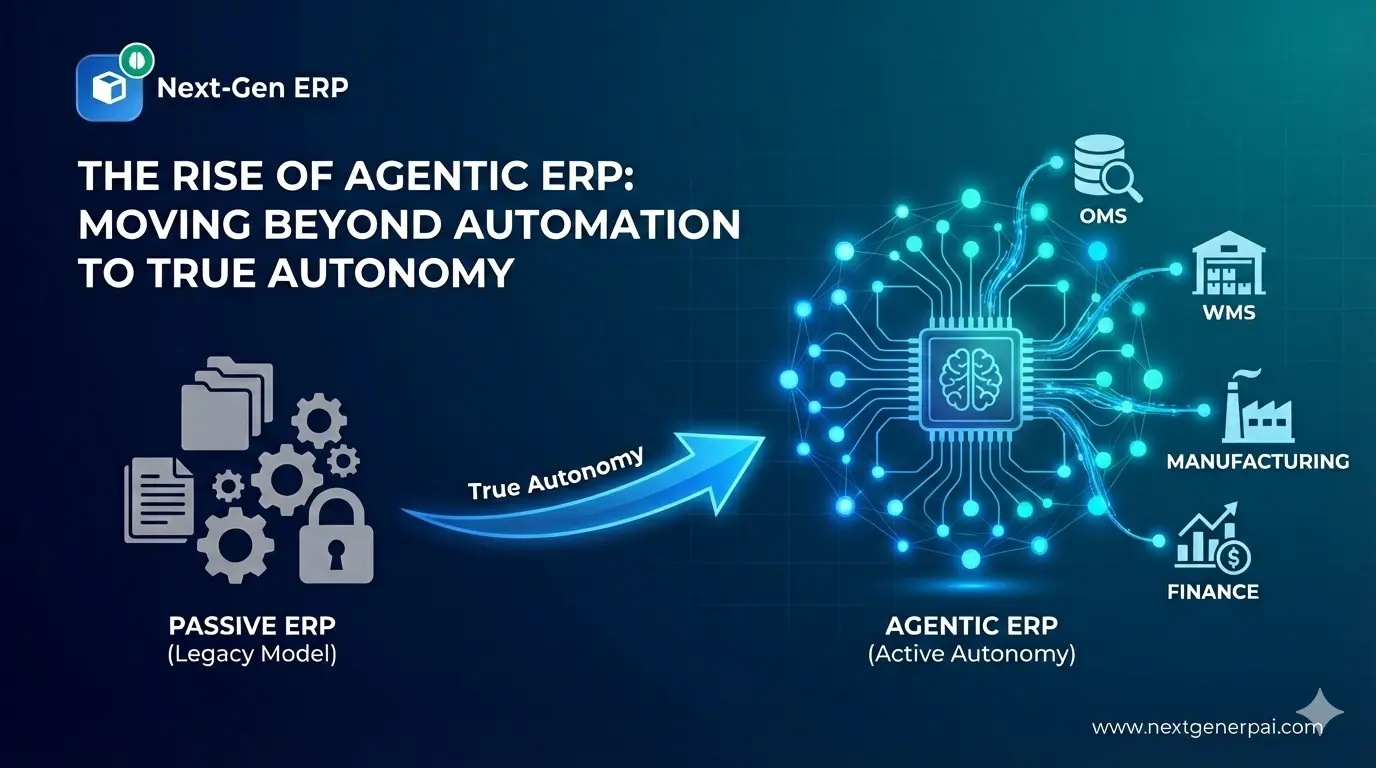
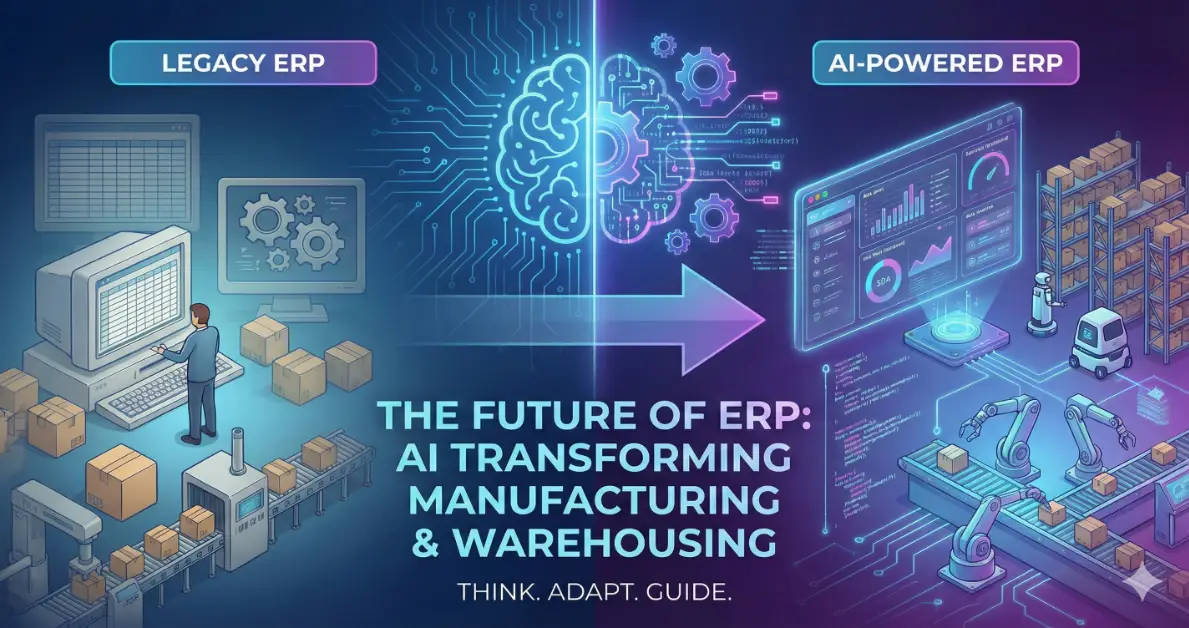
The other shift is technical. Modern open-source ERPs are no longer monolithic legacy systems. Frameworks like Moqui and platforms like OFBiz are built on patterns that align well with microservices, API-first integrations, and AI-driven automation. That makes them strong foundations for the kind of AI-first ERP systems and intelligent automation most enterprises now want to build toward.
A Framework for Evaluating Any Open-Source ERP
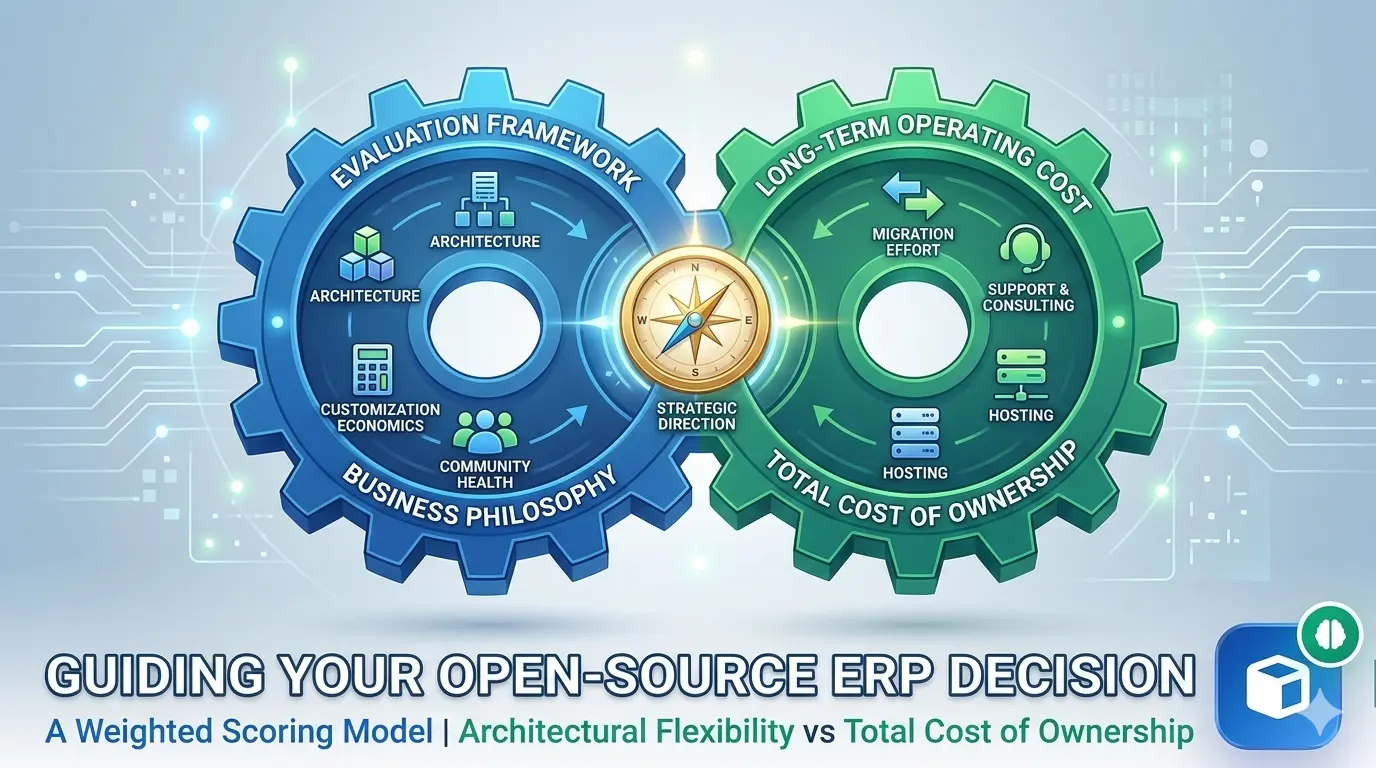
Before comparing specific platforms, you need a consistent way to evaluate them. The mistake most teams make is judging ERPs on features alone. Features are the easy part. The hard part is architecture, community health, customization economics, and long-term operating cost. We recommend evaluating across seven dimensions.
The Seven Evaluation Dimensions
- Architectural flexibility: How easily can the system be extended without breaking upgrade paths
- Data model maturity: Does the underlying schema support complex, multi-entity operations such as multi-warehouse, multi-currency, multi-company
- Customization economics: What does it cost in developer hours to add a new workflow or integration
- Community and ecosystem: Active contributors, third-party modules, available consultants
- Implementation complexity: Time and skill required to deploy a production-grade system
- Integration readiness: Native APIs, webhook support, event-driven capabilities
- Total cost of ownership: Licensing, hosting, customization, support, and migration costs over five years
A Weighted Scoring Model
Not every dimension matters equally for every business. A retail company prioritizes order and warehouse capabilities. A manufacturer needs strong production planning. A services firm cares about finance and project accounting. The weighted scoring approach lets you adapt the framework to your context.
| Criterion | Weight (typical) | What to Score |
|---|---|---|
| Architectural flexibility | 20% | Modularity, separation of concerns, upgrade safety |
| Data model maturity | 15% | Depth of entities, support for complex operations |
| Customization economics | 15% | Developer productivity, framework conventions |
| Community and ecosystem | 10% | Contributors, modules, consultant availability |
| Implementation complexity | 10% | Onboarding curve, deployment effort |
| Integration readiness | 15% | API quality, event support, modern protocols |
| Total cost of ownership | 15% | Five-year all-in cost projection |
Score each platform from 1 to 10 on every criterion, multiply by the weight, and sum the result. The exercise itself forces clarity about what your business actually needs, which is often more valuable than the final number.
How the Major Open-Source ERPs Compare
There is no universal winner in open-source ERP. Each platform was designed with a different philosophy, and each excels in different scenarios. A balanced evaluation should acknowledge real strengths across the field.
Odoo
Odoo is the most commercially visible open-source ERP. Its strengths are real: a polished user interface, a large module marketplace, and a strong out-of-the-box experience for small and mid-sized businesses. Companies that want ERP capability quickly, with minimal customization, often find Odoo the fastest path to value. The tradeoffs come at scale and at the edges of customization. The Community edition is genuinely open source, but many advanced features sit behind the Enterprise license, which reintroduces some of the lock-in concerns enterprises hoped to avoid. Heavy customization can also conflict with Odoo's upgrade cycle, leading to expensive version migrations.
ERPNext
ERPNext, built on the Frappe framework, is the simplicity champion of the open-source ERP world. It is genuinely easy to deploy, has clean documentation, and offers strong functionality for small to mid-market companies, especially in distribution, services, and light manufacturing. For organizations that need a working ERP in weeks rather than months, ERPNext is hard to beat. Its limitations appear when business complexity grows: deep multi-entity operations, sophisticated supply chain modeling, and high-volume transactional workloads stretch the platform. ERPNext is excellent for what it targets and less suited to large enterprise scenarios.
Apache OFBiz
Apache OFBiz is one of the most mature open-source ERPs in existence. Its data model, developed over more than two decades, is widely regarded as one of the most complete in the industry, covering everything from order management to manufacturing to accounting to content management. OFBiz is exceptionally flexible and battle-tested in large deployments. The tradeoff is that this maturity carries weight: the framework conventions are older, the learning curve is steep, and the developer experience can feel dated compared to newer platforms. For organizations that need depth and are willing to invest in expertise, OFBiz remains a serious enterprise option.
Moqui
Moqui is, in many ways, the modern successor to the OFBiz lineage, designed from the ground up for enterprise scalability with a cleaner framework and a more developer-friendly model. It inherits the depth of the Universal Data Model and pairs it with a contemporary service-oriented architecture, strong transaction handling, and good support for high-volume operations. Moqui is particularly strong for organizations building custom ERP workflows or operating at significant transactional scale. The honest tradeoff is community size: Moqui's ecosystem is smaller than Odoo's, which means fewer pre-built modules and a heavier reliance on skilled implementation partners. Our overview of Moqui as the open-source foundation for Next-Gen ERP explores its architecture in more depth.
Quick Comparison Matrix
| Platform | Best Fit | Strength | Watch For |
|---|---|---|---|
| Odoo | SMB to mid-market, fast deployment | UI, module marketplace | Enterprise edition lock-in, upgrade friction |
| ERPNext | Small to mid-market, simple operations | Ease of use, fast time to value | Limited depth for complex enterprise needs |
| Apache OFBiz | Large enterprises, deep data needs | Mature data model, proven at scale | Steeper learning curve, older developer experience |
| Moqui | High-volume, custom enterprise workflows | Modern architecture, scalability | Smaller community, partner-dependent |
Implementation Complexity: The Hidden Cost
Most ERP selection failures happen here. Teams compare license costs and feature lists but underestimate the implementation effort. A realistic complexity assessment should include data migration scope, integration count, custom workflow requirements, training needs, and the skill profile of available implementation partners. Platforms that look cheap on paper can become expensive if your team needs months of ramp-up time, while platforms with steeper licensing can deliver faster if their conventions match your existing skills. The right way to evaluate this is to define your top five custom workflows and ask each shortlisted vendor or partner exactly how those would be implemented. The answers reveal more than any feature comparison.
Vendor Lock-In: A Deeper Look
Open source does not automatically mean lock-in free. Lock-in shows up in subtler forms: proprietary modules added to an otherwise open core, hosted-only deployment models, custom data formats, or skills concentration in a single vendor. When evaluating any ERP, ask four direct questions. Can you take your data and run the system yourself if the relationship ends. Can you find another partner to support the same codebase. Is the source code under a permissive or genuinely open license. Are critical features available in the open core or only in a paid edition. A platform that answers cleanly on all four is structurally low-risk. One that hedges on any of them is worth a closer look. For organizations actively planning to move off proprietary systems, our ERP migration to open-source platforms practice walks through the technical and organizational steps in detail.
Industry Fit Matters More Than Feature Count
Different industries stress different parts of an ERP. Manufacturers care about bill-of-materials handling, shop floor control, and production scheduling. Retail and e-commerce companies need a strong order management system and tight integration with sales channels. Distribution-heavy operations rely on a capable warehouse management system with multi-location inventory, picking optimization, and shipping integrations. Healthcare and financial services have compliance requirements that shape every workflow. The strongest open-source ERP for a manufacturer may be the wrong choice for a fast-growing online retailer. Evaluate platforms against your specific industry workflows, not generic feature lists.
Real-World Selection Scenarios
A few patterns appear repeatedly when companies make sound open-source ERP decisions. A mid-market retailer with a strong technical team and ambitious automation plans typically benefits from a Moqui or OFBiz foundation because the data model handles complex order, inventory, and fulfillment scenarios cleanly. A services firm or distributor that needs a working system quickly and has modest customization needs is often best served by ERPNext. A growing business that wants polished tools and a fast start, with the understanding that some features will require paid editions, frequently lands on Odoo. A large enterprise migrating off legacy SAP, Oracle, or custom mainframe systems usually needs a custom ERP development approach built on a deep open-source foundation like Moqui or OFBiz, with significant tailoring to existing operational patterns. None of these are universal rules. They are starting points that should be validated through a structured evaluation.
Business Benefits of Getting the Selection Right
A well-chosen open-source ERP delivers benefits that compound over years. Total cost of ownership typically falls because licensing is removed from the equation, and the savings can be redirected into customization, integration, and automation that drive real business value. The system becomes an asset that the business owns rather than a recurring expense it rents. Customization economics improve because the source code is available, which means the cost of adapting the system to evolving processes drops over time. Integration becomes easier because modern open-source platforms are API-first and event-driven, which makes them natural fits for AI automation, modern analytics, and broader digital transformation initiatives.
The Future of ERP Selection
The next phase of ERP is being shaped by AI agents, autonomous workflows, and event-driven architectures. Platforms that were designed with monolithic assumptions will struggle to absorb these patterns cleanly. Open-source ERPs with modern architectures are better positioned to host AI-driven order processing, autonomous warehouse decisions, and intelligent finance workflows because their data is accessible and their service layers can be extended. When evaluating any ERP today, it is worth asking not only what the system does now but what it will be able to do in three to five years as automation becomes the default. The companies that make this future a part of their selection criteria tend to choose differently, and choose better.
Choosing an open-source ERP is ultimately a strategic decision, not a software purchase. The right framework, an honest comparison of options, and a clear understanding of your own operational priorities will matter more than any single feature. If you are early in this process, working with an experienced partner like Next-Gen ERP can shorten the evaluation cycle and surface tradeoffs that are easy to miss from the inside.