Why Moqui ERP Is the Best Open-Source Foundation for Building Next-Gen ERP Systems
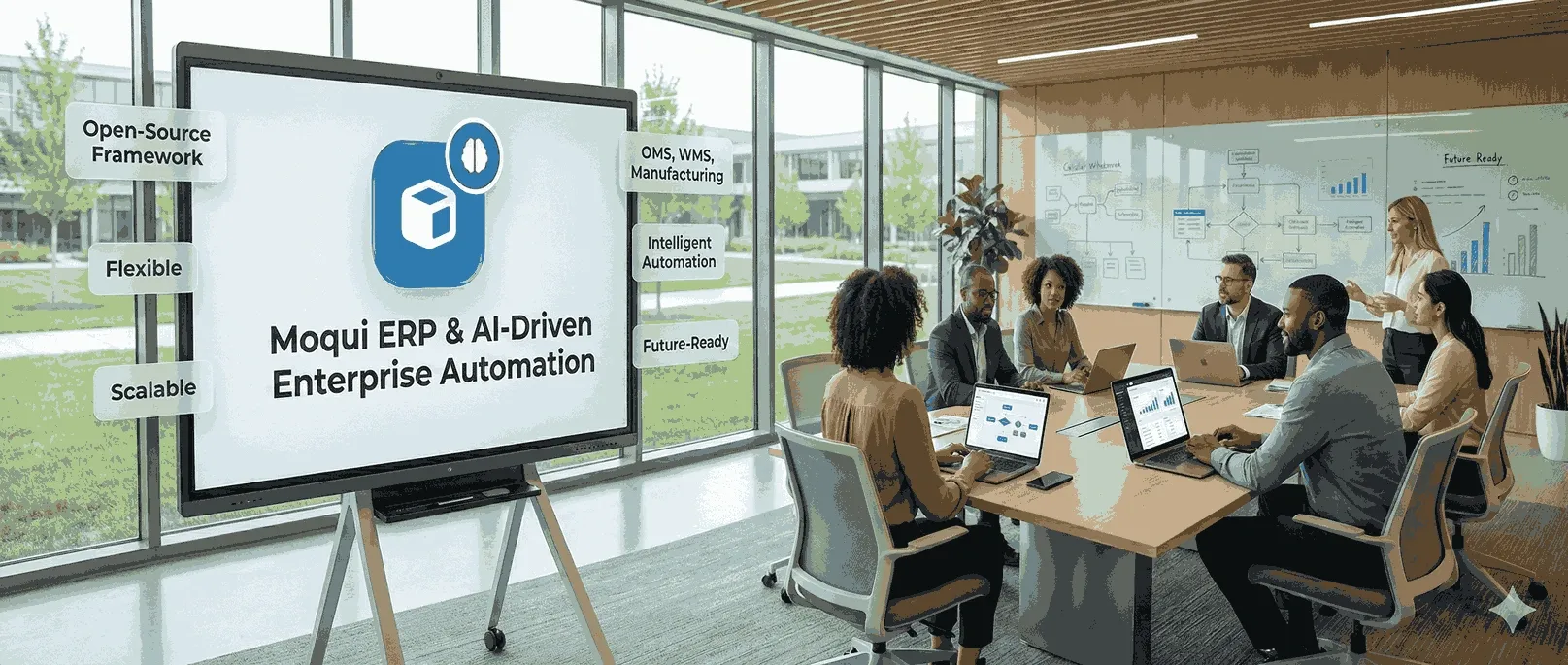
When businesses talk about building a Next-Gen ERP system, they are usually reacting to the same frustrations. Traditional ERP platforms are rigid, slow to change, expensive to customize, and tightly locked to vendors. Modern enterprises need something very different. They need an ERP foundation that is flexible by design, open to innovation, and capable of supporting intelligent automation across Order Management, Warehouse Operations, Manufacturing, and Finance. This is where Moqui ERP stands out as one of the strongest open-source foundations for building truly Next-Gen ERP systems.
Moqui is not just another ERP product. It is an enterprise application framework built for companies that want control over their ERP architecture while still benefiting from proven ERP capabilities. For organizations aiming to design future-ready ERP platforms with AI automation, modular services, and industry-specific workflows, Moqui provides a rare balance of structure and freedom.
What Makes an ERP System Truly Next-Gen
A Next-Gen ERP system is not defined by a long feature list. It is defined by how well it adapts to business change. Modern ERP must support continuous process evolution, real-time data visibility, seamless integrations, and intelligent automation. It must also avoid vendor lock-in so businesses can innovate at their own pace.
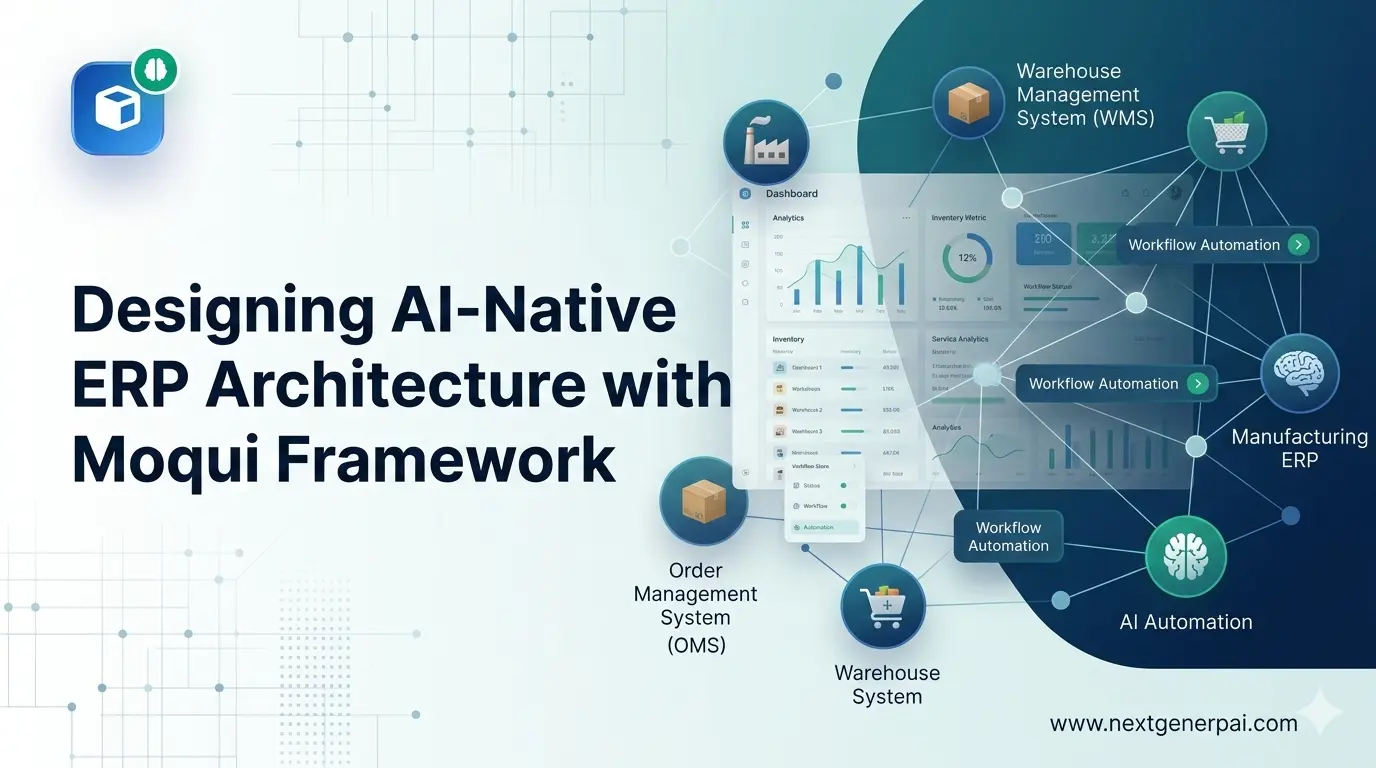
Moqui aligns naturally with this philosophy. Its architecture emphasizes flexibility over rigidity, automation over manual processes, and open-source transparency over proprietary constraints. This makes it an ideal foundation for companies building ERP platforms that combine OMS, WMS, MES, and AI-driven workflows into a single unified system.
Moqui ERP Architecture Built for Flexibility
One of Moqui’s strongest advantages is its modular, component-based architecture. Every functional area in Moqui is organized into components that can be independently developed, extended, or replaced. This is critical for Next-Gen ERP systems where Order Management, Warehouse Management, Manufacturing, and AI automation often evolve at different speeds.
Instead of forcing businesses into predefined workflows, Moqui allows ERP architects to model processes around real operational needs. Whether it is a complex manufacturing workflow, multi-warehouse fulfillment logic, or industry-specific compliance rules, Moqui adapts without forcing large-scale rewrites.
This flexibility is especially valuable for growing companies that expect frequent process changes. New sales channels, new fulfillment models, or new production strategies can be implemented as extensions rather than disruptive ERP reimplementations.
Unified Data Model for Real-Time Intelligence
Next-Gen ERP systems rely heavily on real-time visibility. Decisions around inventory, production, and fulfillment cannot wait for batch jobs or delayed reports. Moqui’s unified data model ensures that all modules operate on a single source of truth.
Order Management, Warehouse Management, Manufacturing, and Finance share consistent data structures, reducing duplication and synchronization issues. This unified model makes it significantly easier to layer AI automation on top of ERP data. Predictive analytics, demand forecasting, intelligent alerts, and process optimization all depend on clean, consistent, and real-time data access.
For businesses building AI-powered ERP platforms, this is a major advantage. Moqui reduces the technical friction between transactional systems and analytical intelligence.
Built-In Enterprise Capabilities Without the Bloat
Many ERP frameworks force a tradeoff between simplicity and capability. Moqui avoids this by providing strong enterprise-grade features without unnecessary complexity. It includes built-in support for multi-entity accounting, role-based security, service orchestration, event-driven processing, and API-first integrations.
These capabilities form the backbone of a serious ERP platform while still allowing teams to keep the system lean. Developers can use what they need and ignore what they do not. This is ideal for Next-Gen ERP initiatives that want to start focused and expand gradually.
Moqui’s service-oriented design also makes it well suited for microservices and hybrid architectures. Businesses can expose ERP services to external systems, e-commerce platforms, logistics providers, or AI engines without breaking core ERP logic.
Ideal Foundation for OMS, WMS, and Manufacturing ERP
Next-Gen ERP platforms typically unify multiple operational systems into a single intelligent platform. Moqui is particularly strong in this area because it was designed to support complex transactional flows.
For Order Management Systems, Moqui supports the full order lifecycle from capture to fulfillment and invoicing. It handles multi-channel orders, complex pricing rules, and real-time order status updates. These capabilities are essential for modern retail, e-commerce, and B2B businesses.
In Warehouse Management, Moqui provides strong inventory tracking, facility modeling, and fulfillment workflows. It supports multi-location inventory, picking and packing logic, and real-time stock visibility. This allows businesses to build WMS solutions that scale across warehouses without losing control.
For Manufacturing ERP, Moqui supports bills of materials, work orders, production planning, and shop floor control. Manufacturers can model production processes accurately while maintaining visibility into costs, quality, and throughput. When combined with AI automation, this enables predictive maintenance, demand-driven production, and continuous optimization.
Open-Source Freedom Without Vendor Lock-In
One of the biggest reasons companies move toward Next-Gen ERP is to escape vendor lock-in. Proprietary ERP platforms limit innovation and inflate long-term costs. Moqui’s open-source foundation gives businesses full ownership of their ERP system.
This freedom allows organizations to customize deeply, integrate freely, and evolve continuously without waiting for vendor roadmaps. It also reduces total cost of ownership over time, especially for businesses with complex or industry-specific requirements.
Open-source transparency also improves security and reliability. Teams can audit code, fix issues faster, and avoid hidden dependencies that often exist in closed systems.
Designed for ERP Migration and Modernization
Many enterprises are not starting from scratch. They are migrating from legacy ERPs that no longer meet modern demands. Moqui is particularly well suited for ERP modernization projects because it can coexist with existing systems during transition phases.
Businesses can migrate modules gradually, starting with high-impact areas like Order Management or Inventory, while keeping legacy systems running. This phased approach reduces risk and allows teams to demonstrate value quickly.
Moqui’s compatibility with Apache OFBiz concepts also makes it a strong choice for organizations already familiar with open-source ERP ecosystems. It provides a modern evolution path without forcing teams to abandon existing expertise.
Why Next-Gen ERP Builders Choose Moqui
For companies building Next-Gen ERP platforms, Moqui offers a rare combination of flexibility, maturity, and openness. It is powerful enough to handle enterprise-scale operations yet adaptable enough to support rapid innovation.
This is why ERP consultancies and product builders increasingly use Moqui as the foundation for AI-driven ERP systems. It enables faster development, cleaner architecture, and long-term scalability without sacrificing control.
At Next-Gen ERP, Moqui plays a central role in delivering intelligent ERP solutions across manufacturing, retail, healthcare, e-commerce, financial services, real estate, and education. By combining Moqui’s open-source foundation with AI automation, OMS, WMS, and Manufacturing ERP capabilities, businesses gain a platform that grows with them rather than holding them back.
The Future of ERP Is Built, Not Bought
The future of ERP belongs to systems that are designed, not imposed. Businesses that want agility, intelligence, and long-term control need an ERP foundation that supports continuous evolution. Moqui ERP provides exactly that foundation.
By enabling modular design, real-time intelligence, open integrations, and AI-ready architecture, Moqui empowers organizations to build ERP systems that reflect how their business actually operates. For companies serious about Next-Gen ERP, Moqui is not just an option. It is one of the strongest open-source foundations available today.