What Is Agentic ERP?
Agentic ERP is the next evolution of enterprise systems where AI does not just analyze data or automate predefined workflows, it takes initiative and performs business actions autonomously within controlled rules. Instead of simply reporting that inventory is low, an Agentic ERP can evaluate demand forecasts, supplier lead times, budget constraints, and automatically trigger replenishment for Q3.
In simple terms, traditional ERP records what happened. Automated ERP streamlines repetitive tasks. Agentic ERP decides what should happen next and acts on it.
This shift represents a fundamental transformation in how enterprise systems operate. It moves ERP from passive infrastructure to an active operational intelligence layer.
From Passive ERP to Active ERP
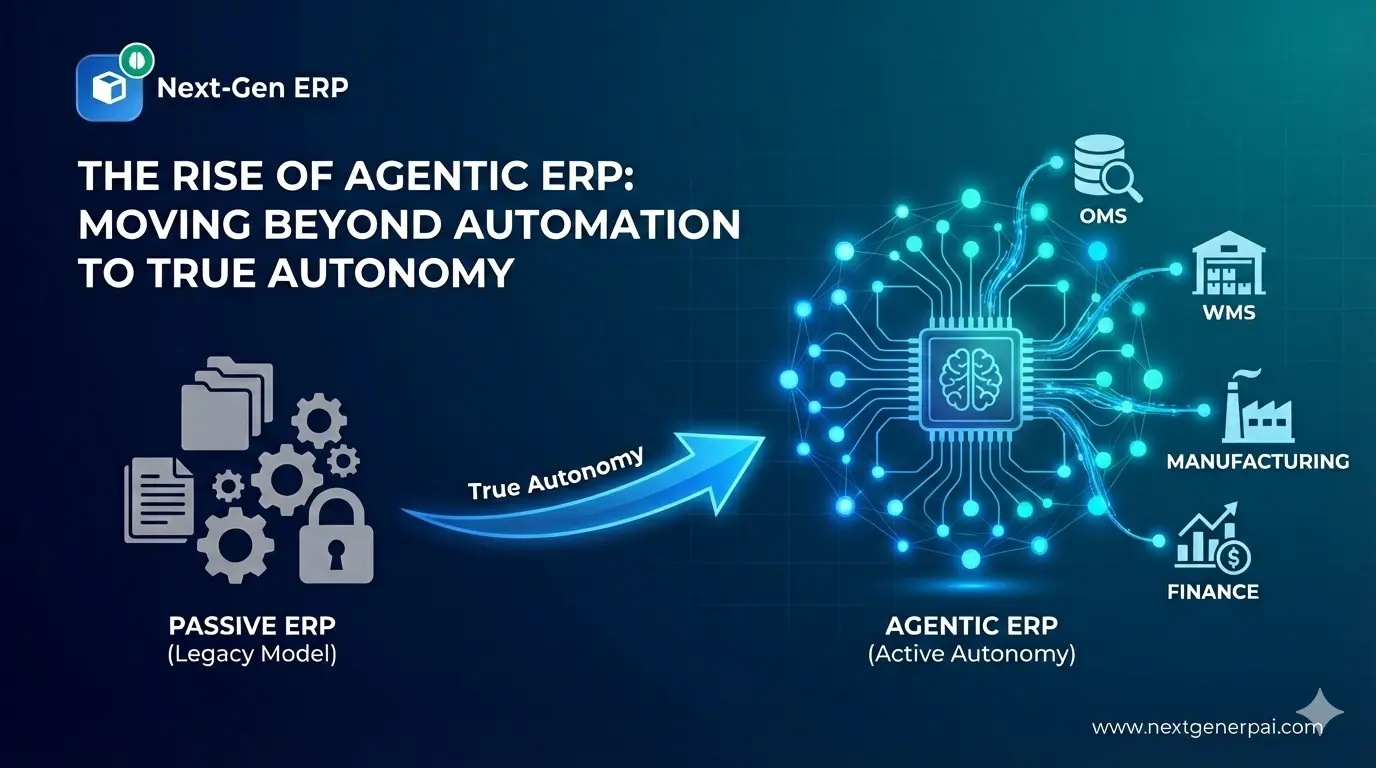
To understand the rise of Agentic ERP, it helps to contrast two models.
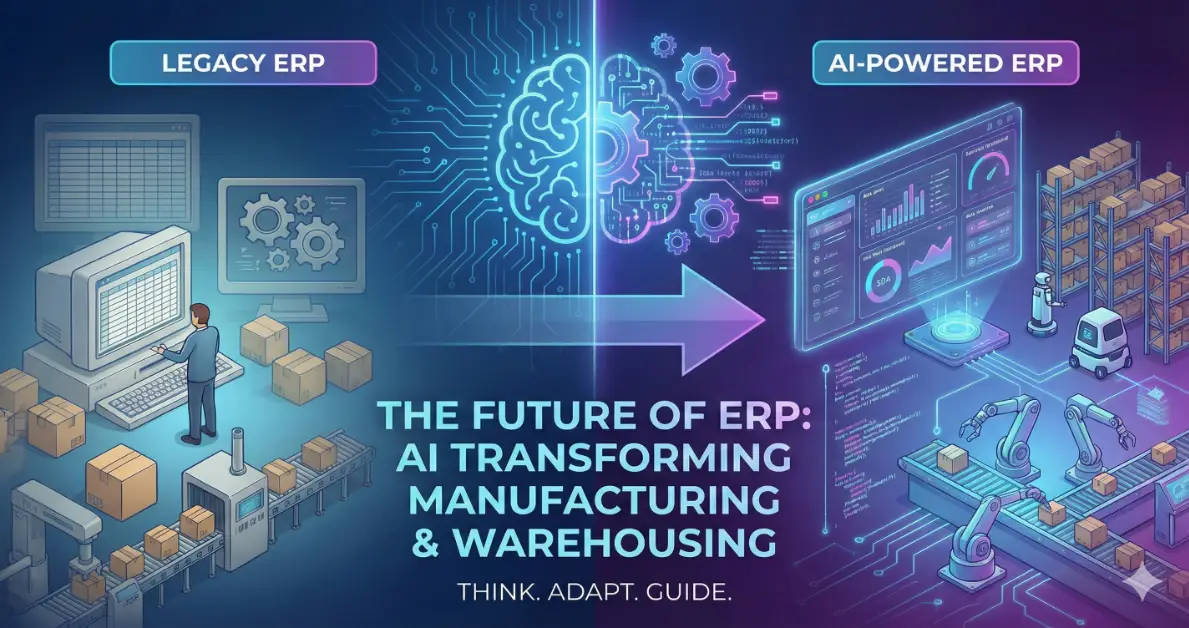
Passive ERPs: The Legacy Model
Legacy ERP systems were built to centralize data. They manage accounting, orders, inventory, manufacturing, and HR. But they wait for human instruction.
They can answer questions like: • What is our current stock level? • Which invoices are overdue? • What were last quarter’s sales?
Even with added automation, these systems mostly follow fixed workflows. They depend heavily on manual decision-making. Managers review dashboards, interpret reports, and then instruct teams to act.
This model creates bottlenecks. Decisions are delayed. Opportunities are missed. Operations remain reactive instead of proactive.
Active ERPs: The Agentic Model
An Active ERP system powered by Agentic AI works differently. It continuously monitors business signals across Order Management, Warehouse Management, Manufacturing, and Finance. When specific conditions are met, it takes approved actions automatically.
Examples include: • Restocking inventory for Q3 based on predictive demand and supplier performance. • Reallocating warehouse stock across locations to prevent stockouts. • Adjusting production schedules when raw material delays are detected. • Triggering credit risk reviews for high-risk accounts.
This is not just automation. It is contextual decision-making within defined business rules.
Next-Gen ERP is built around this Active ERP philosophy. It is designed not just to store operational data but to act on it intelligently.
How Agentic ERP Works in Practice
Agentic ERP combines four essential layers:
- Real-time data integration
- Predictive analytics and AI models
- Rule-based governance and approval frameworks
- Autonomous execution within defined boundaries
For example, in a manufacturing business using a modern Manufacturing ERP:
The system detects increasing order velocity in the Order Management System. The AI model forecasts a spike in demand. The Warehouse Management System evaluates current inventory levels. The Manufacturing Execution layer assesses production capacity.
Instead of waiting for a planning meeting, the ERP proposes and executes a controlled plan: • Increase production batch size • Trigger raw material procurement • Optimize warehouse space allocation • Notify finance about projected cash flow impact
This coordinated, cross-module intelligence is what defines Agentic ERP. It connects OMS, WMS, MES, and financial systems into one active decision engine.
Why 2026 Is the Year of Agentic AI in ERP
Agentic AI has moved beyond experimentation. Businesses now expect AI to deliver measurable operational impact. Chatbots answering questions are no longer enough.
Companies want systems that: • Reduce decision latency • Improve forecasting accuracy • Eliminate manual coordination • Optimize operations in real time
ERP is the natural home for Agentic AI because ERP already sits at the center of enterprise data. When AI is embedded directly into core workflows, the system becomes capable of autonomous action.
Next-Gen ERP was built with this philosophy from the beginning. As outlined in its core definition, it combines scalability, AI-driven automation, and open architecture to help businesses run faster, smarter, and more efficiently . Agentic ERP is the logical next step in that evolution.
Industry Use Cases of Agentic ERP
Manufacturing
In manufacturing environments, delays in procurement or production adjustments can cost millions. An Agentic ERP integrated with Manufacturing Execution Systems can automatically reschedule work orders when supply disruptions occur. It reduces downtime and protects delivery commitments.
Retail and E-commerce
Retailers operating across multiple channels struggle with demand volatility. An Active ERP system can dynamically rebalance inventory between warehouses, update safety stock thresholds, and adjust replenishment strategies without waiting for manual review.
Healthcare
Hospitals and healthcare providers manage critical inventory such as medical supplies and pharmaceuticals. Agentic ERP can monitor consumption patterns and automatically initiate compliant procurement workflows while respecting regulatory requirements.
Financial Services
Financial operations benefit from intelligent automation that proactively flags anomalies, triggers compliance workflows, and adjusts risk models in real time.
Across industries, the pattern is the same. The ERP moves from a reporting tool to an operational co-pilot.
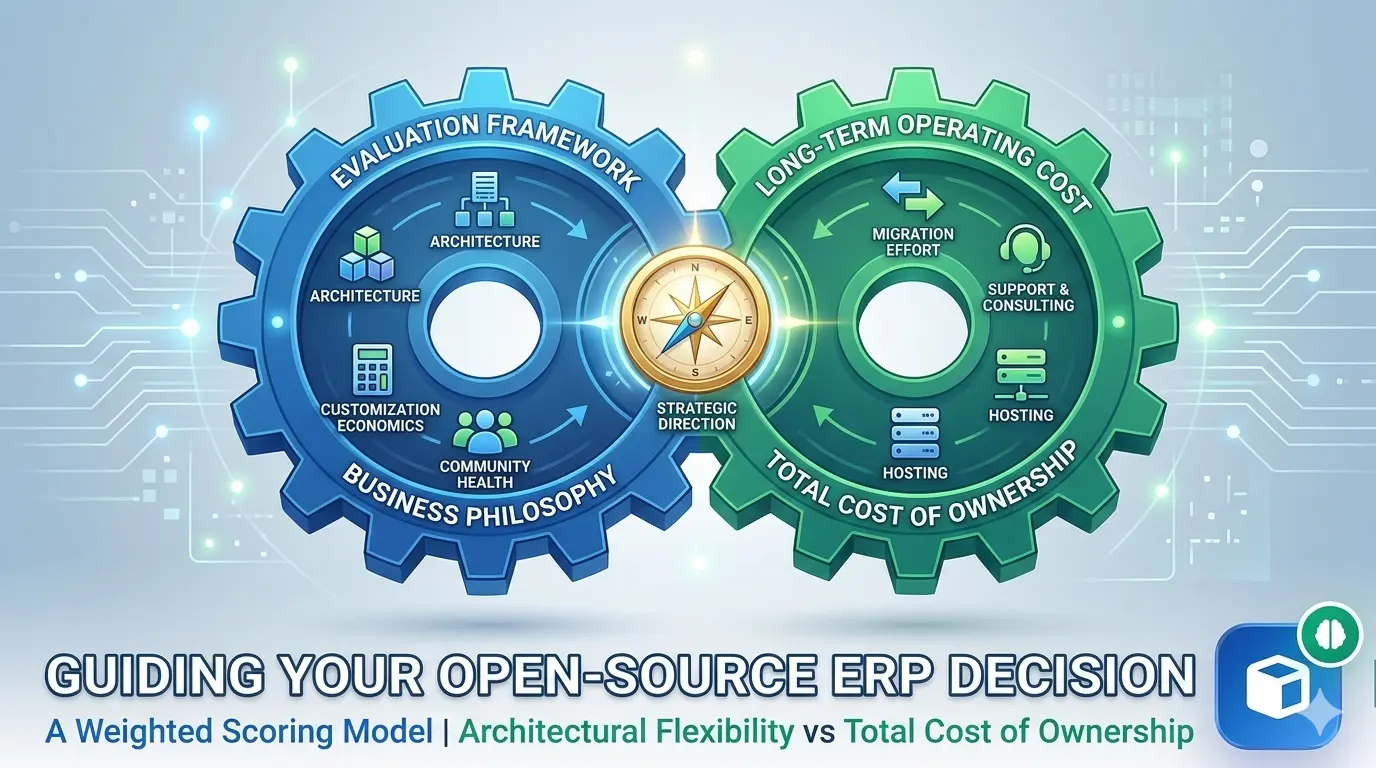
Why Open-Source ERP Matters in the Agentic Era
Agentic ERP requires deep customization and flexibility. Closed, proprietary systems often limit how AI can be embedded into core processes.
Open-source ERP platforms such as Moqui and Apache OFBiz provide the flexibility required to build true autonomy. They allow: • Deep workflow customization • Integration with advanced AI models • Modular system design • Freedom from vendor lock-in
Next-Gen ERP leverages open-source architecture to create scalable, future-ready systems. This flexibility is essential when building Active ERP systems that must evolve alongside business complexity.
Governance and Control in Agentic ERP
Autonomy does not mean loss of control. A well-designed Agentic ERP operates within strict governance frameworks.
Businesses define: • Approval thresholds • Budget constraints • Risk tolerances • Escalation paths
The ERP can act automatically within these guardrails. For high-impact decisions, it can recommend actions and request human approval.
This balance ensures trust while delivering speed.
The Strategic Impact of Agentic ERP
The real value of Agentic ERP is strategic.
Instead of spending hours analyzing dashboards, leadership teams focus on growth, expansion, and innovation. Operational execution becomes faster and more resilient.
An Active ERP system: • Reduces operational overhead • Improves working capital efficiency • Enhances supply chain agility • Increases forecast reliability • Strengthens cross-department alignment
Over time, the organization shifts from reactive management to predictive and autonomous operations.
Moving Beyond Automation to Autonomy
AI-powered ERP automation was the first step. It reduced manual effort. Agentic ERP is the next step. It reduces decision friction.
Next-Gen ERP represents this shift clearly. It integrates Order Management, Warehouse Management, Manufacturing ERP, and AI automation into a unified platform designed not just to manage processes but to optimize them continuously.
The difference is subtle but powerful.
Passive ERP records transactions. Automated ERP speeds up tasks. Agentic ERP drives outcomes.
The Future of Enterprise Systems Is Active
The rise of Agentic ERP signals a broader transformation in enterprise technology. ERP is no longer a back-office system. It becomes the intelligent operating system of the enterprise.
Organizations that embrace Active ERP systems gain faster response times, higher efficiency, and stronger competitive positioning. Those that remain on legacy platforms risk being constrained by slow, manual decision cycles.
For businesses seeking a future-ready, open-source, AI-driven foundation, Agentic ERP is not a distant concept. It is the natural progression of Next-Gen ERP.
The question is no longer whether ERP should be automated. The real question is whether it should be autonomous.