The Future of ERP: How AI Is Transforming Manufacturing and Warehousing
For decades, ERP systems have been the backbone of manufacturing and warehousing operations. They’ve helped businesses track inventory, manage production, process orders, and keep finances in check. But the reality is simple: most traditional ERP systems were built for a world that no longer exists.
Today’s manufacturers and warehouse operators deal with constant demand fluctuations, supply-chain disruptions, labor shortages, and growing customer expectations. In this environment, simply recording data is no longer enough. Businesses need systems that can think, adapt, and guide decisions in real time.
At NextGenERP, we focus on building AI-ready ERP platforms for manufacturing and warehousing businesses that want to move beyond rigid, legacy systems and adopt intelligent, future-proof operations.
Why Traditional ERP Is Struggling to Keep Up
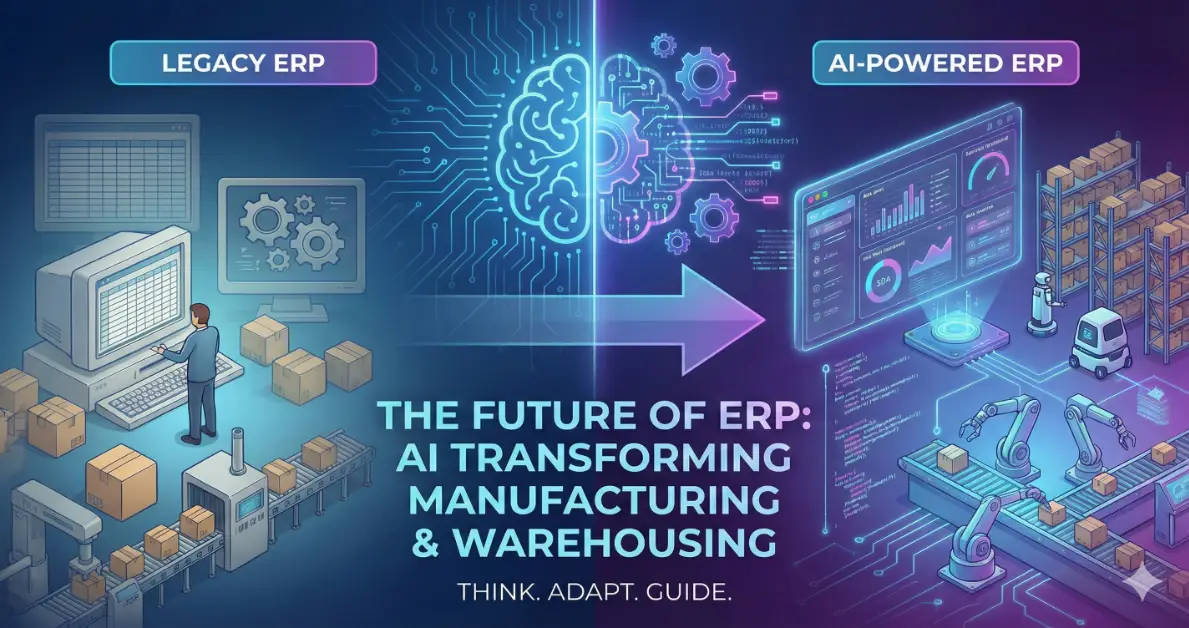
Legacy ERP platforms were designed mainly as systems of record. They do a good job storing transactions, but they fall short when it comes to helping teams respond quickly and intelligently.
Many organizations still face challenges like:
- Limited real-time visibility into operations
- Heavy reliance on spreadsheets and manual analysis
- Rigid workflows that are hard to change
- Slow reporting that shows what already happened, not what’s about to happen
- High cost and complexity when scaling or customizing
As operations grow more complex, these limitations directly impact efficiency, margins, and customer satisfaction.
How AI Changes the Role of ERP
Artificial Intelligence fundamentally changes what ERP systems can do. Instead of just tracking activity, AI allows ERP systems to understand patterns, predict outcomes, and recommend actions.
An AI-enabled ERP system can:
- Analyze operational data continuously, not just at month-end
- Spot anomalies and risks before they become problems
- Automate routine operational decisions
- Provide smarter, context-aware insights to business teams
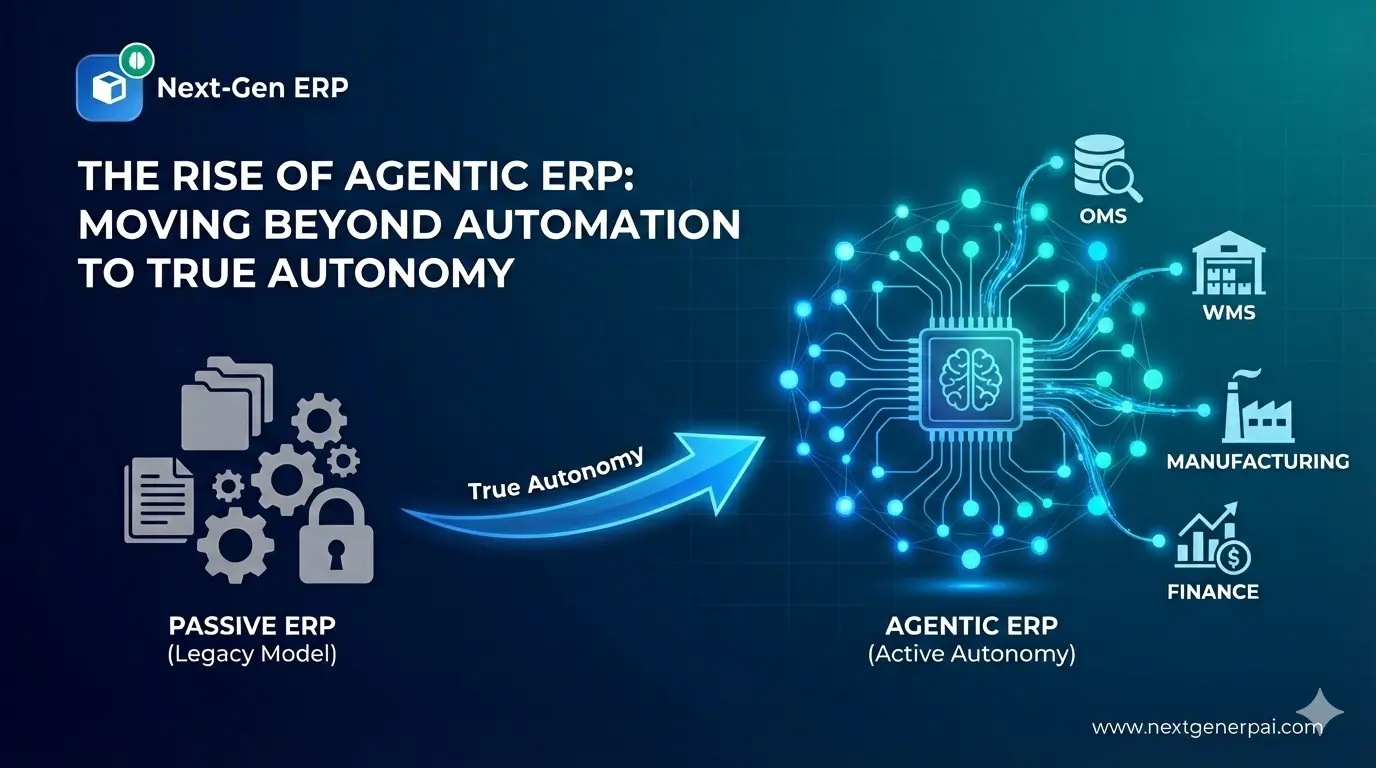
In short, ERP evolves from a passive database into an active decision-support system.
AI in Manufacturing ERP: From Planning to Execution
Manufacturing environments generate massive amounts of data—from machines, production lines, suppliers, and customers. AI helps transform this data into practical insights that teams can actually use.
Real-World Manufacturing Use Cases
Smarter Production Planning
AI can adjust production plans dynamically based on demand shifts, capacity constraints, and material availability.
Predictive Maintenance
Instead of maintaining machines on fixed schedules, AI predicts failures based on real usage patterns—reducing downtime and unexpected breakdowns.
More Accurate Demand Forecasting
AI models factor in seasonality, historical sales, and market trends to improve forecast accuracy.
Improved Quality Control
By identifying patterns linked to defects, AI helps teams address quality issues earlier and reduce rework.
Through our work at NextGenERP, we’ve seen manufacturers unlock greater agility and operational resilience by combining AI-driven planning with modern, modular ERP architectures.
AI in Warehousing: Turning Complexity into Control
Warehousing operations are fast-moving and unforgiving. A small delay or inventory error can quickly ripple across the supply chain.
AI-powered ERP brings clarity and control to warehouse operations.
Practical Warehouse & Logistics Use Cases
Inventory Optimization
AI continuously balances stock levels to reduce holding costs while avoiding stockouts.
Intelligent Order Fulfillment
Orders are prioritized dynamically based on urgency, customer value, and delivery commitments.
Labor and Resource Planning
AI predicts workload patterns and helps allocate staff and equipment more efficiently.
Real-Time Operational Visibility
Live dashboards highlight bottlenecks, exceptions, and performance trends as they happen—not after the fact.
Moving Beyond Automation to Intelligent Operations
Traditional ERP automation relies on predefined rules: if this happens, do that. While useful, rule-based systems break down in complex, changing environments.
AI-powered ERP learns from outcomes and continuously improves decisions over time. This enables:
- Faster response to disruptions
- Reduced dependency on manual interventions
- More consistent decision-making across teams
- Scalable operations without adding operational overhead
ERP stops being just a tool—and starts becoming a strategic partner in running the business.
Why Modern, Open-Source ERP Architectures Matter
AI-driven ERP requires flexibility. Unfortunately, many legacy ERP platforms are too rigid and closed to support modern AI use cases effectively.
Modern ERP solutions built on open-source frameworks offer clear advantages:
- Modular architecture that supports faster innovation
- Easier integration with AI models and automation tools
- Lower long-term cost compared to proprietary systems
- Greater control over customization and scalability
At NextGenERP, we help organizations modernize ERP systems incrementally, leveraging open-source platforms to reduce risk while enabling continuous AI innovation.
How NextGenERP Approaches AI-Powered ERP
Our approach at NextGenERP is practical and outcome-driven. Rather than forcing large-scale system replacements, we focus on modernizing critical operational areas first, such as manufacturing planning, warehouse execution, and enterprise automation.
By designing ERP platforms that are modular, AI-ready, and open, we ensure businesses can scale and adapt as technologies and market demands evolve.
Preparing Your Business for the Next Generation of ERP
Adopting AI-powered ERP is not just a technology upgrade, it’s a strategic shift. Successful organizations focus on:
- Improving data quality and accessibility
- Modernizing systems incrementally rather than all at once
- Aligning ERP initiatives with real business outcomes
- Choosing platforms designed for AI, automation, and future growth
The goal is not to replace people but to empower teams with better intelligence and faster insights.
Final Thoughts
AI is no longer a “nice-to-have” feature for ERP systems. For manufacturing and warehousing businesses, it is quickly becoming a necessity.
AI-powered ERP enables smarter planning, more resilient operations, and faster decision-making in an increasingly unpredictable world. Organizations that embrace this shift early will be better positioned to compete, scale, and adapt.
As enterprises evaluate their ERP future, working with teams that understand both enterprise systems and modern AI architectures can make all the difference. This is where NextGenERP focuses its expertise.
The future of ERP is intelligent, flexible, and built for change, and that future has already begun.