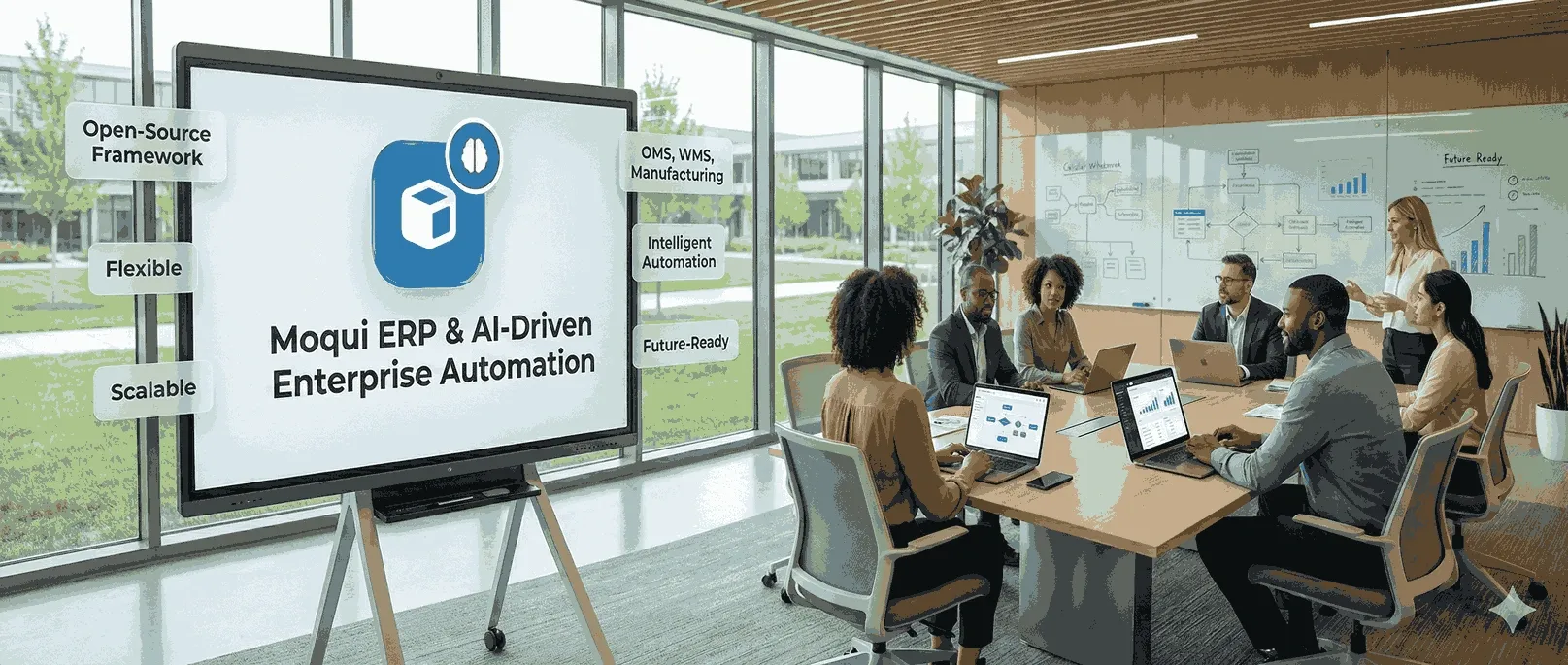
Small and mid-sized businesses are increasingly looking for ERP platforms that are flexible, scalable, and affordable. Traditional ERP systems often lock companies into expensive licensing models and rigid architectures that slow innovation.
This is why many organizations evaluating ERP for SMEs in 2026 compare three major options:
- Moqui ERP
- SAP Business One
- Odoo ERP
Each platform offers different strengths. Some focus on enterprise-grade stability. Others emphasize modular flexibility or open-source customization.
For businesses planning long-term digital transformation, understanding the architectural differences between these systems is critical.
This guide provides a detailed Moqui vs SAP Business One vs Odoo comparison to help SMEs choose the right ERP platform for modern operations.
Businesses implementing modern ERP systems often combine core platforms with solutions such as a modern order management system and an AI-powered warehouse management system to create a complete operational ecosystem.
What Is Next-Gen ERP?
Next-Gen ERP refers to a modern approach to enterprise systems designed for scalability, automation, and real-time business intelligence.
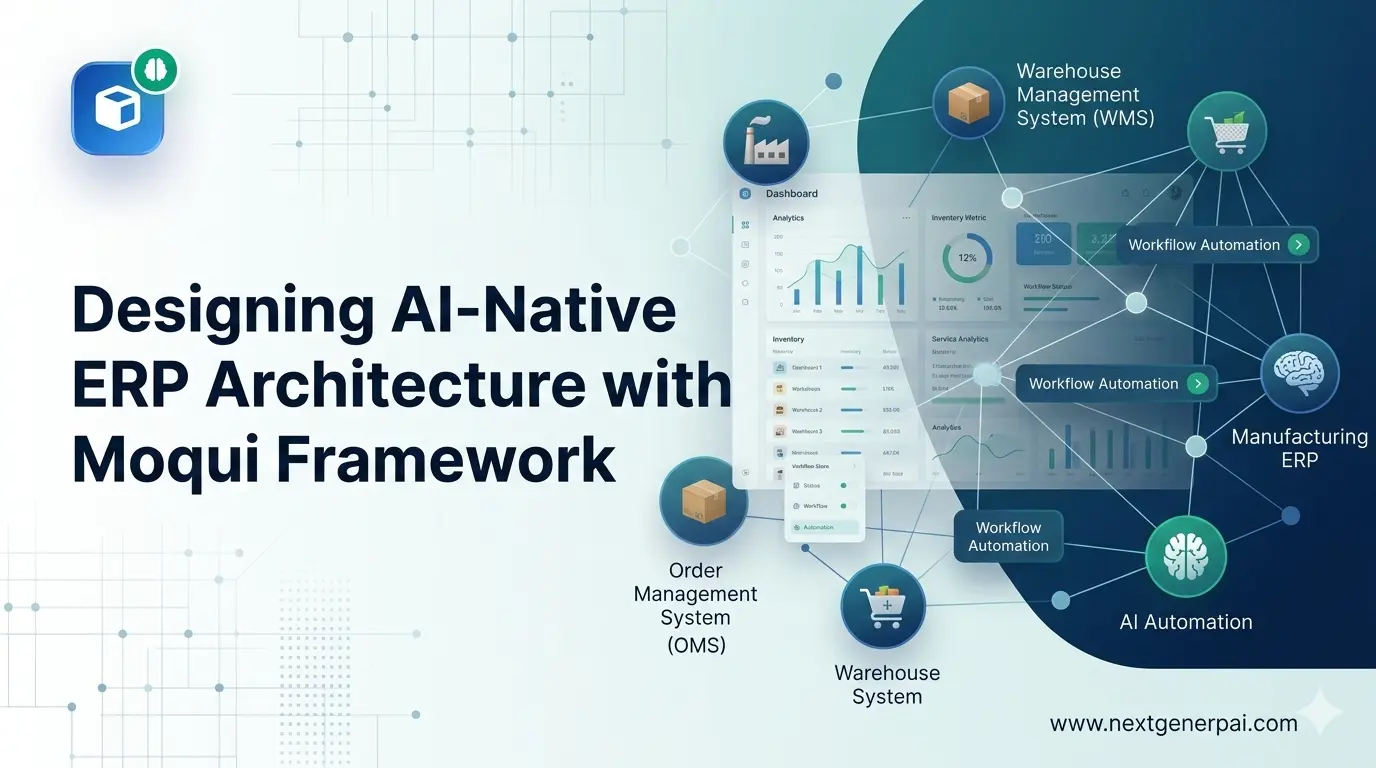
Unlike traditional ERP software, Next-Gen ERP platforms integrate operational systems such as order management, warehouse operations, and manufacturing with intelligent automation and open architecture. :contentReference[oaicite:0]{index=0}
Key characteristics include:
- Modular architecture
- AI-powered automation
- Open-source flexibility
- Real-time data visibility
- Seamless integration across systems
Platforms built with this philosophy allow companies to evolve their systems without expensive reimplementation projects.
Organizations adopting this model often work with a partner like Next-Gen ERP to implement scalable architectures using open-source technologies.
Overview of the Three ERP Platforms
Before comparing the systems, it is helpful to understand what each ERP platform was designed for.
Moqui ERP
Moqui is a modern open-source enterprise framework used to build highly customizable ERP systems.
Unlike traditional ERP products, Moqui focuses on:
- modular architecture
- service-based design
- high scalability
- deep customization capabilities
The Moqui ERP framework allows businesses to build complex ERP workflows without modifying core code.
Organizations often implement Moqui using Moqui ERP development and consultancy to create solutions tailored to their operational needs.
Moqui is particularly strong in industries with complex workflows such as manufacturing, logistics, and e-commerce.
SAP Business One
SAP Business One is a proprietary ERP system designed specifically for small and mid-sized companies.
It provides standard modules for:
- accounting
- sales
- purchasing
- inventory
- CRM
- production
SAP Business One offers reliability and strong financial management features.
However, it comes with:
- licensing costs
- limited customization flexibility
- dependency on SAP partners for modifications
Many SMEs eventually explore open-source alternatives when they outgrow the system's flexibility.
Odoo ERP
Odoo is a widely known modular ERP platform that combines open-source and commercial editions.
It offers more than 30 integrated applications, including:
- CRM
- sales
- inventory
- accounting
- HR
- marketing
Odoo's strength lies in its app ecosystem and user-friendly interface.
However, large-scale customizations can become complex due to heavy module dependencies.
Architecture Comparison
The most important difference between Moqui, SAP Business One, and Odoo lies in their underlying architecture.
Moqui Architecture
Moqui is built as a framework-first ERP platform.
Key characteristics:
- Service-oriented architecture
- Database abstraction layer
- Workflow engine
- built-in integration capabilities
- strong API-first design
Because of this architecture, Moqui is ideal for building custom ERP platforms that evolve with business processes.
Companies implementing Moqui often combine it with custom ERP development solutions to design workflows specific to their industry.
SAP Business One Architecture
SAP Business One is designed as a prebuilt ERP system.
Characteristics include:
- tightly integrated modules
- standardized workflows
- structured configuration model
This approach simplifies implementation but reduces flexibility.
Custom workflows often require:
- add-on development
- certified SAP partners
- higher implementation costs
Odoo Architecture
Odoo follows a modular application architecture.
Each business function is delivered as a module that connects to the core platform.
Advantages:
- large plugin ecosystem
- rapid deployment
- strong community support
Limitations:
- dependency between modules
- complexity during upgrades
- customization conflicts
Feature Comparison for SMEs
Below is a simplified comparison of the three platforms.
Customization
Moqui
- Extremely customizable
- Designed for complex enterprise workflows
- Ideal for companies needing tailored ERP systems
SAP Business One
- Limited customization
- Most workflows are predefined
Odoo
- Moderate customization
- Large module ecosystem but heavy customizations can create upgrade challenges
Cost Structure
Moqui
- Open-source framework
- Implementation cost depends on customization
- Lower long-term licensing cost
SAP Business One
- Licensing fees
- Implementation and maintenance costs
Odoo
- Free community edition
- Paid enterprise modules
Companies seeking lower long-term ownership cost often consider ERP migration to open-source platforms.
Scalability
Moqui
Highly scalable architecture designed for large transaction volumes.
Ideal for:
- high-growth companies
- complex operations
- multi-entity organizations
SAP Business One
Good for small to mid-sized businesses but can become limiting as complexity increases.
Odoo
Scales reasonably well but large enterprise environments may require heavy optimization.
Manufacturing and Supply Chain
Manufacturing companies require deep operational capabilities including:
- production planning
- warehouse operations
- order fulfillment
- inventory optimization
Moqui-based ERP solutions often integrate with systems like:
This creates a fully integrated supply chain environment.
SAP Business One also supports manufacturing but with limited flexibility.
Odoo provides manufacturing modules but often requires third-party extensions for complex operations.
Real-World Use Cases
Manufacturing Companies
Manufacturers benefit from ERP platforms that support:
- bill of materials
- shop floor control
- inventory planning
- production scheduling
Moqui excels here due to its customizable architecture.
E-commerce Businesses
E-commerce companies require:
- real-time order processing
- omnichannel sales integration
- warehouse automation
Odoo can be effective due to its strong e-commerce modules.
However, Moqui becomes advantageous when the business requires large-scale order orchestration.
Multi-Location Retail Operations
Retail chains often need:
- centralized inventory visibility
- integrated POS
- supply chain coordination
SAP Business One works well for standardized retail environments but becomes restrictive when customization is required.
AI and Automation Capabilities
Modern ERP systems are moving toward autonomous workflows and AI-driven decision support.
Platforms built with open architecture adapt more easily to these technologies.
Moqui-based systems support:
- automated workflows
- event-driven processing
- AI-driven optimization
These capabilities form the foundation of Next-Gen ERP architectures, where ERP systems integrate operational data with intelligent automation.
Businesses implementing such systems often combine ERP modules with analytics and automation platforms delivered through Next-Gen ERP architecture.
Advantages and Disadvantages Summary
Moqui ERP
Advantages
- Highly customizable
- Scalable architecture
- Ideal for complex enterprise workflows
- Open-source flexibility
Disadvantages
- Requires experienced implementation partner
- Not a plug-and-play ERP system
SAP Business One
Advantages
- Stable enterprise vendor
- Strong financial management
- Structured implementation model
Disadvantages
- Licensing costs
- Limited customization
- vendor dependency
Odoo ERP
Advantages
- Large application ecosystem
- user-friendly interface
- modular design
Disadvantages
- upgrade complexity with heavy customization
- module dependency challenges
Which ERP Should SMEs Choose in 2026?
Choosing between Moqui, SAP Business One, and Odoo depends largely on business complexity.
Choose SAP Business One if:
- your workflows are standardized
- you want a structured ERP implementation
- licensing cost is acceptable
Choose Odoo if:
- you need quick deployment
- your processes align with existing modules
- you want a modular ERP environment
Choose Moqui if:
- your workflows are complex
- you want deep customization
- you want an open-source ERP architecture
- you plan long-term digital transformation
Many modern companies adopting open-source ERP work with partners specializing in Moqui ERP and enterprise architecture to build systems designed for long-term growth.
The Future of ERP for SMEs
The ERP landscape is shifting rapidly.
Traditional ERP systems built around rigid modules are gradually being replaced by flexible, automation-ready platforms.
Key trends shaping ERP for SMEs include:
- AI-powered automation
- composable ERP architectures
- open-source platforms
- real-time operational intelligence
Framework-driven ERP systems like Moqui are gaining popularity because they allow organizations to evolve their systems instead of replacing them every decade.
Businesses that invest in flexible ERP foundations today will be better prepared for the next generation of digital operations.