Why a Next-Gen ERP Is Essential for Modern Warehouse Management
Warehouse operations have become far more complex than they were just a few years ago. Today’s warehouses are expected to process higher order volumes, support faster delivery timelines, and maintain near-perfect inventory accuracy, all while controlling costs and operating with leaner teams.
Yet many organizations are still running warehouse operations on ERP systems that were designed for a very different era. Systems built primarily for record-keeping struggle to keep up with the speed, variability, and intelligence required in modern warehouse management.
This is why next-generation ERP has become essential for warehouses that want to remain competitive, scalable, and resilient.
At Next-Gen ERP, we work closely with warehouse and logistics teams to design ERP platforms that are purpose-built for modern, AI-driven warehouse operations.
The Growing Complexity of Warehouse Management
Modern warehouses are no longer just storage facilities. They are dynamic operational hubs that must coordinate inventory, labor, automation, transportation, and customer expectations in real time.
Common challenges warehouse operators face today include:
- Rapidly changing order volumes and fulfillment priorities
- Inventory inaccuracy across multiple locations
- Labor shortages and inefficient resource utilization
- Limited real-time visibility into warehouse operations
- Difficulty integrating automation and modern tools
When ERP systems cannot respond quickly to these challenges, warehouses become reactive instead of proactive.
Why Traditional ERP Falls Short in Warehouse Operations
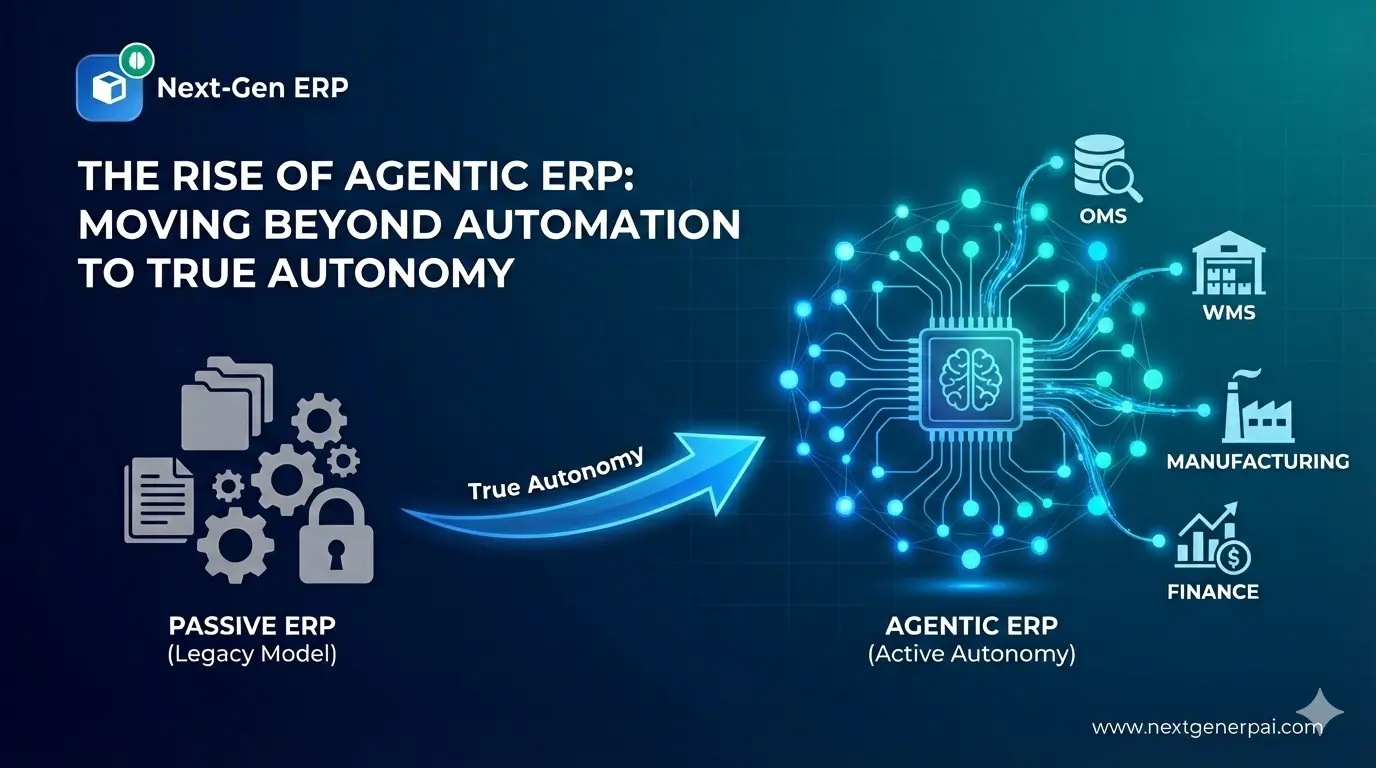
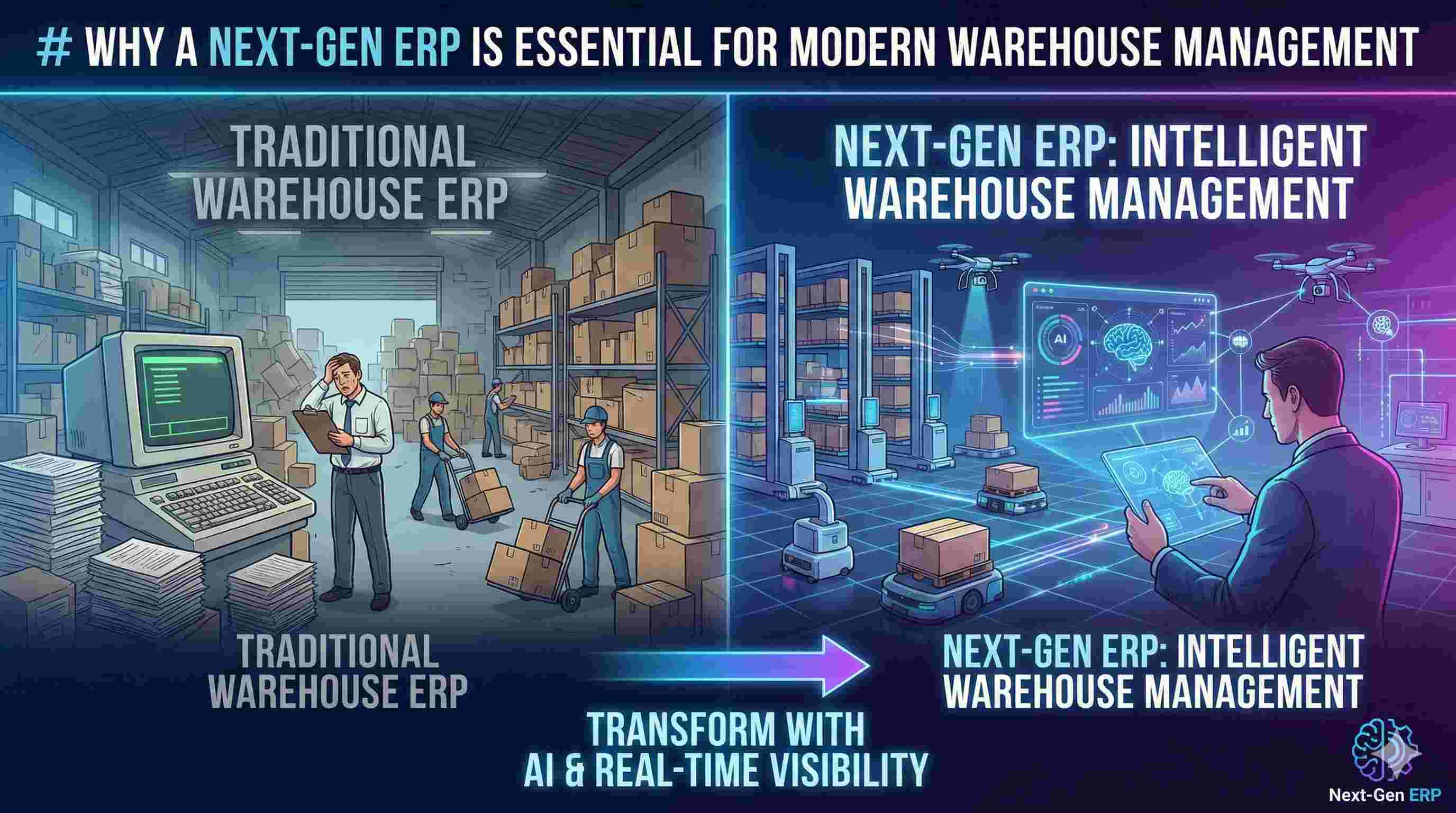
Legacy ERP platforms were not designed for the pace and complexity of modern warehouse management. While they can record transactions, they often lack the intelligence and flexibility needed for operational excellence.
Typical limitations include:
- Delayed or batch-based inventory updates
- Static workflows that are difficult to adjust
- Manual exception handling and decision-making
- Limited integration with automation and analytics tools
- Poor scalability as warehouse operations grow
These constraints lead to inefficiencies, increased errors, and missed service-level commitments.
What Makes a Warehouse ERP Truly “Next-Gen”?
A next-generation ERP is built with warehouse execution in mind, not added as an afterthought. It combines real-time data, intelligent automation, and flexible architecture to support fast-moving operations.
Key characteristics of a next-gen ERP for warehouse management include:
- Real-time inventory visibility across locations
- AI-driven insights for demand and workload prediction
- Intelligent order prioritization and routing
- Automation-ready architecture
- Modular and extensible design for future growth
Rather than reacting to problems, next-gen ERP helps warehouses anticipate and prevent them.
How AI Enhances Warehouse ERP Capabilities
AI plays a critical role in transforming ERP from a tracking system into an intelligent operational platform.
Practical AI Use Cases in Warehouse Management
Inventory Optimization
AI continuously analyzes demand patterns to balance stock levels and reduce carrying costs while preventing stockouts.
Smart Order Fulfillment
Orders are dynamically prioritized based on urgency, customer value, and delivery commitments.
Labor and Resource Planning
AI predicts workload trends and helps allocate labor and equipment more efficiently.
Exception Management
Instead of relying on manual monitoring, AI highlights anomalies and potential disruptions in real time.
At Next-Gen ERP, we design AI-ready ERP systems that allow warehouses to move from manual coordination to intelligent execution.
The Importance of Real-Time Visibility
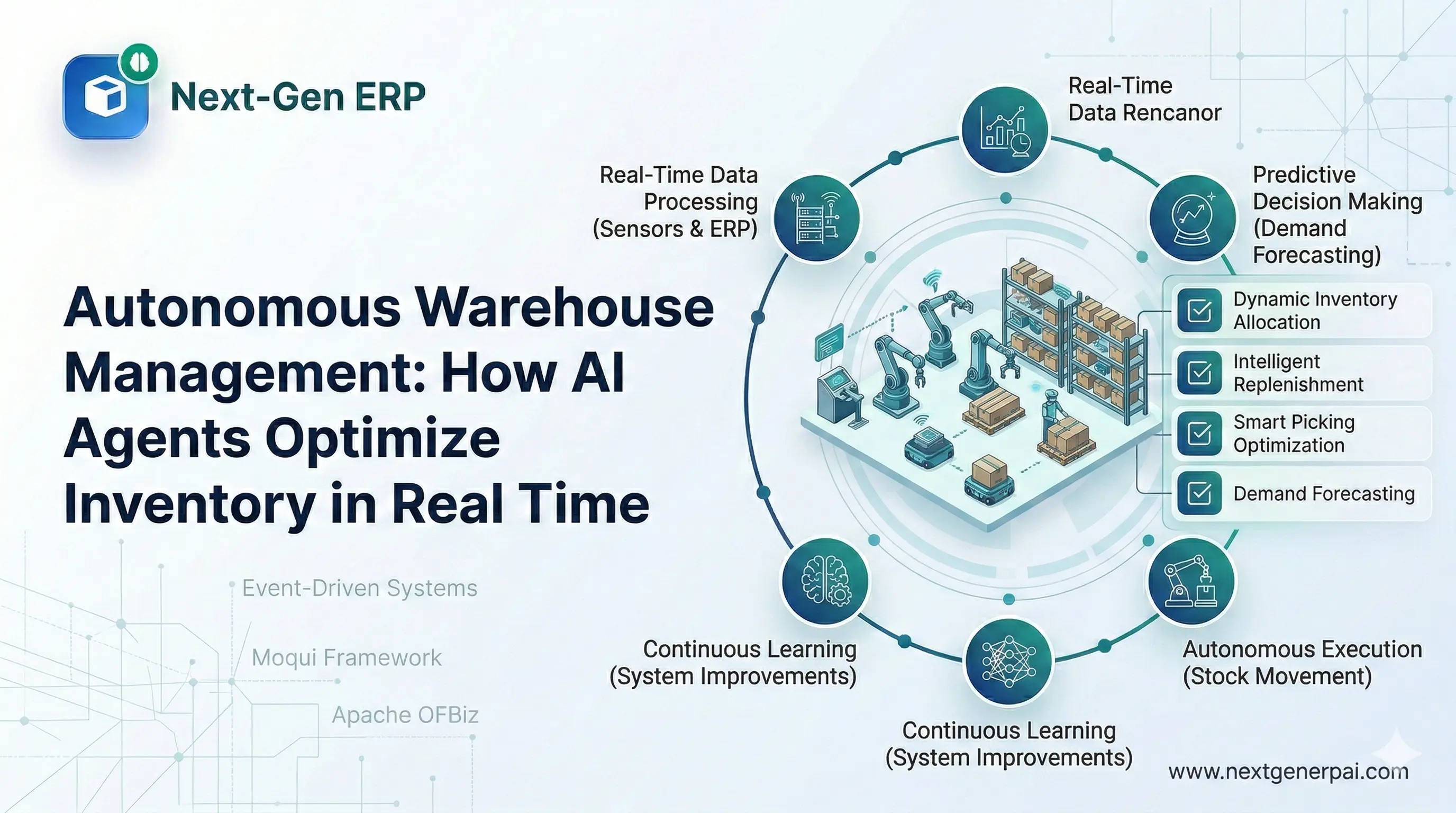
One of the biggest advantages of next-gen ERP is real-time operational visibility. Warehouse managers can see what is happening as it happens—not hours or days later.
Real-time dashboards provide insight into:
- Inventory movement and availability
- Order processing status
- Labor utilization and bottlenecks
- System exceptions and operational risks
This visibility enables faster decision-making and more consistent performance.
Why Open-Source and Modular ERP Matters for Warehouses
Modern warehouses evolve constantly, new channels, automation tools, and operational strategies emerge over time. ERP systems must be able to evolve with them.
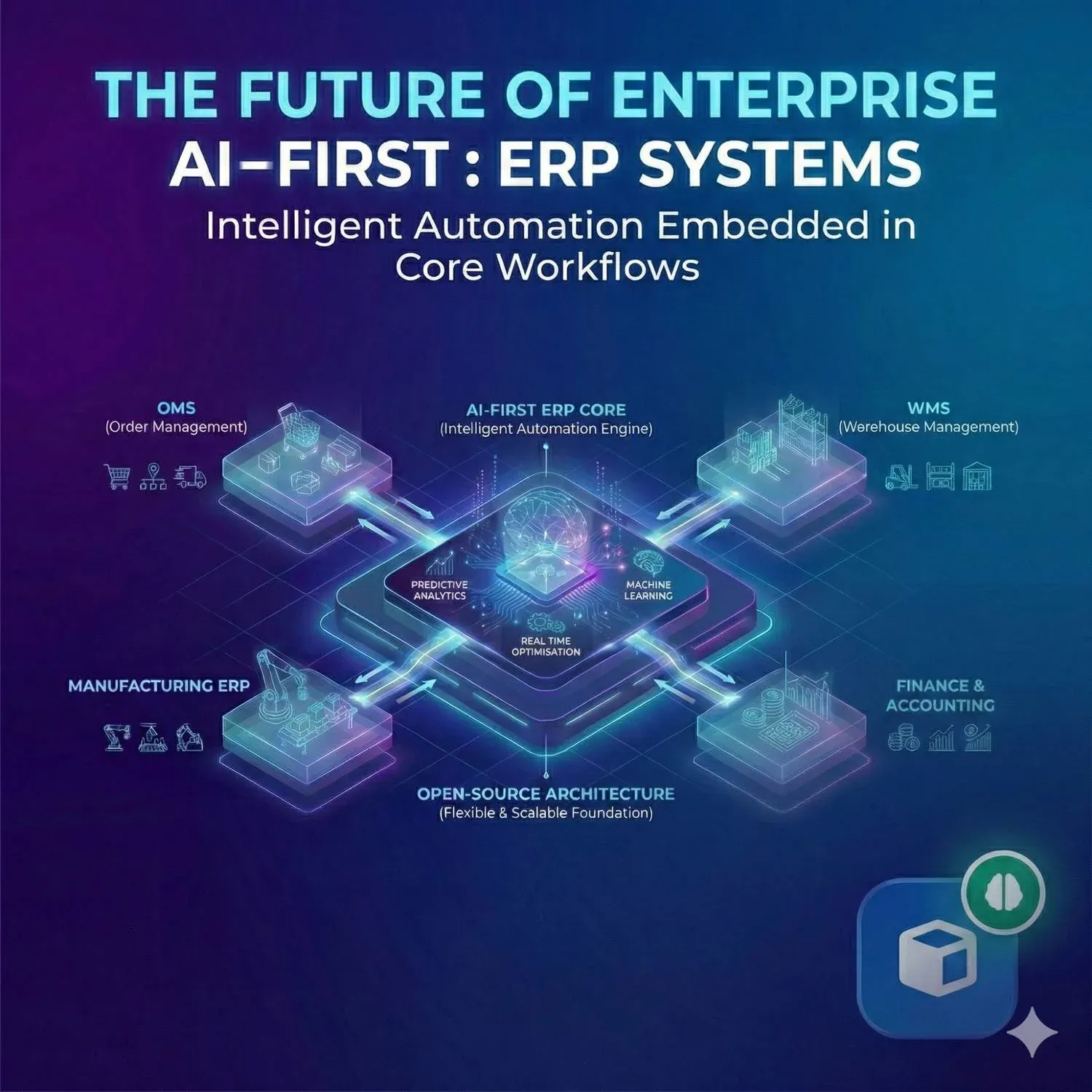
Next-Gen ERP platforms built on open-source, modular architectures offer:
- Faster customization without vendor lock-in
- Easier integration with WMS, OMS, and automation tools
- Lower long-term total cost of ownership
- Greater control over system roadmap
At Next-Gen ERP, we help warehouse organizations modernize incrementally using open-source ERP frameworks that support continuous innovation.
How Next-Gen ERP Approaches Modern Warehouse ERP
Our approach at Next-Gen ERP is focused on practical outcomes rather than disruptive overhauls. We help warehouse teams modernize ERP capabilities step by step, starting with high-impact areas such as inventory visibility, order execution, and automation readiness.
By designing ERP platforms that are flexible, AI-ready, and aligned with real warehouse workflows, we ensure long-term scalability without operational disruption.
Preparing Your Warehouse for the Next Generation of ERP
Successfully adopting next-gen ERP requires more than just new software. Warehouses should focus on:
- Improving data accuracy and availability
- Modernizing workflows incrementally
- Aligning ERP initiatives with operational goals
- Choosing platforms designed for AI and automation
The goal is not to replace warehouse teams but to empower them with better intelligence and faster insights.
Final Thoughts
Warehouse management is becoming faster, smarter, and more demanding. ERP systems that cannot adapt will increasingly hold operations back.
Next-generation ERP provides the intelligence, flexibility, and real-time visibility warehouses need to operate efficiently in a competitive environment. Organizations that invest in modern, AI-ready ERP platforms today will be better positioned to scale, adapt, and deliver consistent performance tomorrow.
As warehouses rethink their ERP strategy, working with teams that understand both warehouse operations and modern ERP architecture can make all the difference. This is where Next-Gen ERP focuses its expertise.
The future of warehouse management depends on intelligent, adaptable ERP and that future is already taking shape.